Long before alarm clocks, electricity, or astrology apps, humanity was already obsessed with the Sun—and for good reason. It shows up every morning like the ultimate overachiever, floods the world with light, and somehow manages to be both life-giver and attention hog at the same time.
In astrology, the Sun isn’t just a glowing ball in the sky; it’s the cosmic symbol of confidence, vitality, and unapologetic “selfhood”. It rules whatever stands at the center, whatever shines without trying, and whatever feels too important to ignore. If astrology has a heartbeat, the Sun is the steady rhythm behind it, reminding us that sometimes the most powerful thing you can do is simply exist—and let yourself be seen.
That said, here are 13 of the most important themes associated with the sun in astrology. Enjoy!
Kings & Royalty
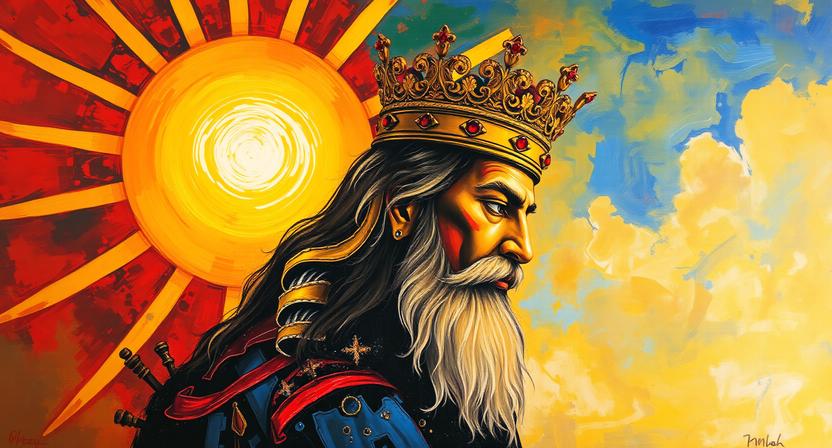
Throughout astrology, the Sun has long been associated with kings, royalty, and sovereign power. This symbolism is almost unavoidable—after all, everything in our solar system quite literally revolves around the Sun. In the same way, kings and rulers were historically seen as the central figures around which society revolved.
Astrologically, the Sun represents authority that is inherent, not borrowed. A king doesn’t need to ask permission to rule; his status is assumed. Similarly, the Sun symbolizes natural leadership, command, and the ability to stand at the center of attention without apology. This is why the Sun often appears prominently in charts of leaders, monarchs, and public figures whose role is to embody power rather than negotiate it.
It is important to note that the Sun typically doesn’t represent elected rulers like Presidents or politicians. That falls more under the domain of Capricorn and its ruling planet Saturn. It’s more about being born into a leadership role or life of privilege. The sun is very much about luck. He’s blessed. He doesn’t have to earn the things he desires. He’s just born with them!
Sons & Children
It’s no accident that the word “sun” and “son” are homonyms in the English language. The Sun has a strong association with sons—traditionally male children—but by extension, it represents children in general.
Symbolically, children are living proof of creative force made manifest. They are vitality, continuation, and legacy. In astrology, the Sun reflects the principle of creation that comes from the self. Just as children carry the essence and life force of their parents, the Sun represents what is produced directly from one’s core identity.
Children are also sources of joy, pride, and purpose—qualities deeply tied to solar energy. The Sun shows where life wants to express itself outwardly and be seen, much like a child stepping into the world as a new spark of existence.
Gold
Gold is perhaps one of the most literal symbols of the Sun. Its color mirrors sunlight, its rarity implies divine favor, and its incorruptibility reflects eternal value. Alchemically and astrologically, gold is considered the metal of the Sun. Gold symbolizes something precious that doesn’t tarnish easily—much like the Sun’s role as a constant source of light and life. In astrology, solar gold represents inner worth, authenticity, and value that comes from being rather than doing. It’s not earned through struggle (that’s more Saturn’s territory); it simply is. This is why gold has historically been associated with royalty, temples, and the divine—it carries the Sun’s promise of enduring brilliance.
Light
Light is one of the Sun’s most obvious and powerful meanings. Without it, nothing grows, nothing lives, and nothing can be seen. In astrology, the Sun symbolizes illumination—consciousness, awareness, and clarity. Where the Sun appears in a birth chart is where life is lit up, energized, and visible. It represents the part of you that knows itself and wants to be known by others. Light also implies truth. The Sun doesn’t hide or obscure; it reveals. That’s why solar themes are often tied to honesty, transparency, and self-expression. To live your Sun is to step into the light willingly.
Blessings, Gifts, & Talents
One of the most beautiful meanings of the Sun in astrology is that it represents blessings—things that come naturally, without effort or struggle. These are talents, gifts, and advantages you didn’t have to earn; they were simply given.
Solar gifts feel effortless because they arise from your core essence. You don’t have to force them—they shine when you’re being yourself. This is why the Sun is associated with luck, favor, and grace. Unlike planets that symbolize work, hardship, or lessons, the Sun symbolizes what flows freely. It shows where life says, “Here—this is yours.”
Entitlement, Pride & Egotism
Because the Sun represents gifts, blessings, and good fortune, it also symbolizes the effects that these things tend to have on human beings. People who are consistently favored by circumstance or recognized for their talents can begin to internalize that treatment as something they inherently deserve. Over time, this can foster a sense of privilege—an assumption that opportunities, admiration, and success should naturally flow their way. What begins as confidence and gratitude can quietly devolve into arrogance and entitlement, especially when a person rarely encounters resistance or denial.
The Sun also governs visibility, status, and the need to be seen, which can amplify ego when not kept in balance. When someone becomes accustomed to being the center of attention or receiving praise, they may start to overidentify with that role, equating their worth with how brightly they shine in the eyes of others. This can manifest as egotism—an inflated sense of importance that demands recognition and validation. In this way, the Sun doesn’t just represent light and vitality, but also the shadow side of being elevated: the tendency to become self-focused, proud, or even a bit blinded by one’s own glow.
The “Spotlight”
If the Sun had a job title, “Spotlight Operator” would be high on the list. Wherever the Sun goes, attention follows. In astrology, it governs visibility, recognition, and being seen.
The Sun doesn’t ask whether it’s too much—it simply shines. This is why solar placements are often linked to public life, leadership roles, and moments of recognition. The spotlight isn’t always comfortable, but it’s undeniably solar. The Sun teaches us that being seen is not something to fear; it’s something to embody.
Acting & Performing Arts
Acting, theater, and performance fall squarely under the Sun’s domain. These arts require presence, confidence, and the ability to embody a role fully—all solar qualities.
On stage, actors become living sources of light, drawing the audience’s focus and energy. Performance is a solar act because it requires stepping forward and saying, “Watch me.” The Sun governs creativity that is expressive rather than internal. It’s not about what you feel privately; it’s about what you project outward for others to experience.
Fame
Fame is another natural extension of the Sun’s symbolism. To be famous is to be widely recognized—to have one’s light seen by many.
Astrologically, fame isn’t just about popularity; it’s about visibility and identity becoming public property. The Sun rules this domain because it represents the part of us that cannot remain hidden. Fame is solar when it arises from authenticity rather than manipulation. It’s the world responding to someone’s natural radiance.
Fathers & Father Figures
The Sun traditionally represents fathers and father figures in astrology. Symbolically, fathers have long been associated with authority, protection, guidance, and identity formation.
Just as the Sun provides structure to the solar system, father figures often provide a framework within which identity develops. The Sun shows how authority is modeled, expressed, and internalized. Even in cases where the father is absent or flawed, the Sun still represents the idea of fatherhood and how one relates to authority and self-definition.
Fireplaces & Hearth Fires
Fireplaces may seem oddly specific, but they’re a perfect solar symbol. A fireplace is controlled fire—it provides warmth, light, and comfort at the center of a home.
Astrologically, fireplaces represent contained vitality. Unlike wild fire (which can be destructive), the hearth fire is life-sustaining and communal. The Sun rules this kind of warmth—the kind that gathers people together and gives life a sense of safety and continuity.
Lions & Cats (Leo’s Realm)
The Sun rules Leo, and Leo’s symbols—lions and cats—naturally fall under solar meaning. Lions are kings of the animal world, radiating authority and confidence. Cats, more generally, embody independence, self-possession, and a natural sense of importance.
Cats don’t beg for attention; they assume it. This perfectly mirrors the Sun’s energy. Lions bask in the Sun, rule their territory, and command respect simply by existing. These animals reflect solar confidence, pride, and self-assured presence.
The Soul
At its deepest level, the Sun represents the soul. Not emotions, not thoughts, but the essential spark that makes you you.
In astrology, the Sun is the animating force—the reason you’re alive and expressing yourself in this particular way. It’s your core identity, your sense of purpose, and your inner fire. While other planets describe experiences, habits, and patterns, the Sun describes being. It is the soul’s voice saying, “This is who I am.”
Ultimately, the Sun in astrology marks what is most visible and clearly defined in the chart. It shows where things operate in a direct, unmistakable way, without needing interpretation or inference. Its placement highlights what stands out, what takes precedence, and what tends to organize the rest by sheer centrality. Rather than pointing to something hidden or complex, it indicates what is obvious, exposed, and consistently present.
In that sense, the Sun functions as a fixed point of emphasis. It brings attention to a specific area of life and keeps it in focus, making it difficult to ignore or sideline. Other factors may modify or interact with it, but the Sun itself remains steady in its role: to illuminate, to center, and to define what is most apparent within the overall structure of the chart.