

Astrology is one of humanity’s most enduring intellectual and symbolic systems, rooted in the earliest attempts to understand existence itself. Long before formal language, mathematics, or writing, human beings oriented their lives by the sky.
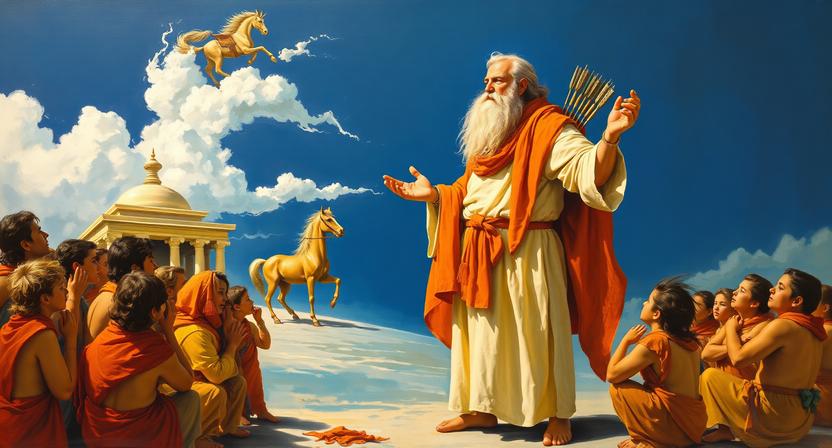
The heavens were not distant or abstract; they were immediate, intimate, and alive. The rising and setting of the Sun structured the day, the Moon shaped the sense of time and fertility, and the stars marked the seasons that governed survival. In a world where nature could be unpredictable and dangerous, the sky offered regularity. This predictability fostered meaning, and meaning gradually evolved into interpretation. Astrology began not as belief but as attention—the sustained, careful watching of the heavens and the conviction that what happened above was deeply connected to what happened below.
Early hunter-gatherer societies relied on celestial patterns to anticipate animal migrations, weather changes, and seasonal abundance. Over time, this observational knowledge became embedded in myth. Stars were imagined as ancestors, animals, spirits, or gods; their movements told stories that encoded survival knowledge. These myths were not separate from reality but functioned as memory systems, preserving astronomical observations across generations. As human societies settled into agricultural life, celestial knowledge became even more crucial. Farming required long-term planning, and the sky became the most reliable guide available. This shift from nomadic to sedentary life intensified humanity’s dependence on celestial cycles and laid the groundwork for more formalized systems of sky interpretation.
The construction of ancient monuments aligned with solar and lunar events reveals that early civilizations possessed an advanced understanding of celestial mechanics, even without modern instruments. These structures were not merely calendars but sacred spaces where cosmic order and human ritual intersected. The alignment of stone, earth, and sky reflected a worldview in which time was cyclical and sacred. In such societies, there was no distinction between scientific observation and spiritual meaning; astrology, religion, and cosmology were inseparable aspects of a unified understanding of reality.
The emergence of writing in Mesopotamia transformed astrology from oral tradition into a documented discipline. Clay tablets preserved detailed records of planetary movements, eclipses, and unusual celestial events. The Mesopotamians believed the gods communicated their intentions through the sky, and astrology became a method of divine interpretation. This was not speculative mysticism but a state-sponsored practice central to governance. Astrologers served kings and were responsible for interpreting celestial warnings that could determine political decisions. If an eclipse threatened the king, ritual substitutions might be enacted to divert the danger. In this way, astrology shaped not only belief but concrete political action.
Over centuries, Mesopotamian astrologers refined their techniques, gradually recognizing repeating cycles and developing mathematical models to predict future celestial events. This predictive capacity marked a crucial shift: astrology was no longer only reactive but anticipatory. The creation of the zodiac represented a major conceptual leap, dividing the continuous movement of the sky into symbolic segments that could be analyzed and compared. This abstraction allowed astrology to evolve beyond immediate omens into a systematic language capable of describing patterns across time.
In Egypt, the sky was woven into theology and the afterlife. The soul’s journey was imagined as a celestial ascent, and the stars were both destination and guide. Egyptian astrology emphasized continuity, renewal, and eternal order rather than sudden fate or catastrophe. The rising of Sirius, coinciding with the Nile’s flood, symbolized rebirth and divine benevolence. This intimate link between celestial events and earthly sustenance reinforced the idea that the heavens were actively involved in human survival. Egyptian star lore influenced temple design, burial practices, and royal ideology, embedding astrology into the fabric of daily and spiritual life.
The fusion of Egyptian, Babylonian, and Greek thought during the Hellenistic period produced one of the most influential astrological systems in history. Greek philosophers approached astrology with a desire to reconcile celestial influence with rational explanation. The concept of a cosmos governed by logos, or rational order, allowed astrology to be framed as a natural process rather than divine whim. Planets were no longer merely gods but carriers of specific qualities that interacted with the material world. This philosophical reframing elevated astrology’s intellectual status and allowed it to coexist with emerging scientific inquiry.
The development of natal astrology fundamentally changed how individuals understood themselves. The moment of birth was seen as a symbolic imprint, capturing the quality of time itself. Astrology offered a language for describing personality, temperament, strengths, and challenges. It did not claim absolute determinism but suggested tendencies shaped by cosmic conditions. This nuanced view allowed astrology to function as both predictive and interpretive, offering insight without eliminating choice. The popularity of horoscopes reflected a growing interest in individuality and personal destiny, concepts that were becoming increasingly important in Hellenistic and Roman culture.
As astrology spread throughout the Roman Empire, it became embedded in everyday life. Soldiers consulted astrologers before battles, merchants before journeys, lovers before marriages. Astrology crossed class boundaries, practiced in both elite courts and popular settings. Yet its power made it politically sensitive. Predicting the death or downfall of an emperor was a dangerous act, and astrologers often walked a fine line between influence and exile. This tension highlights astrology’s perceived authority; it was feared not because it was trivial, but because it was believed to work.
In India, astrology developed within a metaphysical framework that emphasized cosmic justice and spiritual evolution. Jyotisha integrated astronomy, mathematics, ritual, and philosophy into a coherent system that viewed human life as part of a vast karmic cycle. Planetary influences were not arbitrary but reflected accumulated actions across lifetimes. Astrology thus served as a tool for understanding one’s spiritual responsibilities and timing one’s actions in harmony with cosmic law. Its integration into religious practice ensured its continuity across centuries, largely uninterrupted by cultural upheaval.
The Islamic Golden Age represented a critical bridge in astrology’s history. Scholars approached astrology with both reverence and skepticism, refining its techniques while debating its philosophical implications. The distinction between permissible natural influence and forbidden determinism was carefully examined. Advances in astronomy improved the accuracy of astrological calculations, and the development of sophisticated observatories demonstrated that careful observation and symbolic interpretation could coexist. Astrology during this period was deeply interdisciplinary, informing medicine, geography, meteorology, and statecraft.
When astrology re-entered Europe through translation movements, it found fertile ground in medieval universities. Students learned astrology as part of a broader cosmological education that included geometry, music, and natural philosophy. Medical astrology was especially prominent; physicians believed that different parts of the body were governed by zodiac signs and planets, and treatments were timed accordingly. While religious authorities remained cautious, astrology was widely accepted as a means of understanding God’s creation rather than challenging divine authority.
The Renaissance intensified astrology’s symbolic richness. Thinkers viewed the universe as a grand correspondence system, where celestial, terrestrial, and human realms mirrored one another. Astrology provided a language for this interconnectedness, influencing art, architecture, literature, and music. Birth charts were interpreted not only for prediction but for philosophical insight. Even as new scientific discoveries challenged traditional cosmology, astrology remained a framework for meaning, offering coherence in a rapidly changing intellectual landscape.
The eventual separation of astrology from science was not sudden but gradual. As experimental methods prioritized quantifiable results, astrology’s symbolic and qualitative nature became increasingly incompatible with dominant scientific paradigms. The heavens were reimagined as inert matter rather than meaningful signs. Astrology’s authority diminished, but its cultural presence persisted. It survived in folk traditions, esoteric societies, and personal practice, adapting to new contexts and audiences.
In the modern era, astrology’s revival reflected broader cultural shifts. As industrialization and secularization altered traditional sources of meaning, astrology offered an alternative framework for self-understanding. Psychological interpretations reframed planetary symbols as expressions of inner dynamics rather than external fate. This transformation allowed astrology to align with modern values of self-exploration and personal growth. The rise of mass media simplified astrology for popular consumption, while digital technology later enabled unprecedented access to detailed charts and global communities.
Today, astrology exists in multiple forms simultaneously, ranging from scholarly study to casual entertainment. It is practiced differently across cultures, belief systems, and personal philosophies. Some approach it skeptically, others spiritually, others metaphorically. Yet its persistence across millennia suggests that astrology fulfills a fundamental human impulse: the desire to find pattern, meaning, and orientation within a vast and complex universe. Astrology endures not because it resists change, but because it continually adapts, absorbing new ideas while preserving its core function as a symbolic bridge between the sky and human experience.
In this sense, astrology is less a fixed doctrine than a living tradition, shaped by the civilizations that practice it. Its history mirrors humanity’s evolving relationship with knowledge, faith, and identity. From prehistoric stone circles to digital birth charts, astrology remains a testament to humanity’s enduring belief that the universe is not silent, and that by watching the sky, we may learn something profound about ourselves.
…..