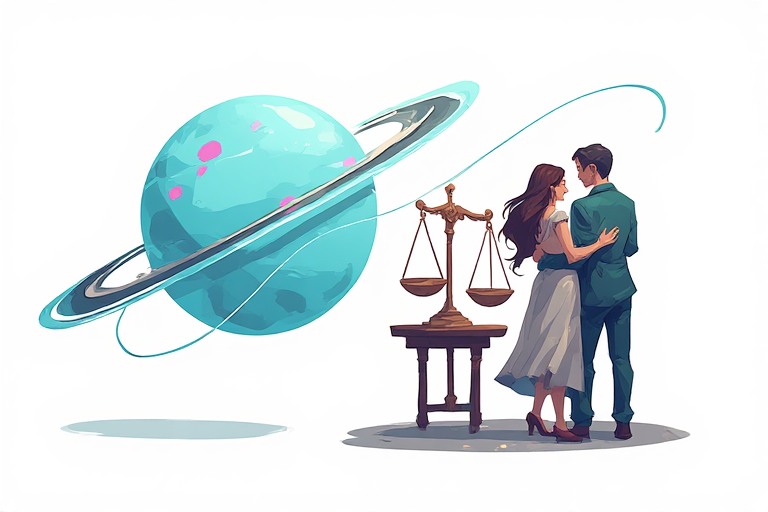
Uranus in Libra sparks a fascinating interaction between innovation and relationship dynamics. Uranus represents awakening, disruption, invention, and sudden progress. Libra represents balance, harmony, diplomacy, and the desire to create fair and meaningful connections. When these two archetypes interact, change often appears through evolving ideas about partnership, social balance, and the way individuals cooperate with one another.
Libra naturally seeks equilibrium and mutual understanding, yet Uranus introduces sudden realizations that challenge established relationship patterns. Social expectations that once seemed normal may begin to feel restrictive or outdated. This dynamic encourages experimentation with new ways of relating, negotiating, and sharing life with others.
Libra is deeply connected to fairness and interpersonal awareness, while Uranus stimulates originality within these themes. Instead of accepting conventional roles in relationships, individuals may explore more independent and unconventional forms of partnership. Through this placement, harmony is not achieved by following tradition, but by discovering new forms of balance that better reflect changing social realities.
Because Libra values perspective and comparison, Uranus here can produce insights about human interaction that others may overlook. Subtle shifts in communication, cooperation, or compromise can produce surprisingly large changes in how relationships function. What begins as a small adjustment in attitude can reshape the entire dynamic between people.
The Meaning of Uranus in Libra
Uranus is associated with disruption, invention, and the impulse toward freedom. Libra, by contrast, governs partnership, diplomacy, fairness, and the delicate balance that allows people to coexist peacefully. When Uranus moves through Libra in a natal chart, the realm of relationships becomes a place where new ideas and unexpected realizations frequently appear. Conventional expectations about cooperation and partnership may be questioned as individuals begin exploring more progressive ways of relating to one another.
Those born with this placement often approach relationships from a unique perspective. Rather than simply following familiar social patterns, they may feel motivated to examine how partnerships actually function. Rules surrounding romance, marriage, friendship, or collaboration may seem open to reinterpretation rather than fixed traditions.
Libra typically seeks stability and harmony in interpersonal dynamics. Yet Uranus introduces sudden turning points that can reshape these connections. Relationships may evolve rapidly when new insights reveal that existing arrangements no longer reflect genuine equality or personal freedom.
Because Libra is deeply connected to justice and reciprocity, Uranus here can illuminate hidden imbalances within partnerships. What once appeared fair may begin to look uneven upon closer reflection. These realizations often inspire a renegotiation of roles, expectations, and the distribution of responsibility between people.
In astrology, Libra corresponds with the 7th House, the area of the chart associated with marriage, committed partnerships, contracts, and open alliances. When Uranus influences this symbolic territory, individuals frequently feel drawn to redefine what commitment means and how agreements between people should function.
On a deeper level, this placement encourages a more thoughtful understanding of Libra’s pursuit of harmony. Instead of preserving peace at any cost, Uranus promotes a form of balance grounded in authenticity. Relationships flourish not through rigid tradition, but through honesty, personal independence, and a willingness to reshape agreements as circumstances evolve.
Uranus in Libra Man
The Uranus in Libra man often carries a distinctly independent mindset when it comes to partnership and social dynamics. While he may appreciate harmony and cooperation, he rarely assumes that relationships must follow a fixed script. Instead, he tends to view them as evolving agreements between individuals rather than permanent roles defined by tradition.
He may be especially sensitive to questions of fairness between people. Situations where one person holds too much control or where expectations feel unequal can quickly capture his attention. Because of this awareness, he may feel compelled to approach relationships in ways that promote greater balance and mutual respect.
Throughout his life, his understanding of partnership can change in sudden or surprising ways. A new realization about personal freedom or equality may prompt him to adjust how he participates in relationships. These shifts are not usually impulsive for their own sake; rather, they arise from a growing desire to create connections that feel more authentic.
He typically values communication and intellectual compatibility in his partnerships. Conversations about ideas, principles, and personal perspectives often play an important role in how he connects with others. Relationships that allow space for independent thought tend to suit him best.
Although he may appear diplomatic and cooperative on the surface, he does not easily accept outdated social expectations surrounding relationships. Instead, he often gravitates toward arrangements that allow both individuals to maintain their individuality while still sharing a meaningful bond.
When this placement operates at its highest expression, the Uranus in Libra man can become a catalyst for healthier relationship patterns. By questioning assumptions and encouraging open dialogue, he helps create partnerships that are built on fairness, honesty, and mutual growth.
Uranus in Libra Woman
The Uranus in Libra woman often approaches relationships with a strong sense of individuality and self-awareness. While she may naturally appreciate grace, cooperation, and emotional connection, she is rarely comfortable accepting partnership roles simply because they are traditional or widely expected. Instead, she tends to explore relationship dynamics that feel more balanced and personally meaningful.
She is often highly aware of fairness between people. Situations where expectations feel one-sided or restrictive can quickly stand out to her. Because of this sensitivity, she may feel drawn to create partnerships where both individuals have equal voice, autonomy, and respect.
Over time, her ideas about relationships may evolve in noticeable ways. Moments of realization can lead her to rethink what commitment, cooperation, or emotional partnership should look like. These changes often arise from a desire to align her relationships more closely with her personal values.
Intellectual connection frequently plays an important role in her relationships. She often enjoys partners who can share thoughtful conversations, exchange perspectives, and engage with her curiosity about how people relate to one another.
Although she may express warmth and diplomacy, she is unlikely to feel fulfilled in partnerships that impose rigid expectations or limit her independence. She tends to thrive in environments where both individuals are free to grow while maintaining mutual respect and understanding.
At its best, this placement reflects someone who encourages healthier relationship dynamics in the people around her. Through her willingness to question outdated assumptions and seek genuine balance, she often inspires others to approach partnerships with greater honesty, equality, and self-awareness.
Uranus in Libra Dates & Years
Uranus needs roughly 84 years to complete a full journey through the zodiac, spending close to seven years in each sign. Because of this slow movement, Uranus in Libra represents a generational influence that shapes how societies think about relationships, social contracts, and ideas of equality across long periods of time.
The next Uranus in Libra cycle will begin around 2066 and continue until approximately 2073. During this era, major cultural conversations may emerge regarding partnership structures, legal agreements, and evolving concepts of fairness within society.
Looking at previous Uranus-in-Libra periods reveals interesting historical themes. While astrology does not claim that planetary cycles directly cause historical events, these eras frequently coincide with shifts in how societies understand equality, diplomacy, and human relationships.
1968 – 1975: During this era, cultural movements focused heavily on civil rights, gender equality, and redefining traditional partnership roles. New perspectives on relationships and personal freedom spread widely.
1884 – 1891: Legal reforms and social discussions about marriage, women’s rights, and fairness within institutions gained momentum in many parts of the world.
1800 – 1807: Political philosophies concerning liberty, equality, and the balance of power between individuals and governments continued evolving during a period of global transformation.
1716 – 1723: Diplomatic alliances and treaties played important roles in shaping political stability across Europe, emphasizing the importance of negotiation and balance between nations.
1632 – 1639: Early modern political thinkers explored questions of justice, law, and the structure of agreements between individuals and governing institutions.
Uranus completes one full journey through the zodiac approximately every 84 years, which means its return to Libra occurs about once every eight decades. Because of this long cycle, each generation born under Uranus in Libra tends to share a collective influence tied to evolving ideas about partnership, justice, and interpersonal balance.
Those born during these periods often grow up questioning inherited assumptions about relationships and social agreements. Their generation may feel naturally inclined to reconsider how cooperation, legal frameworks, and shared responsibilities are structured, frequently pushing society toward more balanced and equitable forms of interaction.
Ultimately, Uranus in Libra symbolizes change unfolding through the dynamics of human relationships. Rather than focusing on inventions or material progress, its influence tends to appear in the shifting ways people form partnerships, negotiate agreements, and define fairness between individuals.
On a personal level, this placement often encourages people to maintain their individuality while participating in close connections. It promotes the willingness to question inherited assumptions about how relationships “should” function and to experiment with arrangements that feel more balanced and authentic.
On a broader societal level, Uranus in Libra frequently corresponds with periods when cultural attitudes about equality, justice, and cooperation begin to evolve. Ideas surrounding partnership, rights, and mutual responsibility may gradually shift as societies reconsider what fairness truly means.
The deeper message of this placement is that harmony is not something fixed forever. Balance must continually adjust as people change and grow. When individuals remain open to reexamining how they relate to one another, entirely new forms of partnership can emerge.