In astrology, the succedent houses represent the phase of life that follows initiation. Where the angular houses ignite experience and thrust us into action, the succedent houses ask a quieter but equally important question: What do you do with what you’ve begun? These houses are not about first contact or public confrontation. They are about continuation, maintenance, and preservation. They describe how energy is stabilized, how resources are accumulated, and how meaning is sustained over time. Without succedent houses, nothing lasts. Without them, beginnings collapse and efforts evaporate.
The word “succedent” comes from the Latin succedere, meaning “to follow after.” This alone reveals their function. Succedent houses follow the angular houses, inheriting their momentum and determining whether that momentum becomes something durable or something fleeting. They are the houses of holding, keeping, and cultivating. Unlike angular houses, which are visible and event-driven, succedent houses operate through consistency, attachment, and endurance. They do not shout. They settle in.
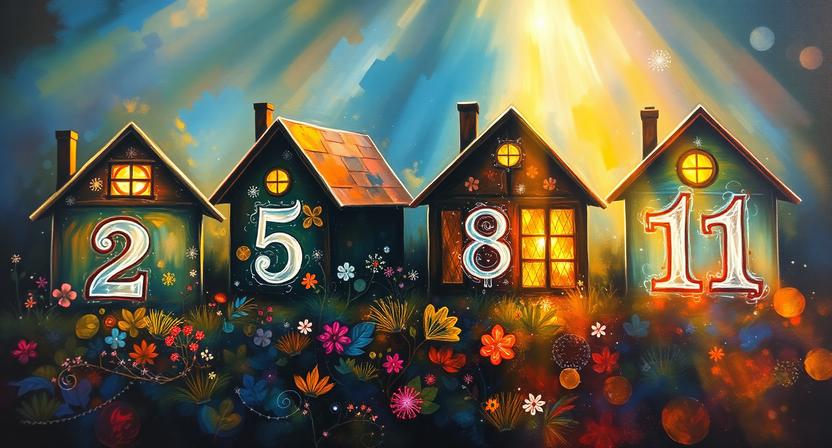
Astrologically, the succedent houses are the second, fifth, eighth, and eleventh. Each one follows an angular house and develops its themes in a more sustained and embodied way. These houses are associated with the fixed signs, which further emphasizes their role in stability, persistence, and resistance to change. Fixed energy does not initiate or dissolve—it maintains. This makes succedent houses deeply connected to material reality, emotional investment, and long-term consequence.
The second house follows the first, and it is here that existence becomes something that must be sustained. If the first house declares “I am,” the second house asks “What do I need in order to continue?” This is the house of resources, values, appetite, and consumption. It governs not only money and possessions, but the deeper principle of what we take in and what we hold onto. The second house reveals how life feeds itself.
The succedent nature of the second house is immediately evident in its relationship to survival. Once the body exists, it must eat. Once identity emerges, it must be supported. This is why the second house governs food, income, personal assets, and the material means of self-preservation. It is not concerned with ambition or reputation; it is concerned with having enough. Enough food. Enough stability. Enough reassurance that tomorrow can be met.
But the second house goes far beyond finances. It is the house of values, meaning what we consider worth keeping. This includes beliefs, attachments, comforts, and preferences. What someone spends money on, what they crave, what they refuse to give up—these are all second-house expressions. Because this house is succedent, these attachments tend to be strong and persistent. Once something becomes part of the second house economy, it is not easily released.
This house also governs appetite in a broad sense. Not just hunger for food, but hunger for experience, pleasure, and material engagement. The second house shows what we consume and, by extension, what we diminish through consumption. To eat is to reduce. To use is to wear down. This subtle principle reveals the second house as a place of exchange between self and environment, where sustenance comes at the cost of depletion elsewhere.
The fifth house follows the fourth and carries forward the foundation established there. If the fourth house is about roots and inner security, the fifth house is about creative expression that grows from those roots. This is the house of joy, pleasure, children, talents, and personal radiance. It is where life says, “Now that I am safe, I can play.” The fifth house is succedent because joy must be sustained to be meaningful.
The fifth house governs creativity not as effort, but as overflow. It is the act of giving form to something that already exists within. Art, performance, romance, and play all live here because they are expressions of vitality that require ongoing engagement. A talent discovered once means little unless it is practiced. A child conceived must be raised. Pleasure must be revisited again and again to remain alive.
This house is also deeply connected to recognition and appreciation, though not in the tenth-house sense of public status. The fifth house wants applause, affection, and acknowledgment on a personal level. It seeks to be seen enjoying itself. Because it is succedent, the fifth house thrives on repetition—regular hobbies, ongoing creative projects, long-term romances. It does not chase novelty for novelty’s sake; it wants continuity of delight.
Children are governed by the fifth house because they represent life extended forward. A child is not an event but a commitment. Parenting requires sustained attention, emotional investment, and long-term responsibility. This aligns perfectly with the succedent quality of the house. What is born must now be nurtured, encouraged, and supported so it can grow.
The eighth house follows the seventh, and here the succedent principle becomes more complex and intense. If the seventh house is about balance and encounter, the eighth house is about what happens after union. This is the house of shared resources, obligations, debts, inheritances, and transformations that arise from entanglement. The eighth house is succedent because bonds, once formed, create ongoing consequences.
This house governs what is shared, not what is owned outright. Money held jointly, emotional burdens carried together, secrets, contracts, and mutual dependencies all fall here. The eighth house reveals how deeply someone is willing to commit their resources to another and how they handle the loss of autonomy that follows intimacy. Once two lives intertwine, disentangling is not simple.
Despite common misconceptions, the eighth house is not inherently about sex. Sex belongs to the seventh house as an act of balance and pleasure between equals. The eighth house is about what comes after that act—attachment, obligation, and transformation. It governs the psychological and material aftermath of union, not the act itself. This distinction is crucial and often overlooked.
The eighth house is also associated with death, but not as a single event. It governs death as a process of transfer. Inheritances, legacies, and the passing of resources from one person to another all fall here. Something ends so something else may continue. This makes the eighth house profoundly succedent: it ensures continuity through redistribution rather than creation.
Transformation is a key theme here, but it is not sudden or explosive. It is slow, unavoidable change that results from sustained entanglement. Grief, healing, and psychological rebirth all belong to the eighth house because they unfold over time. This house does not initiate change; it absorbs it and reshapes the inner landscape accordingly.
The eleventh house follows the tenth and carries public action into the realm of collective continuity. If the tenth house is about achievement and authority, the eleventh house is about what those achievements contribute to the future. This is the house of friendships, communities, alliances, and long-term goals. It governs the networks that sustain influence beyond individual effort.
The eleventh house is succedent because social structures require maintenance. Friendships are not moments; they are relationships that must be tended. Causes do not advance without ongoing participation. Dreams do not materialize without repeated engagement. This house shows how someone invests energy into shared visions and collective aspirations.
Unlike the seventh house, which focuses on one-to-one relationships, the eleventh house governs many-to-many connections. It is the house of groups, audiences, and social ecosystems. These are not intimate bonds but enduring affiliations. The eleventh house reveals where someone finds belonging among peers and how they contribute to something larger than themselves.
This house is also associated with hopes and wishes, but not idle fantasies. These are goals anchored in reality, shaped by circumstance, and pursued over time. The eleventh house shows what someone is willing to work toward patiently, often without immediate reward. This makes it one of the most future-oriented houses in the chart.
What unites all succedent houses is their relationship to value over time. They are concerned with what is worth keeping, what deserves investment, and what must be managed carefully to endure. These houses resist disruption. They prefer continuity to change, familiarity to novelty, and stability to risk. This can manifest as loyalty and reliability, or as stubbornness and resistance, depending on how the energy is handled.
Succedent houses also represent emotional and material attachment. They show where we dig in our heels, where we store our treasures, and where we struggle to let go. This attachment is not inherently negative; it is necessary for building a life. But it can become limiting when growth requires release.
In the architecture of the chart, succedent houses act as the load-bearing walls. Angular houses may set the direction, but succedent houses determine whether that direction is sustainable. Cadent houses may adapt and reinterpret, but succedent houses decide what remains unchanged. They are the keepers of continuity.
Ultimately, the succedent houses answer a fundamental question: What lasts? They show how life is sustained through effort, commitment, and care. They remind us that beginnings mean nothing without follow-through, and that meaning is not created in moments alone, but through endurance, repetition, and devotion.