Rahu is hunger incarnate. It is not the measured desire that drives growth or the quiet ambition that strengthens skill over time. Rahu is the force of appetite turned outward, the shadow that believes fulfillment can only come from taking, extracting, or manipulating the world around it. In Vedic astrology, Rahu is represented as a severed head, forever alive, forever insatiable. The symbolism is precise: a head can see, plan, and demand, but it cannot digest, integrate, or be nourished. Nothing it acquires ever truly satisfies.
The essence of Rahu is lack. Psychologically, it represents the part of the mind that feels incomplete, exposed, and insufficient. Instead of seeking resolution internally, Rahu turns outward, compulsively. This is why Rahu is intimately connected with obsession, compulsion, and moral flexibility. It asks not whether an action is right or ethical, but whether it achieves its aim. Rahu does not care about the long-term consequences to itself or others. Its logic is simple: if it can be taken, it should be taken.
Rahu studies the world like a predator studies its prey. It notices weakness with an uncanny precision. Fear, shame, loneliness, insecurity, and addiction appear as opportunities for leverage. People under Rahu’s gaze are rarely seen as autonomous beings; they are resources, stepping stones, or tools. Manipulation becomes second nature because subtle control is far more efficient than force. Rahu does not argue; it programs. It does not negotiate; it conditions.
On the material plane, Rahu governs all things artificial, synthetic, foreign, and technologically mediated. It rules plastics, chemicals, machinery, digital networks, drugs and anything that is adhesive. Rahu sticks, and it prefers what can be engineered, scaled, and dominated. Nature is slow and resistant, but Rahu thrives in environments where cause and effect can be manipulated, bypassed, or delayed. Modern society, with its technological acceleration and social media amplification, is a perfect playground for Rahu energy. Every ad, every algorithm, every shortcut that promises rapid results without effort carries Rahu’s signature.
Exploitation is Rahu’s natural habitat. It is not incidental; it is strategy. Emotional exploitation manifests as manipulation, guilt, gaslighting, and psychological dependency. Financial exploitation appears as coercion, predatory contracts, debt traps, and systems designed to keep others permanently indebted. Sexual exploitation shows up when desire is leveraged for control rather than mutual fulfillment. Rahu understands exchange but does not understand fairness. It gives just enough to keep the system feeding itself.
Manipulation is Rahu’s most refined instrument. Unlike open aggression, it achieves maximum impact while leaving the user unscathed. Rahu can hypnotize, seduce, persuade, and condition. It bypasses logic and speaks directly to unconscious craving and fear. The influence may be subtle—a whispered suggestion, an emotional trap—or overt, like social manipulation on mass media platforms. Those under its sway often feel drained, confused, or powerless without ever fully understanding why.
Extortion and leverage are natural to Rahu. Wherever dependency exists, Rahu exploits it. Secrets, vulnerabilities, addictions, legal risks, and emotional ties become bargaining chips. It creates circumstances where others feel they have no choice, then profits from the illusion of inevitability. Control through dependency is more efficient than control through force. Rahu thrives in environments where moral boundaries are blurred, and ethical ambiguity is normalized.
Parasitism is Rahu in action. A parasite does not destroy its host outright; it drains while keeping the host alive. Rahu relationships often operate under the same principle. One party extracts energy, money, labor, attention, or status while offering just enough to maintain the dynamic. The host becomes anxious, exhausted, and disoriented, often blaming themselves rather than recognizing the imbalance. Rahu relies on normalization: once the imbalance becomes familiar, it is no longer questioned.
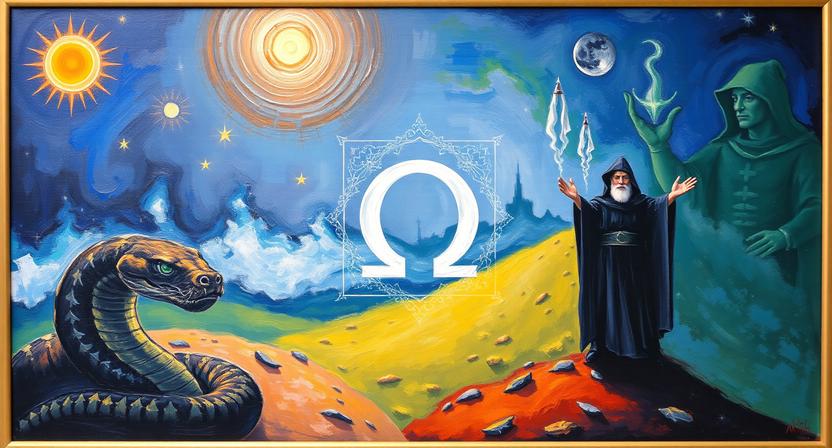
Rahu’s fascination with unseen forces manifests as magic, occultism, and psychological manipulation. It is not interested in spiritual liberation. Its focus is power: control over perception, belief, and behavior. Ancient rituals, spells, and talismans are early expressions; modern equivalents include advertising psychology, social engineering, and mass media manipulation. Rahu operates with a fundamental understanding: control belief, and behavior will follow.
At a societal level, Rahu governs propaganda, mass hypnosis, and ideological possession. Entire populations can fall under Rahu’s influence when narratives exploit fear, desire, outrage, or tribal instincts. Truth becomes secondary to effectiveness. The measure of information is not accuracy but impact. Rahu thrives when society is unstable, technology advances faster than ethics, and moral ambiguity dominates.
Control is Rahu’s obsession. Whether it’s people, groups, animals, organizations, countries, emotions, or ideas…Rahu wants to bring it under his spell and keep it there for as long as possible. Once the target is sufficiently inebriated, Rahu goes to work, sinking its teeth in like a vampire and draining it to the bone.
Nowhere is Rahu’s nature more visible than in the world of drugs and addiction. Rahu is the archetypal drug dealer. Addiction itself is a Rahu process: the endless pursuit of relief through substances that deepen the emptiness they claim to solve. The addict is trapped in a cycle of craving, consumption, collapse, and escalation. Artificial pleasure becomes a substitute for inner peace.
The drug dealer exemplifies Rahu’s predatory logic. They exploit vulnerability, trauma, poverty, and dependence for profit. They do not heal suffering; they monetize it. Addicts are drained financially, physically, psychologically, and spiritually, kept alive just enough to continue consuming. Hate is unnecessary; calculation is sufficient. Dependency is leverage. The dealer profits from weakness; the addict pays the toll. Rahu orchestrates this transaction flawlessly.
Drugs themselves are Rahu substances. They hijack natural neurological systems, bypassing organic emotional processing. They promise transcendence without transformation, pleasure without integration, escape without resolution. Entire communities can be hollowed by addiction, creating cycles of crime, exploitation, and despair, benefiting those at the top of the chain. Rahu thrives in these artificially engineered systems, where suffering is predictable, dependency is scalable, and control is maximized.
Financially, Rahu governs unconventional, speculative, and ethically ambiguous wealth. Black-market profits, windfalls, risky investments, and exploitative ventures all bear Rahu’s signature. Rahu money arrives quickly and leaves unease behind. Even when abundance is achieved, peace is rare. Anxiety, paranoia, and fear of loss accompany the wealth because what is taken without integrity never feels secure.
Addiction under Rahu extends beyond substances. Power, attention, validation, sex, control, and stimulation also fall under its orbit. Rahu is not addicted to pleasure; it is addicted to relief. Each indulgence temporarily eases inner discomfort, only for craving to return stronger. Escalation is inevitable. Boundaries erode. Consequences intensify. Rahu teaches through excess, not moderation.
In relationships, Rahu creates intense attraction that feels magnetic, obsessive, and fated. But it is rarely balanced. Rahu bonds are often built on projection rather than intimacy. One partner becomes a fantasy solution to the other’s dissatisfaction. Control, jealousy, manipulation, and psychological games appear once the initial intoxication fades. Rahu clings and tests rather than connects, fearing abandonment more than dishonesty.
Rahu often aligns with outsiders, rebels, and those who reject tradition. This can be liberating in rigid or oppressive systems. But Rahu’s rebellion is rarely altruistic. Its goal is not to dismantle hierarchies, but to climb them. Ideologies, beliefs, and moral codes are tools, not principles. Power is the prize; all else is expendable.
In the digital age, Rahu thrives through social media, online personas, and algorithmic manipulation. It is the energy behind influencer obsession, virality, and the relentless pursuit of attention. Likes, shares, and followers become currency, and the chase for external validation mirrors the ancient psychological pattern of taking, consuming, and craving. Virtual parasitism—where attention is drained while offering only superficial reward—is a modern Rahu playground.
Rahu also manifests in corporate, political, and financial structures. Corporate exploitation, insider trading, lobbying, and systemic inequality are reflections of Rahu logic on a societal scale. It prioritizes outcome over ethics, leverage over fairness, and profit over human well-being. Here, Rahu demonstrates its collective impact: entire industries and institutions can operate as parasitic networks under its influence.
Even creative industries are not immune. Rahu fuels obsession with fame, recognition, and virality over craft or integrity. Art and talent can be exploited for commercial gain, stripped of context, and used to manipulate audiences. Rahu cares little for authenticity; its focus is extraction and amplification.
Despite its darkness, Rahu is not meaningless destruction. It reveals uncomfortable truths about desire, dependency, and the consequences of externalizing fulfillment. It exposes what happens when identity is built on acquisition rather than being. Its lessons are brutal: obsession, collapse, and exhaustion are inevitable if hunger is left unchecked. Only when the void’s pursuit becomes unsustainable can self-awareness emerge.
The lesson of Rahu is unflinching: nothing external can fill an internal void. The more the shadow is fed, the larger it becomes. Rahu does not punish—it drains. And when the relentless chase collapses under its own weight, the possibility of restraint, awareness, and integration finally appears.