

Why Venus Is Debilitated in Virgo: A Deeper Analysis


If you ask an astrologer why Venus is debilitated in Virgo, most of them will likely tell you it is because Venus represents love and Virgo represents criticism. The logic is simple: criticism does not feel loving. Being nitpicked does not make someone feel adored. Therefore, Venus struggles in Virgo.

There is truth in that. Excessive fault-finding rarely strengthens a relationship. Being overly focused on the bad instead of the good does not make a partner feel cherished. I have often seen this placement manifest as someone who truly cares, but who expresses that care through correction rather than appreciation. Over time, that dynamic can cool warmth and create distance. In that sense, the idea of love versus criticism explains a lot.

But I don’t think that is the whole story.

Criticism & Conditional Love

Venus is attraction. It is harmony, sweetness, and connection. It represents the instinct to bond freely and to enjoy another person without tension. Virgo, on the other hand, analyzes. It separates wholes into parts. It focuses on flaws, inefficiencies, and areas that require improvement. When these two principles combine, affection can become conditional.

I have seen Venus in Virgo express care through advice rather than praise. The intention may be supportive, but the tone can feel corrective. Over time, this creates subtle pressure. A partner may feel evaluated rather than cherished. Instead of simply being loved, they may feel they must qualify for it.

This is how conditional love patterns can develop. Approval becomes tied to behavior. Affection becomes linked to performance. The more love is filtered through constant improvement, the less spontaneous it feels. Venus prefers ease. Virgo prefers refinement. When refinement dominates, romantic warmth cools into assessment rather than appreciation.

This dynamic is the most common explanation for why Venus is debilitated in Virgo. However, there are other explanations that are often not discussed by the majority of astrologers, possibly because they are sometimes unsettling to the natives.

However, I believe it is important to understand the full scope of both the positive and negative manifestations of a zodiacal placement. Almost everyone has at least one troubling placement in their birth chart, and I for one believe it is almost always better to acknowledge it and prepare for it than to shy away from it.

Venus & Altered Consumption

Venus rules Taurus, and Taurus governs food, eating, taste, and nourishment. Venus therefore rules not just romance, but also what we put in our mouths. It is the principle of fueling the body as well as enjoyment and sensory satisfaction. When Venus operates freely, pleasure is simple and natural.

Virgo is mutable earth. Earth represents the physical world and tangible matter. Mutable implies change, adjustment, or modification. Cooking is a mild example of mutable earth — raw ingredients are altered into something new. But mutable earth can also imply excessive processing. It can symbolize taking something natural and refining it until it becomes artificial.

Fermentation illustrates this clearly. When food ferments, its structure changes. From fermentation we get alcohol. Alcohol may be enjoyable in moderation, but it is still a drug. Most drugs follow a similar pattern: natural substances are extracted, refined, or chemically altered into something more potent. Poppies are transformed into opium. Coca plants are changed into cocaine. The list goes on.

If Venus rules the mouth and Virgo symbolizes mutation of physical matter, then Venus in Virgo can point toward processed pleasure & altered consumption. Enjoyment becomes intensified, modified, or chemically enhanced. I am not suggesting that everyone with this placement struggles with addiction. That would be inaccurate. But I have observed that this placement can incline someone toward excessive use of recreational drugs.

When pleasure must be processed rather than experienced naturally, Venus weakens. Simplicity is replaced with modification. Ease is replaced with adjustment. That distortion of the pleasure principle is another reason Venus struggles here.

Love & the Problem of Obligation

Service is another important meaning of Virgo. It represents the servant, the conscripted worker, the one who fulfills duties and obligations. Service can be honorable. It can be noble. But it can also imply hierarchy and lack of freedom.

Venus governs romantic relationships, which depend on voluntary participation. Healthy love requires choice. It requires desire. When Venus operates in a sign associated with service, affection can become entangled with obligation. Love may be offered because it is required rather than because it is freely given.

In extreme symbolism, this can correlate with prostitution — offering intimacy as a service. In even harsher historical contexts, it can point toward bondage or sexual slavery. Of course, having Venus in Virgo does not automatically produce such outcomes. For the vast majority of people, it does not manifest in extreme ways.

More commonly, the expression is subtle. A person may stay in a relationship because they feel needed. They may equate loyalty with responsibility. They may confuse obligation with devotion. This is where need versus desire dynamics become central. When someone remains in love because they must rather than because they want to, romance slowly transforms into duty.

Love thrives on freedom. When freedom is reduced, affection becomes work. That shift from desire to obligation significantly weakens Venus.

Wounds, Pain, & Alteration of the Body

There is another layer that is rarely discussed. Virgo, as mutable earth, relates to physical alteration of the body. Earth symbolizes the tangible form. Mutable implies change or mutation. When the body is cut, burned, bruised, or broken, it has been altered. A fracture is a mutation of structure. A scar is a permanent modification.

If Virgo symbolizes wounds and bodily alteration, and Venus symbolizes pleasure, then Venus in Virgo can symbolically connect pleasure with pain or damage. In extreme cases, this may manifest as developing a taste for discomfort or for altering the body in harmful ways.

This is where issues such as cutting or other forms of self-mutilation can surface. The symbolism is direct: Venus, the planet of enjoyment, operating in a sign associated with physical injury. I want to be clear that this does not mean every person with Venus in Virgo will experience self-harm tendencies. Most will not. Astrology describes symbolic potentials, not fixed outcomes.

However, when the pleasure principle is filtered through a sign of bodily mutation, there can be a distortion. Pain and pleasure can become psychologically entangled. That possibility alone illustrates how Venus’s natural sweetness becomes compromised in this sign.

From Simplicity to Distortion

When you step back, a consistent theme emerges. Venus represents natural pleasure, voluntary love, sweetness, and ease. Virgo represents refinement, service, mutation, and physical alteration. In every case, something simple becomes modified.

Love becomes conditional. Pleasure becomes processed. Affection becomes obligated. The body becomes altered. The common thread is distortion of what should be natural and freely enjoyed.

For most natives, this does not manifest in extreme or catastrophic ways. It may show up as being overly selective in relationships. It may show up as mild overindulgence in recreational substances. It may show up as staying in partnerships for practical reasons rather than passionate ones. But the symbolic tension remains.

Venus prefers ease and freedom. Virgo imposes refinement and adjustment. When enjoyment must be corrected, processed, or obligated, its strength diminishes. That steady movement from natural desire to structured distortion is the deeper reason Venus is considered debilitated in Virgo.


Virgo: The Underappreciated Servant of the Zodiac
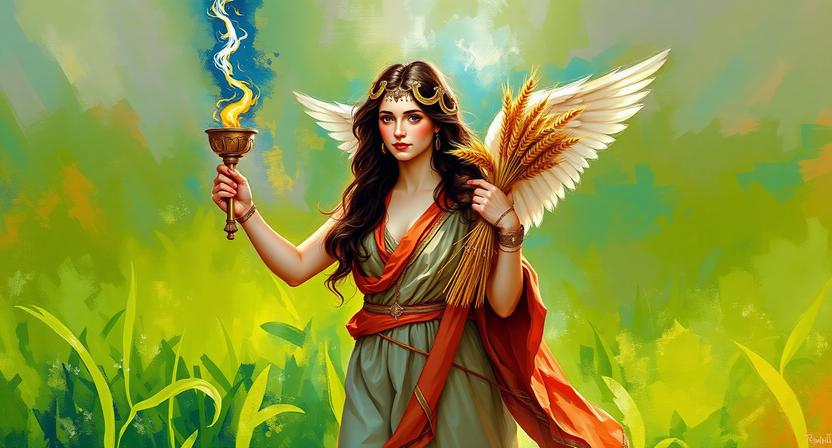

Virgo—the maiden—is the sixth sign of the zodiac. It is a feminine, mutable earth sign. Feminine signs are inwardly receptive, and Virgo channels that energy through observation, discernment, and thoughtful refinement. As a mutable sign, Virgo adapts and adjusts, fine-tuning what already exists rather than seeking to dominate or declare. Its element, earth, grounds it in practicality and tangible results, making Virgo methodical, attentive, and deeply concerned with improvement. Where some signs expand through spectacle or assertion, Virgo moves through precision—guided not by ego, but by careful analysis, measured service, and a quiet commitment to usefulness—constantly seeking to organize, to purify, and to bring subtle order to the details that hold the world together.

Virgo Words & Phrases

abdomen, abstinence, abstinent, abused, acolyte, affliction, aid, ailing, ailment, analysis, apprentice, attendant, backbreaking labor, bandage, being necessary, being needed, belly, bondage, bound, broken, captivity, caregiver, celibacy, celibate, chained, chastity, chaste, chopping wood, cleaning, cleaner, cleave, cleft, confinement, cookery, cooking, crack, criticize, critical, cultivation, cut, debt, dependent, diagnosis, diagnostician, digestion, digestive tract, disinfect, discipline, discernment, doctor, duty, editing, fermentation, fettered, fieldwork, fissure, fracture, gastrointestinal, healer, holding back, hostage, humiliation, humility, illness, imbalance, infection, infirmity, inescapable, injury, intestines, laborer, maiden, maintenance, malady, manual labor, medic, medical care, modesty, mutable earth, nurse, obligation, patient, plowing fields, prisoner, pupil, purification, purity, really hard work, repair, restraint, sacred virgin, sanitize, serf, servant, service, sick, sickness, student, subservience, the Virgin Mary, trainee, vassal, victim, virgin, virginity, wound

The Symbolism Of The Virgin

The symbol of the virgin has rarely meant merely sexual inexperience. Across history and culture, virginity has often represented sovereignty of the self, a state of being untouched, unclaimed, and inwardly whole. In many ancient societies, a virgin was not defined by naivety, but by autonomy. The Latin virgo originally implied a woman who belonged to herself—unmarried, independent, and therefore not yet absorbed into another household or lineage. In this sense, the virgin symbolized potential energy: life not yet distributed, identity not yet divided, power still contained within.

In religion, the image becomes even more layered. In Christianity, the figure of Virgin Mary embodies purity, obedience, and divine receptivity—but also paradoxical strength. Her virginity signifies spiritual incorruptibility and a body set apart for sacred purpose. In other traditions, virgin goddesses such as Artemis and Athena were not passive or submissive figures. They were fierce, self-possessed, and independent. Their virginity symbolized inviolability—freedom from romantic entanglement, political manipulation, or maternal obligation. It marked them as complete within themselves.

Mythologically, virginity often represents threshold states—the moment before transformation. The maiden archetype appears in countless cultures as the embodiment of youth, renewal, and unspent vitality. She stands at the edge of change, carrying both innocence and latent capability. In agricultural symbolism, the virgin is associated with untouched land—fertile not because it has been used, but because it has not yet been exhausted. This imagery links the virgin to cycles of cultivation, harvest, and preservation.

Yet history also reveals the shadow side of the symbol. Virginity has been politicized, controlled, commodified, and weaponized—used to measure worth or enforce social order. The cultural fixation on female purity often reflects anxieties about lineage, inheritance, and power. In this way, the virgin becomes less an individual and more a vessel for collective projection. The symbol can elevate, but it can also confine.

Ultimately, the enduring power of the virgin archetype lies in its ambiguity. It can mean innocence, but also self-containment. It can suggest purity, but also disciplined autonomy. It may evoke vulnerability, yet just as often it signals untouchable strength. Across myth, religion, and culture, the virgin is not merely untouched by others—she is fundamentally centered within herself, representing potential that is intact, guarded, and profoundly self-directed.

The Symbolism Of Number 6

The number six has long carried a complex and layered symbolism across culture, religion, and mythology. Mathematically, it is the first “perfect number,” because its divisors (1, 2, and 3) add up to itself. This gives six an ancient association with balance and structural harmony. It represents a completed form—something stable, symmetrical, and internally coherent. The hexagon in sacred geometry, the six directions of space (north, south, east, west, above, below), and the six-pointed star all reinforce the idea of order emerging from division and arrangement.

In religion, six often appears as the number of human limitation. In the Book of Genesis, humanity is created on the sixth day, linking the number to embodied life and earthly existence. In contrast to seven—frequently regarded as divine or transcendent—six can symbolize the realm of effort, labor, and imperfection. This tension is intensified in apocalyptic imagery such as 666, the “number of the beast,” where six becomes associated with imbalance magnified. Yet even here, it remains deeply tied to the human condition: striving, falling short, and wrestling with material reality.

Mythologically and culturally, six frequently relates to cycles of care and responsibility. There are six traditional directions in many cosmologies, six seasons in some ancient calendars, and six-petaled floral patterns associated with fertility and cultivation. In numerology, six is often interpreted as the number of service, duty, and healing. It governs themes of responsibility toward others, maintenance of order, and the tending of what is fragile or imperfect. Where five disrupts and seven transcends, six stabilizes and repairs.

Interestingly, the word “six” is a near homonym for “sick,” a linguistic coincidence that feels symbolically appropriate in astrological symbolism. Virgo, the sixth sign of the zodiac, has long been associated with illness, hygiene, digestion, and medical practice. The house traditionally linked with Virgo concerns health, daily routines, and service work. In this sense, six represents not just sickness itself, but the response to it—the analysis, diagnosis, correction, and restoration required to maintain functional life. The number thus embodies both vulnerability and remedy: the reality of disorder and the disciplined effort to bring the body and world back into working order.

Ultimately, six stands at the midpoint between initiation and completion. It is neither raw beginning nor mystical culmination, but the labor in between. It symbolizes maintenance rather than spectacle, correction rather than conquest. As a cultural and spiritual symbol, six speaks to the humble but essential work of keeping things running—of tending wounds, balancing systems, and quietly sustaining the structures upon which life depends.

The Virgo Constellation

The constellation Virgo is one of the largest and most expansive patterns in the night sky, stretching broadly along the ecliptic. Visible most clearly during spring in the Northern Hemisphere, it occupies an immense swath of celestial real estate—second in size only to Hydra. Unlike more compact constellations, Virgo’s stars form a wide and subtle arrangement, requiring the observer to trace its shape with patience. Traditionally envisioned as a maiden holding grain, the constellation carries enduring associations with harvest, cultivation, and earthly provision.

Its brightest star, Spica, serves as the constellation’s anchor. The name derives from the Latin word for “ear of grain,” reinforcing Virgo’s agricultural symbolism. Spica is not a single star but a close binary star system, its two massive stars orbiting one another so tightly that they appear as one brilliant blue-white point of light. For ancient skywatchers, Spica marked the timing of harvest seasons; for modern astronomers, it represents dynamic stellar physics unfolding at immense scale.

Beyond its mythic outline, Virgo is astronomically rich. It contains the heart of the Virgo Cluster, a sprawling collection of thousands of galaxies bound together by gravity. Within this cluster lies Messier 87, a massive elliptical galaxy that houses a supermassive black hole famously imaged in 2019. This makes Virgo not just symbolically fertile, but cosmically dense—a region of profound galactic concentration and deep-space structure.

In mythology, Virgo is often identified with Astraea, the virgin goddess of justice who ascended to the heavens when humanity fell into moral decline. Other traditions connect the constellation to Demeter, tying it to themes of grain, nourishment, and seasonal cycles. Across cultures, Virgo has embodied moral purity, agricultural stewardship, and the careful tending of life. As both a celestial expanse filled with distant galaxies and a symbolic maiden bearing wheat, Virgo bridges the practical and the cosmic—linking the rhythms of the earth with the vast architecture of the universe.

Virgo In Tropical vs. Vedic Astrology

The sign of Virgo carries distinct tonal differences when interpreted through Tropical astrology versus Vedic astrology, even though both systems trace their symbolic roots to the same zodiacal archetype. In Tropical astrology—the Western system aligned with the seasons—Virgo is most commonly associated with routines, health, organization, and analytical refinement. It governs daily habits, digestion, hygiene, editing, and the improvement of systems. Here, the Virgin symbolizes discernment and maintenance: the careful sorting of what works from what does not. Virgo energy is framed as practical, modest, detail-oriented, and concerned with functional efficiency in everyday life.

In Vedic astrology (Jyotish), however, the interpretive emphasis shifts. While Virgo (Kanya) still carries themes of analysis and service, it is strongly linked to the sixth house significations of debt, disease, disputes, and enemies. In this context, Virgo is less about tidy routines and more about confrontation with imbalance. It represents the realities that must be managed: illness that requires treatment, obligations that must be repaid, adversaries that must be overcome. The analytical quality of Virgo becomes a strategic tool—used to diagnose weaknesses, calculate risks, and navigate conflict. Rather than simply maintaining order, it often indicates struggle within the material realm.

This difference partly arises from structural emphasis. Tropical astrology often assigns Virgo to the sphere of health and daily work, highlighting personal improvement and skill refinement. Vedic astrology, by contrast, integrates Virgo more explicitly with the domain of debts, enemies, and litigation, reflecting the sixth house’s karmic undertones. In Jyotish, the sixth house is considered a dusthana (challenging house), and Virgo’s rulership over it amplifies themes of service through hardship, growth through friction, and purification through problem-solving.

Ultimately, both traditions recognize Virgo as a sign of correction and adjustment. The divergence lies in tone: Tropical astrology frames Virgo as the organizer of life’s small details, while Vedic astrology emphasizes its role in managing life’s imbalances and adversities. In one system, the Virgin refines the routine; in the other, she confronts the wound. Yet in both, Virgo’s essence remains tied to analysis, humility, and the disciplined effort required to restore order where something has gone awry.

Origin & Word Resonance

The word Virgo comes directly from Latin, where it simply meant “maiden” or “young woman.” In classical usage, virgo referred to an unmarried woman, but the term carried broader implications than modern English “virgin.” It did not exclusively denote sexual inexperience; rather, it implied a woman who was not yet claimed by marriage—someone still under her own identity rather than transferred into another household. In this sense, the word suggested autonomy, youth, and unbound potential as much as physical purity.

Linguistically, virgo is related to the Latin word virga, meaning “rod,” “branch,” or “shoot.” Some scholars believe this connection reflects imagery of fresh growth—something young, straight, and newly sprung from the earth. That association reinforces the agricultural symbolism later attached to the zodiacal Virgo, often depicted holding a sheaf of wheat. The word also influenced several Romance languages: Italian vergine, Spanish virgen, and French vierge all descend from the same Latin root. English adopted “virgin” through Old French after the Norman Conquest, gradually narrowing its meaning to focus more specifically on sexual purity.

In Roman religion, the term Virgo held sacred significance. The Vestal Virgins—priestesses devoted to the goddess Vesta—were called Virgines Vestales, emphasizing not only chastity but ritual separation and spiritual dedication. Their virginity symbolized containment of sacred power, not simply abstinence. This theme echoes in later Christian usage, particularly in reference to the Virgin Mary, where virginity signifies divine consecration and incorruptibility.

As the name of a zodiac sign, Virgo preserves this older, more expansive meaning. The constellation and astrological sign are tied less to literal sexuality and more to themes of purity, refinement, discernment, and cultivation. Etymologically and symbolically, Virgo evokes something intact, self-contained, and unspoiled—an image of life in its formative, carefully tended state.

How To Interpret Virgo In A Birth Chart

When I look at Virgo in a birth chart—whether through the Sun, Moon, Ascendant, or clusters of planets—I immediately ask: where is the service, and where is the strain? In my experience, Virgo tends to manifest in one of two ways. It either appears as service to others, or it shows up as a wound, illness, or physical limitation. Rarely does Virgo sit idle; it is always engaged in responding to something that requires attention, correction, or care.

On the service side, Virgo often describes someone who is tasked with responsibility or duty—but it is not always voluntary. Virgo energy can make you the helper, the analyst, the caregiver—but sometimes that role is imposed by circumstance or external pressure. If a malefic planet like Mars or Saturn activates Virgo, that service can become compulsory. The individual may be forced into labor, conscription, caregiving, or other demanding tasks against their will. The energy of Virgo is fundamentally about subordination to a task or system, whether chosen or required; it manifests as usefulness, duty, or obedience, but always with the underlying current of obligation.

At the same time, Virgo frequently manifests through the body. The sign governs digestion, assimilation, and the processes of maintenance within the physical system. When challenged or afflicted, Virgo often appears as illness, injury, or chronic vulnerability—the body itself demanding attention. The wounds, whether physical or symbolic, serve as lessons in discipline, self-care, and humility. The interplay of service and suffering is at the core of Virgo’s expression: you either manage the world around you or respond to the limitations imposed on you by your own body or circumstances.

Ultimately, interpreting Virgo in a chart requires seeing where life demands maintenance, adjustment, and correction. It is about tending what is broken, incomplete, or in need of refinement. Whether through compelled service, voluntary assistance, or bodily limitations, Virgo calls for awareness, precision, and disciplined effort. It asks us to notice what is not functioning perfectly and respond with careful, sometimes arduous work, turning challenges into opportunities for skill, resilience, and attentiveness.


In the end, Virgo is a sign of discernment, service, and vigilant care, embodying both the capacity to assist others and the reality of vulnerability within the self. Across astrology, mythology, and culture, Virgo represents the tension between maintaining order and confronting imperfection—whether in the body, in daily routines, or in the obligations life imposes. It carries themes of duty, healing, and correction, manifesting either as the servant, the analyst, or the one attending to wounds, illness, and limitations. The constellation, the number six, and the etymology of virgo all reinforce this duality: potential held in check, energy refined through precision, and strength cultivated through discipline. Ultimately, Virgo is not about spectacle or flamboyance; it is about care, humility, and the steady, unglamorous work of keeping the world, and oneself, in balance.