
Why Venus Is Debilitated in Virgo: A Deeper Analysis


If you ask an astrologer why Venus is debilitated in Virgo, most of them will likely tell you it is because Venus represents love and Virgo represents criticism. The logic is simple: criticism does not feel loving. Being nitpicked does not make someone feel adored. Therefore, Venus struggles in Virgo.

There is truth in that. Excessive fault-finding rarely strengthens a relationship. Being overly focused on the bad instead of the good does not make a partner feel cherished. I have often seen this placement manifest as someone who truly cares, but who expresses that care through correction rather than appreciation. Over time, that dynamic can cool warmth and create distance. In that sense, the idea of love versus criticism explains a lot.

But I don’t think that is the whole story.

Criticism & Conditional Love

Venus is attraction. It is harmony, sweetness, and connection. It represents the instinct to bond freely and to enjoy another person without tension. Virgo, on the other hand, analyzes. It separates wholes into parts. It focuses on flaws, inefficiencies, and areas that require improvement. When these two principles combine, affection can become conditional.

I have seen Venus in Virgo express care through advice rather than praise. The intention may be supportive, but the tone can feel corrective. Over time, this creates subtle pressure. A partner may feel evaluated rather than cherished. Instead of simply being loved, they may feel they must qualify for it.

This is how conditional love patterns can develop. Approval becomes tied to behavior. Affection becomes linked to performance. The more love is filtered through constant improvement, the less spontaneous it feels. Venus prefers ease. Virgo prefers refinement. When refinement dominates, romantic warmth cools into assessment rather than appreciation.

This dynamic is the most common explanation for why Venus is debilitated in Virgo. However, there are other explanations that are often not discussed by the majority of astrologers, possibly because they are sometimes unsettling to the natives.

However, I believe it is important to understand the full scope of both the positive and negative manifestations of a zodiacal placement. Almost everyone has at least one troubling placement in their birth chart, and I for one believe it is almost always better to acknowledge it and prepare for it than to shy away from it.

Venus & Altered Consumption

Venus rules Taurus, and Taurus governs food, eating, taste, and nourishment. Venus therefore rules not just romance, but also what we put in our mouths. It is the principle of fueling the body as well as enjoyment and sensory satisfaction. When Venus operates freely, pleasure is simple and natural.

Virgo is mutable earth. Earth represents the physical world and tangible matter. Mutable implies change, adjustment, or modification. Cooking is a mild example of mutable earth — raw ingredients are altered into something new. But mutable earth can also imply excessive processing. It can symbolize taking something natural and refining it until it becomes artificial.

Fermentation illustrates this clearly. When food ferments, its structure changes. From fermentation we get alcohol. Alcohol may be enjoyable in moderation, but it is still a drug. Most drugs follow a similar pattern: natural substances are extracted, refined, or chemically altered into something more potent. Poppies are transformed into opium. Coca plants are changed into cocaine. The list goes on.

If Venus rules the mouth and Virgo symbolizes mutation of physical matter, then Venus in Virgo can point toward processed pleasure & altered consumption. Enjoyment becomes intensified, modified, or chemically enhanced. I am not suggesting that everyone with this placement struggles with addiction. That would be inaccurate. But I have observed that this placement can incline someone toward excessive use of recreational drugs.

When pleasure must be processed rather than experienced naturally, Venus weakens. Simplicity is replaced with modification. Ease is replaced with adjustment. That distortion of the pleasure principle is another reason Venus struggles here.

Love & the Problem of Obligation

Service is another important meaning of Virgo. It represents the servant, the conscripted worker, the one who fulfills duties and obligations. Service can be honorable. It can be noble. But it can also imply hierarchy and lack of freedom.

Venus governs romantic relationships, which depend on voluntary participation. Healthy love requires choice. It requires desire. When Venus operates in a sign associated with service, affection can become entangled with obligation. Love may be offered because it is required rather than because it is freely given.

In extreme symbolism, this can correlate with prostitution — offering intimacy as a service. In even harsher historical contexts, it can point toward bondage or sexual slavery. Of course, having Venus in Virgo does not automatically produce such outcomes. For the vast majority of people, it does not manifest in extreme ways.

More commonly, the expression is subtle. A person may stay in a relationship because they feel needed. They may equate loyalty with responsibility. They may confuse obligation with devotion. This is where need versus desire dynamics become central. When someone remains in love because they must rather than because they want to, romance slowly transforms into duty.

Love thrives on freedom. When freedom is reduced, affection becomes work. That shift from desire to obligation significantly weakens Venus.

Wounds, Pain, & Alteration of the Body

There is another layer that is rarely discussed. Virgo, as mutable earth, relates to physical alteration of the body. Earth symbolizes the tangible form. Mutable implies change or mutation. When the body is cut, burned, bruised, or broken, it has been altered. A fracture is a mutation of structure. A scar is a permanent modification.

If Virgo symbolizes wounds and bodily alteration, and Venus symbolizes pleasure, then Venus in Virgo can symbolically connect pleasure with pain or damage. In extreme cases, this may manifest as developing a taste for discomfort or for altering the body in harmful ways.

This is where issues such as cutting or other forms of self-mutilation can surface. The symbolism is direct: Venus, the planet of enjoyment, operating in a sign associated with physical injury. I want to be clear that this does not mean every person with Venus in Virgo will experience self-harm tendencies. Most will not. Astrology describes symbolic potentials, not fixed outcomes.

However, when the pleasure principle is filtered through a sign of bodily mutation, there can be a distortion. Pain and pleasure can become psychologically entangled. That possibility alone illustrates how Venus’s natural sweetness becomes compromised in this sign.

From Simplicity to Distortion

When you step back, a consistent theme emerges. Venus represents natural pleasure, voluntary love, sweetness, and ease. Virgo represents refinement, service, mutation, and physical alteration. In every case, something simple becomes modified.

Love becomes conditional. Pleasure becomes processed. Affection becomes obligated. The body becomes altered. The common thread is distortion of what should be natural and freely enjoyed.

For most natives, this does not manifest in extreme or catastrophic ways. It may show up as being overly selective in relationships. It may show up as mild overindulgence in recreational substances. It may show up as staying in partnerships for practical reasons rather than passionate ones. But the symbolic tension remains.

Venus prefers ease and freedom. Virgo imposes refinement and adjustment. When enjoyment must be corrected, processed, or obligated, its strength diminishes. That steady movement from natural desire to structured distortion is the deeper reason Venus is considered debilitated in Virgo.


Venus in Astrology: The Principle of Attraction, Value, and Living Pleasure
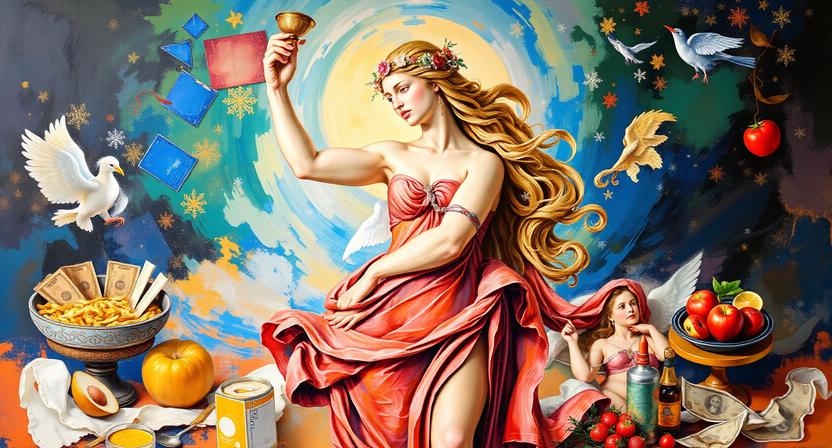

Venus in astrology is often introduced as the planet of love, but that description is only the doorway, not the room itself. Venus is the force that determines what we are drawn toward, what we value, and what we are willing to invest our time, energy, and resources into. It governs attraction in all its forms—romantic, aesthetic, material, social, and sensory. Where Venus appears in a birth chart, life asks a fundamental question: What feels worth it to me? The answer shapes relationships, finances, tastes, habits, and even survival strategies. Venus is not merely about pleasure for pleasure’s sake; it is about the mechanisms through which we sustain ourselves and create harmony with the world around us.

At a psychological level, Venus describes our internal compass of worth. It reveals how we define value—both in ourselves and in others. This includes self-esteem, self-worth, and the subtle beliefs we carry about what we deserve. A well-integrated Venus tends to feel naturally deserving of comfort, love, and beauty, while a challenged Venus may struggle with scarcity, comparison, or over-attachment. Venus teaches us that attraction is not random; we are magnetized toward what resonates with our sense of worth. In this way, Venus acts like a tuning fork, drawing experiences that match our internal valuation system.

Venus also governs pleasure, but not in an abstract or idealized way. Venus rules embodied pleasure—the kind that can be tasted, touched, smelled, seen, and enjoyed in the physical world. This includes food, texture, art, music, fashion, fragrance, and physical comfort. Venus reminds us that pleasure is not frivolous; it is essential. From an evolutionary standpoint, pleasure reinforces survival. We are drawn to nourishing food, safe shelter, fertile land, and cooperative relationships because they sustain life. Venus, therefore, bridges desire and survival, beauty and necessity.

On a material level, Venus is deeply connected to money and resources. Money is not just currency under Venus—it is stored value. Venus governs what we accumulate, how we spend, and what we believe is worth paying for. This includes income, savings, possessions, and the tangible rewards of labor. Venus does not rule ambition or effort directly; that belongs more to Mars and Saturn. Instead, Venus determines why we want what we want. It answers questions like: What kind of lifestyle feels satisfying? What purchases bring genuine fulfillment rather than fleeting pleasure? What material conditions make me feel secure and content?

Physical possessions fall squarely under Venus’s domain. Clothing, jewelry, furniture, art, cosmetics, and decorative objects all reflect Venusian energy. These items are extensions of personal value made visible. The way someone dresses, decorates their home, or curates their belongings tells a story about their relationship with Venus. A minimalist aesthetic may express Venus through simplicity and refinement, while abundance and ornamentation may reflect a Venus that delights in richness and sensory saturation. Neither is inherently better; Venus simply expresses value in different forms.

Venus also governs physical beauty, but astrology understands beauty as relational rather than absolute. Venus shows what we find beautiful, not what beauty “should” be. This includes facial features, body types, voices, movement, and personal style. Venus influences grooming habits, skincare, fashion choices, and the desire to present oneself attractively to the world. On a deeper level, Venus asks us to reconcile beauty with authenticity. When Venus is healthy, physical beauty becomes a form of self-expression rather than a performance for approval.

Food and sustenance are another key manifestation of Venus. While the Moon often governs hunger and emotional nourishment, Venus rules enjoyment of food and the pleasure of eating. This includes taste preferences, culinary traditions, indulgence, and the social rituals surrounding meals. Venusian food is not rushed or purely functional; it is savored. Meals become experiences, expressions of culture, love, and value. This is why Venus is linked to cooking for others, dining atmospheres, and the joy of sharing food as a bonding act.

In relationships, Venus describes how we give and receive affection. It shows what makes us feel loved and how we demonstrate care in return. Venus does not rule passion or conflict—that is Mars—but rather harmony, cooperation, and mutual enjoyment. Venus seeks balance. In romantic partnerships, it governs dating, courtship, affection, and shared pleasures. In friendships and social connections, Venus reveals how we create goodwill and social ease. A strong Venus tends to smooth interactions, while a strained Venus may struggle with people-pleasing, dependency, or withdrawal.

Venus also governs compromise and diplomacy. It is the principle that says peace is sometimes more valuable than winning. This does not mean Venus avoids conflict at all costs, but rather that it weighs the relational and aesthetic consequences of discord. In social and professional settings, Venus influences manners, charm, tact, and the ability to create pleasant environments. It plays a major role in negotiations, customer relations, and any situation where mutual benefit matters more than dominance.

On a psychological level, Venus is closely tied to attachment patterns. It reveals how we bond, what we fear losing, and how we respond to separation or rejection. A person with a strong Venus emphasis may prioritize connection and shared enjoyment, while someone with a challenged Venus may oscillate between craving closeness and fearing dependence. Venus teaches that attachment itself is neutral; the challenge lies in whether value is exchanged freely or hoarded out of insecurity.

Venus also has a shadow side, which emerges when value becomes distorted. Overindulgence, laziness, materialism, vanity, and avoidance of discomfort are all potential Venusian imbalances. When Venus is overemphasized, pleasure can replace purpose and comfort can override growth. Conversely, when Venus is suppressed or wounded, life may feel joyless, barren, or deprived. The lesson of Venus is not to choose pleasure or discipline, but to integrate pleasure into a meaningful life.

In astrology, Venus also rules the economy of energy exchange. It governs giving and receiving—not just money, but time, affection, attention, and effort. Healthy Venus energy understands reciprocity. It knows when to give generously and when to protect resources. Many issues around burnout, resentment, or scarcity stem from Venusian imbalances, where value is not honored or exchanges feel unfair.

Venus has a strong connection to creativity and artistic expression. Art, music, dance, design, and fashion are all Venusian channels. These are not merely hobbies under Venus; they are ways of translating value into form. Creative work allows Venus to externalize inner taste and preference, turning subjective feeling into tangible beauty. This is why Venus is often prominent in the charts of artists, designers, chefs, and performers.

In the body, Venus rules areas associated with symmetry, softness, and attraction. This includes the skin, lips, kidneys, throat, and reproductive harmony. Venus governs balance within the body, particularly the balance between effort and rest, stimulation and relaxation. Physical conditions related to Venus often involve issues of excess or deficiency—too much sugar, too little pleasure, too much indulgence, or too much restriction.

Venus also plays a role in values and ethics, though not in a moralistic sense. It shows what feels “right” rather than what is objectively right. This can influence political tastes, cultural preferences, and lifestyle choices. Venus does not argue; it gravitates. It shapes opinion quietly through attraction and aversion rather than logic or force.

In a broader sense, Venus governs peace, art, and civilization itself. Societies flourish when Venusian principles are honored—when beauty is valued, resources are shared fairly, and pleasure is not criminalized. Venus represents the civilizing impulse, the desire to make life not just survivable, but enjoyable. Without Venus, existence becomes harsh and utilitarian; without structure, Venus becomes decadent. Balance is the goal.

Ultimately, Venus teaches that value is creative. What we value shapes what we build, what we protect, and what we allow ourselves to enjoy. Through Venus, astrology reminds us that attraction is a form of intelligence, pleasure is a form of wisdom, and beauty is not separate from survival. Venus asks us to live in a way that honors both our senses and our self-worth, weaving love, material stability, and enjoyment into a coherent life.

To understand Venus in your chart is to understand why certain things feel worth wanting, why some pleasures nourish while others drain, and how you can align your inner sense of value with the tangible world around you. Venus is not just the planet of love—it is the principle that answers the question: What makes life feel truly worth living?