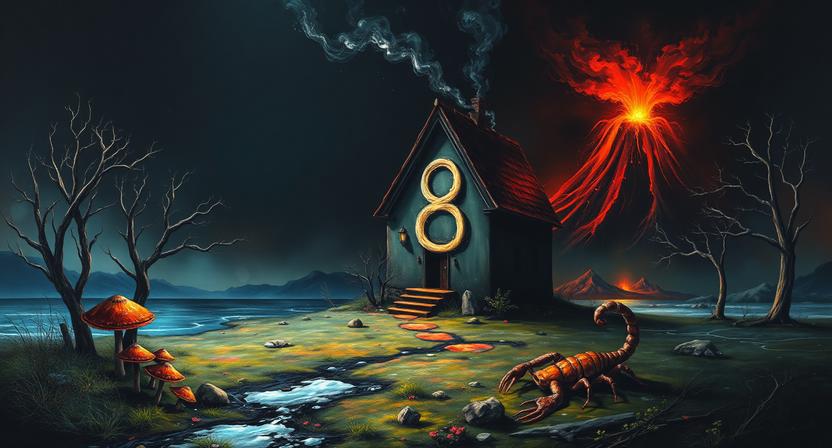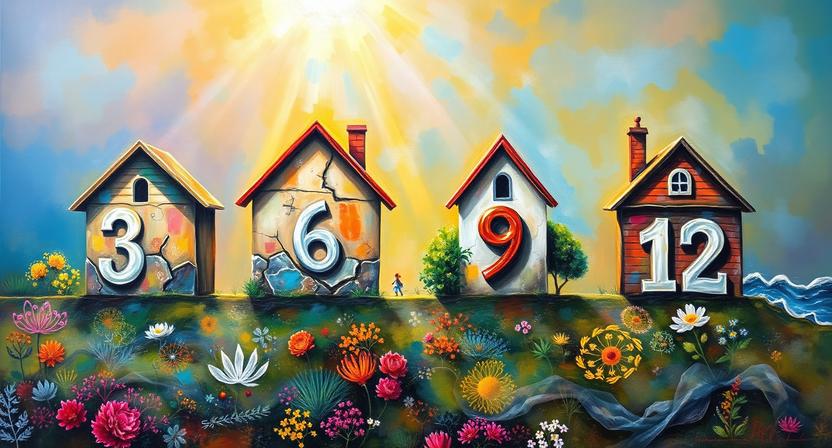


The Succedent Houses in Astrology: Where The Horoscope Stabilizes
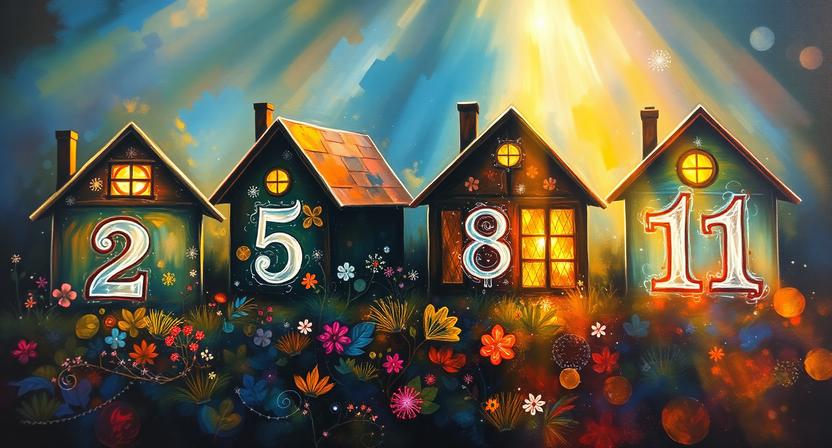

In astrology, the succedent houses represent the phase of life that follows initiation. Where the angular houses ignite experience and thrust us into action, the succedent houses ask a quieter but equally important question: What do you do with what you’ve begun? These houses are not about first contact or public confrontation. They are about continuation, maintenance, and preservation. They describe how energy is stabilized, how resources are accumulated, and how meaning is sustained over time. Without succedent houses, nothing lasts. Without them, beginnings collapse and efforts evaporate.

The word “succedent” comes from the Latin succedere, meaning “to follow after.” This alone reveals their function. Succedent houses follow the angular houses, inheriting their momentum and determining whether that momentum becomes something durable or something fleeting. They are the houses of holding, keeping, and cultivating. Unlike angular houses, which are visible and event-driven, succedent houses operate through consistency, attachment, and endurance. They do not shout. They settle in.

Astrologically, the succedent houses are the second, fifth, eighth, and eleventh. Each one follows an angular house and develops its themes in a more sustained and embodied way. These houses are associated with the fixed signs, which further emphasizes their role in stability, persistence, and resistance to change. Fixed energy does not initiate or dissolve—it maintains. This makes succedent houses deeply connected to material reality, emotional investment, and long-term consequence.

The second house follows the first, and it is here that existence becomes something that must be sustained. If the first house declares “I am,” the second house asks “What do I need in order to continue?” This is the house of resources, values, appetite, and consumption. It governs not only money and possessions, but the deeper principle of what we take in and what we hold onto. The second house reveals how life feeds itself.

The succedent nature of the second house is immediately evident in its relationship to survival. Once the body exists, it must eat. Once identity emerges, it must be supported. This is why the second house governs food, income, personal assets, and the material means of self-preservation. It is not concerned with ambition or reputation; it is concerned with having enough. Enough food. Enough stability. Enough reassurance that tomorrow can be met.

But the second house goes far beyond finances. It is the house of values, meaning what we consider worth keeping. This includes beliefs, attachments, comforts, and preferences. What someone spends money on, what they crave, what they refuse to give up—these are all second-house expressions. Because this house is succedent, these attachments tend to be strong and persistent. Once something becomes part of the second house economy, it is not easily released.

This house also governs appetite in a broad sense. Not just hunger for food, but hunger for experience, pleasure, and material engagement. The second house shows what we consume and, by extension, what we diminish through consumption. To eat is to reduce. To use is to wear down. This subtle principle reveals the second house as a place of exchange between self and environment, where sustenance comes at the cost of depletion elsewhere.

The fifth house follows the fourth and carries forward the foundation established there. If the fourth house is about roots and inner security, the fifth house is about creative expression that grows from those roots. This is the house of joy, pleasure, children, talents, and personal radiance. It is where life says, “Now that I am safe, I can play.” The fifth house is succedent because joy must be sustained to be meaningful.

The fifth house governs creativity not as effort, but as overflow. It is the act of giving form to something that already exists within. Art, performance, romance, and play all live here because they are expressions of vitality that require ongoing engagement. A talent discovered once means little unless it is practiced. A child conceived must be raised. Pleasure must be revisited again and again to remain alive.

This house is also deeply connected to recognition and appreciation, though not in the tenth-house sense of public status. The fifth house wants applause, affection, and acknowledgment on a personal level. It seeks to be seen enjoying itself. Because it is succedent, the fifth house thrives on repetition—regular hobbies, ongoing creative projects, long-term romances. It does not chase novelty for novelty’s sake; it wants continuity of delight.

Children are governed by the fifth house because they represent life extended forward. A child is not an event but a commitment. Parenting requires sustained attention, emotional investment, and long-term responsibility. This aligns perfectly with the succedent quality of the house. What is born must now be nurtured, encouraged, and supported so it can grow.

The eighth house follows the seventh, and here the succedent principle becomes more complex and intense. If the seventh house is about balance and encounter, the eighth house is about what happens after union. This is the house of shared resources, obligations, debts, inheritances, and transformations that arise from entanglement. The eighth house is succedent because bonds, once formed, create ongoing consequences.

This house governs what is shared, not what is owned outright. Money held jointly, emotional burdens carried together, secrets, contracts, and mutual dependencies all fall here. The eighth house reveals how deeply someone is willing to commit their resources to another and how they handle the loss of autonomy that follows intimacy. Once two lives intertwine, disentangling is not simple.

Despite common misconceptions, the eighth house is not inherently about sex. Sex belongs to the seventh house as an act of balance and pleasure between equals. The eighth house is about what comes after that act—attachment, obligation, and transformation. It governs the psychological and material aftermath of union, not the act itself. This distinction is crucial and often overlooked.

The eighth house is also associated with death, but not as a single event. It governs death as a process of transfer. Inheritances, legacies, and the passing of resources from one person to another all fall here. Something ends so something else may continue. This makes the eighth house profoundly succedent: it ensures continuity through redistribution rather than creation.

Transformation is a key theme here, but it is not sudden or explosive. It is slow, unavoidable change that results from sustained entanglement. Grief, healing, and psychological rebirth all belong to the eighth house because they unfold over time. This house does not initiate change; it absorbs it and reshapes the inner landscape accordingly.

The eleventh house follows the tenth and carries public action into the realm of collective continuity. If the tenth house is about achievement and authority, the eleventh house is about what those achievements contribute to the future. This is the house of friendships, communities, alliances, and long-term goals. It governs the networks that sustain influence beyond individual effort.

The eleventh house is succedent because social structures require maintenance. Friendships are not moments; they are relationships that must be tended. Causes do not advance without ongoing participation. Dreams do not materialize without repeated engagement. This house shows how someone invests energy into shared visions and collective aspirations.

Unlike the seventh house, which focuses on one-to-one relationships, the eleventh house governs many-to-many connections. It is the house of groups, audiences, and social ecosystems. These are not intimate bonds but enduring affiliations. The eleventh house reveals where someone finds belonging among peers and how they contribute to something larger than themselves.

This house is also associated with hopes and wishes, but not idle fantasies. These are goals anchored in reality, shaped by circumstance, and pursued over time. The eleventh house shows what someone is willing to work toward patiently, often without immediate reward. This makes it one of the most future-oriented houses in the chart.

What unites all succedent houses is their relationship to value over time. They are concerned with what is worth keeping, what deserves investment, and what must be managed carefully to endure. These houses resist disruption. They prefer continuity to change, familiarity to novelty, and stability to risk. This can manifest as loyalty and reliability, or as stubbornness and resistance, depending on how the energy is handled.

Succedent houses also represent emotional and material attachment. They show where we dig in our heels, where we store our treasures, and where we struggle to let go. This attachment is not inherently negative; it is necessary for building a life. But it can become limiting when growth requires release.

In the architecture of the chart, succedent houses act as the load-bearing walls. Angular houses may set the direction, but succedent houses determine whether that direction is sustainable. Cadent houses may adapt and reinterpret, but succedent houses decide what remains unchanged. They are the keepers of continuity.

Ultimately, the succedent houses answer a fundamental question: What lasts? They show how life is sustained through effort, commitment, and care. They remind us that beginnings mean nothing without follow-through, and that meaning is not created in moments alone, but through endurance, repetition, and devotion.


The Angular Houses in Astrology: Where the Sky Touches the Earth
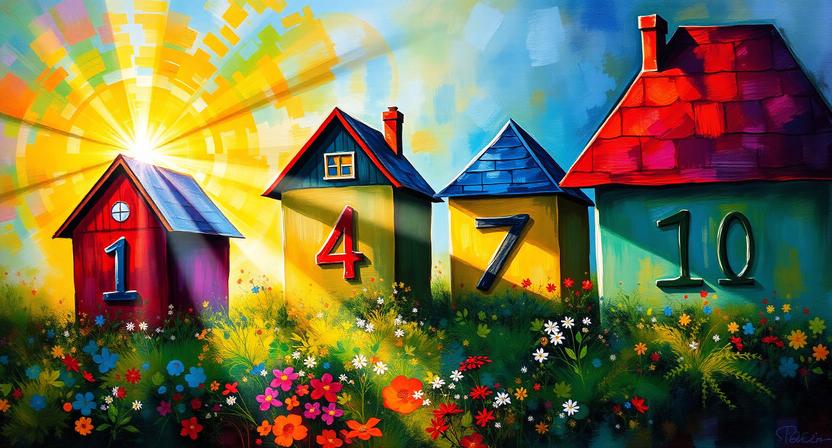

In astrology, the angular houses hold a special status that immediately sets them apart from all others. They are not subtle, hidden, or abstract. They are loud, visible, and active. When planets occupy these houses, they announce themselves in unmistakable ways, shaping the trajectory of a life through concrete events, decisive actions, and unmistakable turning points. The angular houses describe the points where the sky meets the Earth, where the symbolic becomes real, and where intention crystallizes into experience. They are the houses of doing, meeting, founding, and culminating. Without them, a chart lacks traction. With them, life moves.

The word “angular” itself comes from the idea of angles, and in astrology, angles are the most potent points in the chart. These are not arbitrary divisions. They are rooted in astronomy and lived experience. The Ascendant marks the moment a body rises over the eastern horizon, the Midheaven marks the highest point it reaches in the sky, the Descendant marks its setting in the west, and the Imum Coeli marks its lowest, darkest point beneath the Earth. These four angles form the skeleton of the chart, and the angular houses attached to them describe the four great acts of human existence: becoming, acting, relating, and rooting.

The first house begins at the Ascendant, and it is here that life enters the world. This is the house of arrival, emergence, and self-assertion. It is not simply about personality in a superficial sense. It describes the raw fact of existence as a separate being. The first house is the act of standing upright and declaring “I am.” It governs the body as a living vessel, the instinct to survive, and the way consciousness inhabits flesh. This is why planets in the first house are impossible to miss. They shape how someone moves through space, how they are noticed, and how they initiate action. The first house is not passive. It does not wait. It begins.

What makes the first house angular is its direct connection to the horizon. This is the place where the unseen becomes seen, where potential becomes form. It governs identity in motion, not identity as an idea. The Ascendant is not who someone thinks they are; it is who they are being moment by moment. This is why the first house also governs instinctual reactions and immediate responses. There is no mediation here. No negotiation. No reflection. The first house acts first and understands later. It is the spark that lights the chart.

The angular quality of the first house also explains why it is associated with vitality and health. This is not medical detail in the sixth-house sense, but life force itself. When the first house is strong, life moves forward. When it is burdened, life feels heavy to initiate. The first house shows how easily someone steps into existence each day, how naturally they take up space, and how confidently they face the world as an individual.

Opposite the first house is the seventh, anchored by the Descendant. If the first house is “I am,” the seventh house is “I meet.” This is the house of encounter, exchange, and mirroring. It governs marriage, partnerships, contracts, alliances, and declared enemies, not because these are moral categories, but because they all involve another will standing across from you. The seventh house is angular because it marks the moment where the self must recognize that it is not alone.

The seventh house is often misunderstood as merely romantic, but its deeper function is balance. It is the house where the chart corrects itself. Where the first house pushes outward, the seventh pushes back. It forces awareness of equilibrium, justice, and reciprocity. This is why law courts, negotiations, treaties, and commerce fall under this house. All of these require two sides to acknowledge one another as equals, even when they oppose each other.

The angular nature of the seventh house makes relationships unavoidable. When planets are here, life brings people into direct confrontation with others who matter. These are not background characters. They are pivotal figures who shape choices and redirect paths. The seventh house teaches that identity does not exist in isolation. It is forged through contrast. Through opposition. Through the act of standing face-to-face with someone who reflects what we are and what we are not.

This is also why the seventh house governs sex and union. Sex is not hidden or secretive here; it is an act of balance and mutual pleasure. It is the meeting point of two bodies seeking harmony and exchange. Unlike the eighth house, which dissolves boundaries and merges resources, the seventh house preserves two distinct entities choosing to connect. Sex here is about reciprocal enjoyment, not loss of self. It is pleasure achieved through alignment.

Moving from the horizon to the deepest point of the chart brings us to the fourth house, anchored by the Imum Coeli. This is the lowest angle, the place of midnight, roots, and foundations. If the first house is emergence, the fourth house is origin. It governs where we come from, what holds us up, and what remains when the world is stripped away. This is the house of home, family, ancestry, and inner security.

The angular nature of the fourth house is subtle but profound. It is not loud like the first or confrontational like the seventh, but it is just as powerful. This is the axis of gravity. The fourth house determines what someone returns to when life collapses inward. It describes the psychological basement, the emotional ground floor, and the inherited patterns that shape behavior long before conscious choice enters the picture.

Planets in the fourth house anchor a person’s life around themes of belonging and protection. This is not just the physical home, but the idea of having somewhere to land. The fourth house governs shelter in all forms, including emotional safety, private identity, and the inner world that is never fully shared. Because it is angular, these matters manifest clearly. Home is not abstract here; it is decisive.

The fourth house also relates to endings, not as death itself, but as withdrawal from public life. It is the place one retreats to after the world has taken its toll. This is why it governs old age, family legacy, and the emotional inheritance we pass on. The fourth house completes the cycle that begins in the first. One enters the world through the Ascendant and eventually seeks rest and containment at the IC.

Opposite the fourth house is the tenth, crowned by the Midheaven. This is the highest point in the chart, the place of maximum visibility. The tenth house governs achievement, reputation, authority, and public contribution. If the fourth house is where we come from, the tenth house is where we are seen. It describes what we build, what we are known for, and how our actions ripple outward into the collective.

The angular power of the tenth house cannot be overstated. Planets here seek expression through accomplishment and recognition. This is not ego for ego’s sake. It is responsibility made visible. The tenth house asks, “What are you doing with your life in the eyes of the world?” It governs career not merely as a job, but as a calling, a role that carries weight and consequence.

This house also governs authority figures, not because of hierarchy alone, but because authority represents structure imposed from above. The tenth house is where order is established and maintained. It shows how someone handles power, status, and accountability. When strong, it produces leaders. When challenged, it produces conflict with systems and expectations.

The relationship between the fourth and tenth houses is one of private versus public, inner versus outer, roots versus results. These two angular houses form the vertical axis of the chart, describing the tension between personal security and worldly ambition. Every life negotiates this axis differently, but it is always active. One cannot climb without a foundation, and one cannot hide forever without forfeiting potential.

What unites all four angular houses is their relationship to action and consequence. Unlike succedent houses, which stabilize, or cadent houses, which adapt and transition, angular houses initiate. They begin chapters. They mark turning points. They are where events happen rather than where they are processed. This is why traditional astrology considers angular planets the strongest. They are closest to the angles, closest to manifestation, closest to the physical world.

The angular houses also correspond to the cardinal signs, reinforcing their initiatory nature. Aries aligns with the first house and emergence, Cancer with the fourth and protection, Libra with the seventh and balance, and Capricorn with the tenth and authority. This cardinal quality gives angular houses a sense of urgency. They do not linger. They move life forward, sometimes forcefully.

Another defining trait of angular houses is visibility. Matters associated with these houses are rarely hidden. Identity, home, relationships, and public standing are all observable in tangible ways. When challenges arise here, they tend to be lived out in real time, through real events, with real people. There is little room for avoidance. Angular houses demand engagement.

The angular houses also serve as anchors for the rest of the chart. Each one pulls energy toward itself, shaping how neighboring houses function. The first house influences the second and twelfth, the fourth shapes the third and fifth, the seventh affects the sixth and eighth, and the tenth conditions the ninth and eleventh. In this way, angular houses act as gravitational centers, organizing experience around core life themes.

In a broader philosophical sense, the angular houses describe the human condition itself. We are born into a body, shaped by a home, defined through relationships, and measured by what we contribute. These are not optional experiences. They are universal. This is why angular houses feel so immediate and unavoidable. They reflect the fundamental structure of lived reality.

Ultimately, the angular houses show where life meets resistance and response. Where we must act, adapt, confront, and commit. They are not comfortable by default, but they are meaningful. They are where astrology stops being symbolic and starts being lived. When you understand the angular houses, you understand the engine of the chart—the places where fate presses hardest and where choice matters most.

The 7th House in Astrology: Opposition, Exchange & the Reign of Balance!

Key Takeaways: Everyone always thinks of this as the house of marriage and spouses – and it is. However, I often find in my practice that planets and signs here can just as easily take the form of opponents or trading partners. After all, the 7th House is really just about exchange of all types, whether it’s pleasant or not. It’s the house where you are counteracted, where balance attempts to establish itself.


The 7th House in astrology is the house of balance, reflection, and equivalence. It is the place where the self meets its equal and opposite, where life stops being a solo experience and becomes a negotiation between two forces. If the 1st House is the declaration of I am, then the 7th House is the question that follows: Who stands across from me?

This house governs marriage, committed partnerships, trade, contracts, justice, sex, and even death—not because it is dark or destructive, but because it is the point where one thing must meet another and be measured against it. The 7th House is the horizon of the birth chart. It is the line where day begins to turn into night, where the individual must acknowledge the presence of something other than themselves.

At its core, the 7th House is about what is fair, what is equal, and what brings equilibrium. Every theme associated with this house—romance, commerce, law, union, rivalry—flows naturally from that single principle.

The 7th House as the House of Balance

Balance is the soul of the 7th House. This is not balance as vague harmony or emotional calm, but balance as proportion, symmetry, and counterweight. The 7th House asks whether two forces can stand opposite one another without tipping the scales too far in either direction.

In the zodiac, the 7th House aligns with Libra, the sign of the scales, and this symbolism is not accidental. Libra is not about peace at any cost; it is about weighing, comparing, and adjusting. The 7th House inherits this function and applies it to lived experience.

Whenever we enter a relationship, sign a contract, make a trade, or engage another person in any serious way, the 7th House is activated. It governs situations where mutual recognition is required. One side cannot exist without the other. There must be agreement, or at least acknowledgment.

This is why imbalance in the 7th House often shows up as unfair relationships, unequal power dynamics, one-sided effort, or broken agreements. When the 7th House is functioning well, both parties feel seen, matched, and met.

Marriage, Spouse, and Long-Term Partnership

Marriage is one of the most well-known associations of the 7th House, but it is important to understand why marriage belongs here. Marriage is not simply romance. It is a binding agreement between equals, a formal recognition that two individuals will operate as counterparts.

The spouse in astrology is not shown by the 5th House of dating or pleasure, but by the 7th House because marriage requires balance, compromise, and reciprocity. A spouse is someone who stands opposite you, mirrors you, challenges you, and completes you—not by erasing difference, but by holding it in tension.

The 7th House describes the type of partner one attracts, the dynamics within committed unions, and the way one behaves when forced to account for another person’s needs as equal to their own. This is the house of “we”, not “me.”

Marriage, in its ideal form, is a living scale. When one person leans too far, the other adjusts. When one falters, the other compensates. This constant re-balancing is pure 7th House work.

Sex, Union, and the Myth of the 8th House

Everyone thinks that sex belongs to the sign of Scorpio and the 8th House. However, I find in my practice that that is simply not true. And there’s logical reason for it.

Sex and sex drive are not the same thing. The act of making love is not the same as your libido. They are two separate things.

The libido is painful. Sex is pleasant.

The libido or what some might describe as “horniness” – is that uncomfortable force inside of us that makes us want to have sex. It isn’t really a pleasant sensation when you think about it. It’s pressurized and urgent and scathing. Which is why it belongs to the planet of acute pain (Mars) and it’s secondary sign – Scorpio.

Sex on the other hand, is perfectly Libran when you think about it. It’s where two humans (or animals) come together and form a balanced physical and emotional union. It’s about complimentary anatomy. It’s about equilibrium. And…it is pleasurable! Which is why I argue that sex really falls under the domain of Venus (the planet of pleasure) and its primary sign – Libra.

Exchange, Trade, and Commerce

Trade is one of the clearest expressions of 7th House symbolism. Every trade assumes equivalence. One item, service, or resource is exchanged for another of presumed equal value. If the exchange is unfair, the trade fails.

This is why commerce, contracts, and negotiation all belong to the 7th House. These are not solitary acts. They require another party. They require agreement. They require balance.

Markets function on trust that value will be honored. Contracts exist to ensure fairness. Bargaining is the art of finding the point where both sides feel satisfied.

The 7th House governs not only personal relationships but also economic relationships. It shows how a person negotiates, what they demand, what they offer, and whether they tend to overgive or undercharge themselves.

Even modern capitalism, at its most abstract, still rests on the 7th House principle that exchange should be mutually beneficial.

Justice, Fairness, and the Law

Justice is balance applied to society.

The 7th House governs courts, lawsuits, legal agreements, and arbitration because law exists to restore equilibrium when balance has been broken. A crime is an imbalance. A lawsuit is an attempt to correct it.

Judges, lawyers, and mediators operate in the realm of the 7th House. They weigh evidence, hear both sides, and attempt to render a fair outcome. The imagery of Lady Justice holding scales is pure 7th House symbolism.

This house does not promise kindness—it promises proportion. Justice may feel harsh, but its purpose is balance, not mercy.

On a personal level, the 7th House describes one’s internal sense of fairness. Do you seek equality in relationships? Do you tolerate injustice to avoid conflict? Do you demand perfect symmetry, or are you willing to accept imperfection?

Wherever the 7th House is emphasized, issues of fairness will be unavoidable.

Opposition, Rivals, and Open Enemies

Not all 7th House relationships are pleasant. This house also governs open enemies, rivals, and declared opponents. This may seem contradictory until we remember that enemies are still counterparts.

An enemy is someone who stands clearly across from you. There is recognition, confrontation, and engagement. Unlike hidden enemies, who belong elsewhere in the chart, 7th House enemies are visible and acknowledged.

This includes business competitors, legal adversaries, and personal rivals. These relationships are still balanced in a strange way—each party recognizes the other’s power.

Opposition is a defining feature of the 7th House. Astrologically, it is the house directly opposite the 1st, and this geometric reality shapes its meaning. The 7th House is what pushes back against the self, forcing growth through confrontation.

Death as the End of Balance

At first glance, death seems like an odd inclusion in the 7th House. Yet symbolically, it makes sense. Death is the moment when the balance between body and soul breaks.

Life exists because forces are held in equilibrium. Breath in, breath out. Tension and release. When that balance fails, life ends.

The 7th House does not govern death as transformation—that belongs to the 8th. Instead, it governs death as the severing of union, the point where the partnership between consciousness and form dissolves.

In older astrological traditions, the 7th House was associated with the end of life because it represents the final confrontation with the “other”—whether that other is fate, time, or mortality itself.

Contracts, Agreements, and Promises

Any formal agreement belongs to the 7th House. Contracts exist because humans understand that balance must be defined and protected.

Marriage contracts, business deals, legal documents, and even spoken promises are all 7th House matters. They formalize exchange and set boundaries so that fairness can be maintained over time.

A strong 7th House often indicates someone who takes agreements seriously. A challenged 7th House can show broken promises, unfair terms, or fear of commitment.

This house asks: Can you meet another person halfway and stay there?

The Shadow Side of the 7th House

When the 7th House is distorted, balance becomes obsession. One may become overly focused on pleasing others, terrified of conflict, or dependent on external validation.

Alternatively, imbalance can manifest as constant opposition—seeking enemies everywhere, turning every relationship into a power struggle.

Because the 7th House is about the other, it can also become a projection screen. People may blame partners for internal issues or expect others to complete them.

True 7th House mastery comes from recognizing that balance begins within, even though it is tested through others.


Ultimately, the 7th House is a mirror. It reflects back what the self cannot see alone. Partners reveal our blind spots. Enemies expose our weaknesses. Contracts show us our values.

The 7th House teaches that life cannot be lived in isolation. Every meaningful experience requires an exchange. Every bond demands fairness. Every union asks for balance.

This is why the 7th House governs sex, marriage, justice, trade, and opposition alike. These are not separate themes—they are variations on a single truth:

Balance is created when two forces meet and recognize one another as equal.

The 7th House is where that recognition happens.

The 6th House in Astrology: Injuries, Restraint, Duty & What Must Be Done


The 6th house is the part of the astrological chart where life becomes unavoidable. It describes the conditions under which existence stops feeling optional and begins to feel compulsory. This is the house where the body must be managed, where time must be accounted for, and where effort must be repeated regardless of desire, inspiration, or emotional readiness. The 6th house does not represent what we hope for or move toward. It represents what we must deal with simply because we are alive in a physical world that demands upkeep, labor, and correction.

Across astrological traditions, the 6th house has been understood as a place of strain and submission. In classical Western astrology, it was associated with illness, servitude, labor, and misfortune. In Vedic astrology, it is categorized as a dushtana, a house that generates suffering through conflict, imbalance, and effort. Yet the suffering of the 6th house is rarely dramatic. It does not arrive all at once. Instead, it accumulates slowly through routine, repetition, and necessity. It is the suffering of having to continue.

The 6th house shows us life when it must be maintained rather than enjoyed, endured rather than escaped.

Necessity & Compulsion

The central theme of the 6th house is necessity overriding choice. This is the house where circumstances remove alternatives and reduce life to a narrow set of required actions. The situations governed by the 6th house are not chosen freely. They exist because something will deteriorate, collapse, or fail if they are ignored. Health declines, systems break, consequences appear. Action becomes mandatory.

This is why the 6th house is associated with survival labor. It represents the ongoing effort required to keep things from falling apart. In this house, the question is never what you want to do. The question is what you must do in order to keep functioning. The pressure is constant, and the margin for error is small.

Discipline & Restraint

Discipline in the 6th house is not aspirational. It is corrective. It exists because something fragile must be protected or controlled. This house governs forms of discipline that arise when excess produces harm and freedom produces instability. Diets, regimens, schedules, and restrictions all belong here, not as lifestyle choices, but as necessities.

Restraint in the 6th house is deeply bodily. The body must be regulated, monitored, and managed. Impulses are suppressed not because they are immoral, but because they are impractical. Over time, this produces a relationship to discipline that is rigid and mechanical. The body learns compliance through repetition, and deviation becomes associated with punishment or breakdown.

Duty & Obligation

The 6th house is one of the primary houses of duty. It governs responsibilities that cannot be postponed indefinitely and obligations that persist regardless of emotional state. These are not duties taken on for meaning or recognition. They exist because life demands them.

This house shows where a person feels permanently “on the clock.” There is always something that must be done, monitored, corrected, or completed. Rest, when it occurs, feels conditional and temporary. The sense of obligation never fully disappears, because the conditions that created it never fully resolve.

Debt & Survival Economy

Debt is a defining concept of the 6th house. This debt may be financial, physical, or symbolic, but it always requires repayment through effort. Work in the 6th house is not performed for fulfillment. It is performed to avoid loss, punishment, or collapse.

Historically, the 6th house governed servants because service was the price of survival. Modern systems have changed the surface structure, but the underlying dynamic remains. The 6th house describes labor that sustains systems rather than elevates individuals. It is the economy of endurance, not aspiration.

Service & Servitude

Although often softened in modern astrology as the house of service, the 6th house originally described servitude, not voluntary contribution. This house governs situations in which one person’s time, energy, or body is claimed by another, usually within a hierarchy that limits autonomy.

Service in the 6th house is not romantic. It is repetitive, unequal, and frequently exhausting. The individual serves because refusal carries consequences. Even when service is chosen, the house reveals where it becomes burdensome, obligatory, or draining over time.

Slavery & Power Imbalance

At its core, the 6th house reflects asymmetry of power. Someone commands. Someone complies. Someone benefits. Someone labors. This imbalance is embedded in the symbolism of the house and explains its historical association with slavery and forced labor.

Even in contemporary contexts, the 6th house often describes environments where autonomy is restricted and compliance is rewarded. Time is regulated. Output is monitored. Deviation is punished. The body becomes a resource to be used.

Imprisonment & Forced Routine

The 6th house governs forms of confinement that revolve around routine and obligation. Unlike the 12th house, which removes individuals from daily function, the 6th house traps them within it. One must continue to perform tasks, follow schedules, and meet expectations even while confined.

This includes literal imprisonment, institutionalization, and medical confinement, but it also includes life situations where escape is not possible and repetition is mandatory. The defining feature is not isolation, but compulsion.

Celibacy & Abstinence

The 6th house governs abstinence imposed by necessity. This includes sexual restraint, fasting, and denial of pleasure that arises not from spiritual aspiration, but from practical or medical requirement. The body is denied indulgence because indulgence produces harm, imbalance, or risk.

Pleasure in the 6th house is always conditional. It must be earned, postponed, or eliminated entirely in order to preserve function.

The Body as a Site of Control

In the 6th house, the body is not celebrated. It is managed. This house shows where the body becomes a problem to be solved rather than a source of joy. Symptoms must be tracked. Behaviors must be adjusted. The body is scrutinized and corrected.

This is why the 6th house is so closely tied to health. It represents the ongoing negotiation between bodily limits and life’s demands. The body is expected to perform, even when strained.

Illness & Breakdown

The 6th house governs illness that arises from wear, stress, and repetition. These are conditions that develop slowly through overuse and neglect. They are rarely dramatic. Instead, they require ongoing management and impose long-term restrictions.

Illness in the 6th house does not remove one from responsibility. It adds more of it. Treatment becomes another routine, another obligation layered on top of an already demanding structure.

Infection & Contamination

Infection is a central theme of the 6th house because it represents breach. Boundaries are crossed. Foreign matter enters the system. The body must respond through defense, effort, and vigilance.

This house governs environments where cleanliness, hygiene, and purification become constant concerns. It reflects the reality that bodies exist in hostile ecosystems and must continuously protect themselves.

Wounds & Injury

The 6th house governs injuries such as cuts, strains, fractures, and stress injuries. Whether the injury comes from labor, recreation or conflict…the 6th House is the place where the body breaks.

That’s why it’s the house of Virgo – mutable Earth. To mutate is to change or break the natural pattern. The Earth is the body.

Combine them…and you’ve got some unpleasant things to deal with.

Cracks & Fissures

One of the most literal meanings of the 6th house is fracture. This house governs cracks in the body and in the earth. It represents matter being split, cut, or divided so that it may be processed or used.

This is the house of the plow, the knife, and the scalpel. Intact things do not remain intact here.

Mutable Earth

Elementally, the 6th house is mutable earth. This is earth that is not preserved, but worked. Soil is turned. Food is chopped. Bodies are conditioned. Matter is repeatedly manipulated to serve function.

Nothing rests in the 6th house. Everything is subjected to effort.

Habit & Conditioning

Over time, the demands of the 6th house produce habitual behavior. The body learns compliance. The mind learns routine. Action becomes automatic.

This conditioning is powerful. It reshapes identity through repetition rather than choice. People with strong 6th-house emphasis often struggle to stop working, even when exhausted, because rest feels unsafe.

Conflict & Daily Struggle

Traditionally, the 6th house also governed enemies, particularly those encountered through ongoing conflict rather than dramatic opposition. These struggles are not singular events. They are persistent frictions that drain energy over time.

They must be managed continually.

The Dushtana Nature of the 6th House

In Vedic astrology, the 6th house is considered a house of suffering because it represents imbalance that demands correction. The suffering here is not purposeless. It forces adaptation. It exposes weakness. It demands effort.

The 6th house does not destroy outright. It wears down.

Psychological Weight

Psychologically, the 6th house is where guilt and obligation merge. It is where self-worth becomes tied to usefulness and productivity. Where rest feels undeserved. Where failure feels dangerous.

This house produces endurance, but often at the cost of ease.


The 6th house does not promise happiness. It promises functionality. Those who master this house learn how to survive systems that would overwhelm others. They become resilient, precise, and reliable.

The 6th house is not where we dream.

It is where we keep going.

The 5th House in Astrology: Talents, Kids, Fame & Blessings of All Kinds!

Key Takeaways: When in doubt, just remember that the 5th House is the house of gifts. A child is a gift. A talent is a gift. An inheritance is a gift. Intelligence is a gift. These are things that are given, not earned. That’s what the 5th House is all about. And because its the natural domain of Leo, you’ll find that planets and signs in this house often coincide with light, lions (cats) and the sun.


The 5th House in astrology is one of the most joyful, expressive, and visibly radiant places in the birth chart. It is the house where life wants to be seen, where existence steps forward and says, “Look at me.” If the 1st House is the fact of being alive, and the 2nd House is what sustains life, and the 3rd House is what we actively develop and pursue, the 5th House is where life celebrates itself.

This house governs pleasure, creativity, performance, play, romance, children, applause, luck, and blessings that arrive without effort. It shows what flows naturally from you, what emerges spontaneously, and what seems to shine without trying. The 5th House is not about survival or struggle. It is about expression, enjoyment, and recognition.

Traditionally associated with Leo and the Sun, the 5th House carries a solar quality. It wants warmth, visibility, and appreciation. It is the house of being noticed—not for what you work hard at, but for what you simply are.

The Spotlight

At its core, the 5th House is the house of the spotlight. It governs moments when attention naturally turns toward you, whether you seek it consciously or not. This is the place in the chart that shows how you stand out, how you draw eyes, and how you occupy center stage in the theater of life.

Unlike the 10th House, which deals with public reputation and earned authority, the 5th House spotlight is personal and immediate. It is not about status or titles. It is about presence. It reflects the moments when others instinctively watch you, listen to you, or respond to your energy.

This can show up through performance, humor, charisma, creativity, or sheer vitality. Some people command attention by speaking. Others by moving, competing, or creating. Whatever sign and planets occupy the 5th House describe how this spotlight functions and what draws people in.

Importantly, the 5th House does not require permission. It does not wait for credentials. It simply shines. This is why it is so closely linked to confidence, pride, and self-expression. When this house is activated, life feels like a stage—and you are meant to step into the light.

Gifts, Talents & Blessings

One of the most essential meanings of the 5th House is what you are given rather than what you earn. This is where your interpretation is especially accurate and important.

The 5th House reveals natural gifts, talents, blessings, and luck—things that seem to come easily, sometimes mysteriously, and often without deliberate effort. These are abilities or advantages that feel innate. They are present early in life and tend to activate automatically when circumstances allow.

This is fundamentally different from the 3rd House, which describes skills developed through repetition, effort, learning, and persistence. The 3rd House is what you build. The 5th House is what you receive.

Someone with a strong 5th House may not even recognize their gift at first because it feels normal to them. Others, however, see it immediately. This is often why 5th House talents attract recognition or admiration—they stand out precisely because they are effortless.

Luck also belongs here. Not the calculated luck of strategy, but fortunate timing, happy accidents, and unexpected wins. The kind of luck that appears when you follow joy, take a risk, or allow yourself to play. The 5th House rewards courage and authenticity rather than discipline.

Appreciation & Applause

Closely tied to the spotlight is the theme of being appreciated, admired, and applauded. The 5th House governs applause in both literal and symbolic forms. It shows how and where you receive positive feedback, praise, and affirmation simply for expressing yourself.

This is the house of being loved for who you are, not evaluated for what you accomplish. Compliments, cheers, laughter, admiration, and romantic attention all fall under this domain. It is the emotional reward of being seen and enjoyed.

When the 5th House is emphasized, people often feel deeply affected by whether they receive appreciation or not. Lack of recognition can feel personal, while praise feels life-giving. This is because the 5th House feeds the ego in its healthiest sense—the sense that your presence matters.

This house also shows how you respond to appreciation. Some soak it in. Some deflect it. Some need it to feel alive. Others give it generously to others. Whatever planets reside here reveal the relationship between self-expression and validation.

Children & Progeny

The 5th House has long been associated with children, progeny, and offspring, both literal and symbolic. On a literal level, it can describe experiences with having children, relationships with them, and the joy or pride they bring.

But astrologically, children are not just biological. They are extensions of the self—creations that carry your essence forward. In this way, the 5th House governs anything you “give birth” to: art, projects, ideas, performances, or passions that feel like your own living creations.

This is why creative works are often described as someone’s “babies.” The emotional bond, pride, protectiveness, and joy mirror the 5th House experience exactly. Whether it is a child, a novel, a business idea, or a performance, the 5th House shows how you relate to what you bring into the world.

It also reflects the joy of watching something grow and express itself independently—a deeply 5th House experience rooted in love rather than obligation.

Creativity & Self-Expression

Creativity in the 5th House is not about mastery or technique. It is about expression for its own sake. This house rules art, play, performance, and any activity done because it feels good, not because it is productive.

This includes music, acting, writing, painting, dancing, fashion, and personal style—but also humor, storytelling, flirtation, and dramatic flair. Creativity here is spontaneous and emotionally driven. It is fueled by joy, desire, and inspiration.

The 5th House asks: What happens when you let yourself express freely? It is where individuality takes shape in visible form. Even people who do not consider themselves “artistic” still express their 5th House through how they play, love, entertain, or take risks.

When this house is suppressed, life can feel dull or overly serious. When it is honored, life regains color, pleasure, and meaning.

Performance & Play

The 5th House governs performance in all its forms, including plays, theater, sports games, competitions, and public displays of talent. Anywhere there is an audience, a score, or a moment of excitement, the 5th House is active.

In sports, this house rules athletes not as professionals earning a living (that belongs more to the 10th), but as players engaged in the joy of the game. It rules spectatorship as well—the thrill of watching, cheering, and emotionally investing in performance.

Play itself is sacred in the 5th House. Games, hobbies, amusement, and fun are not seen as distractions but as essential expressions of life force. This is why children are naturally aligned with this house—they play because it is how life expresses joy.

Risk also enters here. The 5th House rules gambling, speculation, and chance—not because of recklessness, but because it embraces uncertainty and excitement. It is willing to risk something for the thrill of possibility.

Romance & Pleasure

Romance is another key domain of the 5th House. Unlike the 7th House, which governs committed partnership, the 5th House rules courtship, attraction, and the spark of desire. It is the flirtation stage, the butterflies, the thrill of being chosen and admired.

This is love as play rather than obligation. Romance here is expressive, dramatic, and emotionally vivid. It wants passion, excitement, and pleasure. It thrives on attention and mutual enjoyment.

Pleasure of all kinds falls under this house: physical pleasure, sensual enjoyment, laughter, celebration, and indulgence. The 5th House is where life says yes to enjoyment without guilt.

Luck & Favor

The 5th House has long been called a house of good fortune, but its luck operates in a specific way. It is not the luck of careful planning or long-term investment. It is the luck that arises when you act from joy, confidence, and authenticity.

This is why following 5th House impulses often leads to fortunate outcomes, even if they seem irrational at first. This house trusts life. It believes that when you express your true nature, doors open.

Planets placed here often indicate areas where life seems to offer favor, protection, or ease. These blessings are not earned through effort but activated through participation. You have to show up, play, create, or risk—but you do not have to struggle.

The 5th House Versus the 3rd House

The contrast between the 5th and 3rd Houses is essential for understanding both.

The 3rd House is about effort, learning, repetition, and skill-building. It governs what you acquire through practice, trial and error, and persistence. It is where you hustle, train, and improve.

The 5th House, by contrast, shows what is already alive within you. It is not learned—it is revealed. While the 3rd House says, “Go get it,” the 5th House says, “Let it out.”

Both houses matter. Gifts still need expression, and skills still benefit from joy. But astrologically, knowing the difference between what you must work for and what you are already blessed with can be life-changing.

Joy as a Life Principle

Ultimately, the 5th House is about joy—not as luxury, but as a vital force. It reminds us that life is not meant to be endured alone. It is meant to be celebrated, shared, and enjoyed.

This house shows where your heart lights up, where your spirit feels alive, and where your presence makes life brighter for others. When honored, it restores confidence, vitality, and meaning.

The 5th House teaches that joy is not frivolous. It is creative power in motion. It is the soul expressing itself simply because it exists.

And when that happens, the world watches.

The 4th House in Astrology: Shells and Shelters of All Types!

Key Takeaways: The 4th House in astrology is the house of Cancer the crab. Where do crabs live?? Inside a shell! As in shel………ter. Shells. Shelter. Things that house or protect. Dwellings. Containers. Armor. Helmets. Mothers. All things that incubate or insulate – including cars. Planets and signs in this house tend to become crablike in some way – they are sheltered.


The 4th House sits at the very bottom of the astrological chart, and that position alone tells you nearly everything you need to know about it.

This is not a visible house.
It is not performative.
It is not concerned with achievement, recognition, or outward motion.

The 4th House is the underground.

It is the place where things begin before they are seen, where causes exist before effects, where life gathers itself inward before it ever attempts to rise. If the Midheaven shows what we become in the world, the 4th House shows what we came from, what we carry, and what quietly supports us when no one is watching.

This is why the 4th House governs homes, shelter, mothers, ancestry, roots, the past, pregnancy, emotional security, and the containers that protect life itself. It is the house of interiority—of what holds, houses, shelters, and sustains.

In Vedic astrology especially, the 4th House is associated with happiness, peace, and contentment, not because it is exciting, but because it is safe. It is the relief of being held. The calm of being protected. The sense that one belongs somewhere, even if nowhere else.

The 4th House is not about movement forward.
It is about being able to rest at all.

Shells & Containers

At its most literal level, the 4th House governs shelter in all forms.

Houses, apartments, buildings, tents, caves, fortresses, walls, chests, boxes, vaults, wombs, armor, helmets—anything designed to enclose, protect, or contain falls under the 4th House domain. This is not merely about comfort. It is about survival.

The 4th House is the architectural principle of protection. It represents the instinct to cover, to shield, to insulate, to place something valuable inside something stronger.

This is why the 4th House is not limited to domestic homes. A soldier’s armor is a 4th House object. A turtle’s shell is a 4th House structure. A vault protecting gold, a safe protecting documents, a chest protecting organs—these are all manifestations of the same archetype.

The 4th House does not ask what something does.
It asks what keeps it intact.

Psychologically, this translates into emotional defenses, coping mechanisms, and internal boundaries. A strong 4th House creates an inner sense of safety. A damaged or unstable one can produce hypervigilance, withdrawal, or an endless search for security.

The quality of one’s 4th House often determines whether the world feels survivable at all.

Moms & Maternal Figures

The 4th House is traditionally associated with the mother, but more accurately, it governs the experience of being mothered.

This includes biological mothers, adoptive parents, grandparents, caregivers, and any figure who provided protection, nourishment, emotional containment, or a sense of home. It is not about gender—it is about function.

The 4th House describes how care was given, how safety was modeled, and whether the world initially felt like a place that would hold you or expose you.

This is why the 4th House is so deeply tied to emotional memory. The nervous system forms its earliest expectations here. Long before belief or identity, the body learns whether it is safe to relax.

A well-supported 4th House often produces an inner steadiness that remains even when external life is chaotic. A challenged 4th House can produce longing, nostalgia, or a sense of homelessness that no physical structure quite resolves.

The 4th House mother is not necessarily kind or gentle. She may be strict, distant, anxious, or overprotective. What matters is not intention, but imprint.

The 4th House records how care felt.

Roots & Origins

Because the 4th House sits at the bottom of the chart, it governs origins.

It represents the root of things—the underlying cause beneath visible behavior, the emotional or ancestral source from which actions grow. This is not the house of events. It is the house of conditions.

If the 1st House is what is happening now, the 4th House is what had to happen before now was possible.

This is why the 4th House governs family lineage, ancestry, inherited patterns, and the psychological soil in which personality develops. It shows what is taken for granted, what is assumed to be normal, and what exists so deeply beneath awareness that it feels like truth.

The 4th House is causal, not expressive.
It shapes without announcing itself.

This is also why the 4th House is associated with land, foundations, and real estate. These are not mobile assets. They are fixed. They support everything above them. If the foundation is unstable, nothing built on top can remain secure.

The Past

The 4th House is inherently linked to the past—not as nostalgia, but as gravity.

The past exerts force. It pulls. It anchors. It explains why certain reactions feel automatic, why some fears arise without context, and why some places feel like home even when they no longer exist.

This house governs childhood memories, early emotional conditioning, and the invisible habits formed long before conscious choice was available. It is the archive of feeling.

Unlike the 12th House, which dissolves memory, the 4th House preserves it. It keeps emotional history alive within the body.

This is why transits to the 4th House often coincide with relocations, family reckonings, ancestral revelations, or emotional regressions. Something old is being reactivated—not to punish, but to be acknowledged.

The 4th House does not demand progress.

It demands recognition.

Pregnancy & The Womb

Pregnancy belongs to the 4th House because it is the purest expression of containment.

Before birth, life exists entirely inside a protected environment. It is nourished, insulated, and hidden. It does not act. It does not choose. It develops quietly.

This is the 4th House state.

The house governs gestation of all kinds—not just physical pregnancy, but emotional and creative incubation. Ideas, identities, and futures often develop invisibly here before they are ready to be seen.

The 4th House reminds us that not all growth is outward. Some growth requires darkness, stillness, and enclosure.

This is why rushing a 4th House process often backfires. What belongs here must mature internally before it can survive exposure.

Rain, Tears & Rivers

The 4th House governs running water—streams, rivers, rain, and subterranean flows. It also governs crying, emotional release, and the movement of feeling through the body.

Water here is not dramatic or destructive. It is soothing, sustaining, and cyclical.

Rain nourishes the ground. Tears regulate the nervous system. Flow prevents stagnation.

This is why emotional expression is essential to 4th House health. When feeling is blocked, the inner environment becomes brittle. When it is allowed to move, stability returns.

The 4th House teaches that containment does not mean suppression. A strong container allows flow without collapse.

Contentment & Satisfaction

In Vedic astrology, the 4th House is considered one of the primary indicators of happiness and contentment.

This is not the happiness of excitement or success. It is the happiness of peace. Of being able to sit down. Of being able to sleep. Of not being internally threatened.

This kind of happiness cannot be faked. It arises when the inner environment is stable.

Material success without 4th House peace often feels hollow. But even modest lives with strong 4th House support can feel deeply satisfying.

This is why the 4th House is sometimes described as the house of emotional wealth. It shows whether comfort exists internally, regardless of circumstance.

The Shadow of the 4th House

When distorted, the 4th House can manifest as emotional withdrawal, fear of exposure, excessive attachment to the past, or resistance to change.

It can become a bunker instead of a home. Protection turns into isolation. Memory turns into fixation.

But the solution is never abandonment of the 4th House. It is repair.

The 4th House heals through rebuilding safety, redefining home, and learning that containment can coexist with openness.


Everything visible rests on something invisible. The 4th House is that invisible support. It is the ground beneath ambition, the emotional infrastructure beneath personality, the shelter beneath action.

Without it, life may move—but it will never feel secure. The 4th House does not seek recognition. It seeks continuity.

It is the place where life returns when it is tired.

The place where it begins again when everything else collapses.

And in that sense, the 4th House is not only about the past. It is about what allows the future to exist at all.

The 3rd House in Astrology: Who Copies You & What You Make Grow

Key Takeaways: The 3rd House is arguably one of the most misunderstood houses. Everybody thinks it’s just about communication. But on a more relative level, it’s really the house of who copies/records you…as well as what you cause to amplify or grow. Focus on those two things, and readings will begin to make more sense. Oh and because it’s the natural house of Gemini, I find that planets and signs in this house manifest very often in a written or coded way….such as books or software.


The 3rd House in astrology is not really the house of “small talk”, although it’s often considered that. Rather, it is the house of echoes—of repetition, rehearsal, imitation, and the strange power that arises when something is done again and again. It is the house of the younger sibling, not because siblings are casual, but because younger siblings watch. They listen. They copy. They remember. They repeat. They record the world not as philosophy, but as pattern. And that’s what the 3rd house is all about.

If the 1st House is the raw fact of being, and the 2nd House is what we consume and hold, the 3rd House is where being begins to move outward, not yet with wisdom or meaning, but with nerve. It is the first house of deliberate action. Not destiny. Not fate. Action.

This is why the 3rd House governs writing, coding, messaging, speech, mimicry, courage, willpower, short journeys, siblings, and hands. It is the house of the signal—and of learning how to send one.

But more than that, the 3rd House reveals something most astrological frameworks fail to articulate clearly:
It shows what we naturally stretch, amplify, or provoke simply by existing.

Not what expands us—that is the 11th House.
But what we expand.

Courage & Willpower

In Vedic astrology, the 3rd House is one of the primary houses of courage, valor, and willpower. This often confuses modern Western astrologers, because the 3rd House appears “small” on the surface—letters, siblings, daily movement, communication. But courage does not begin with heroic acts. It begins with repetition under uncertainty.

The 3rd House is the house of trying again.

This is why Mars performs well here in many traditions. This is why athletes, writers, coders, debaters, activists, and anyone who sharpens a skill through repetition often have pronounced 3rd House signatures. The courage of the 3rd House is not dramatic. It is procedural. It is the courage to speak again, to write again, to attempt again, to knock again, to send the message again even when it might be ignored.

Unlike the 9th House, which seeks truth, or the 10th House, which seeks achievement, the 3rd House seeks competence through motion. It is the courage of the hands learning what the mind cannot yet explain.

This is also why fear manifests here not as terror, but as hesitation, procrastination, or muteness. A damaged or suppressed 3rd House does not usually produce cowardice in the cinematic sense. It produces silence where speech should be. Stillness where practice is needed. The refusal to send the signal.

Mimicry, Copying & Repetition

The 3rd House is the house of mimicry, and this is not a lesser form of intelligence. Mimicry is how nervous systems learn. It is how language forms. It is how skills are acquired. The younger sibling copies the older sibling not because they lack originality, but because copying is the fastest path to agency.

This is why the 3rd House governs early education, handwriting, accents, slang, gestures, typing styles, coding syntax, and rhetorical tics. Before we invent, we repeat. Before we originate, we echo.

To dismiss the 3rd House as derivative is to misunderstand its role entirely. The 3rd House is the forge of pattern recognition. It is where consciousness learns how to compress reality into repeatable actions. In this sense, the 3rd House is deeply connected to programming, algorithms, and code—not metaphorically, but structurally.

Code is imitation refined to perfection.
Writing is repetition shaped into meaning.
Speech is breath trained into signal.

All of these belong to the 3rd House.

And crucially, the 3rd House does not judge originality. It judges functionality. Does it work? Does it transmit? Does it repeat accurately? Can it be reproduced?

This is why plagiarism scandals, surveillance concerns, copyright issues, recordings, transcripts, screenshots, and data tracking all have an unmistakable 3rd House flavor. This is the house of recorded reality.

Being Tracked & Recorded

Because the 3rd House governs recording, repetition, and replication, it is also the house associated with the sensation of being tracked, mirrored, or observed. This is not paranoia—it is pattern awareness.

The younger sibling is watched by the older one, but also watches in return. The 3rd House exists in a feedback loop. It is not private in the way the 12th House is private. It is proximal. Nearby. Audible. Visible.

This is why strong or afflicted 3rd House placements can correlate with heightened awareness of surveillance, social monitoring, gossip, screenshots, or digital trails. It governs the awareness that what you say travels, that it can be repeated without you present.

In the modern world, the 3rd House has quietly become one of the most technologically activated houses in astrology. Text messages, DMs, metadata, keystrokes, voice notes, call logs, browser histories—these are not abstractions. They are literal manifestations of the 3rd House principle: movement of information through short distances, recorded and replicable.

This also explains why anxiety around “being misunderstood” or “being taken out of context” often traces back to the 3rd House. Once a signal leaves you, it no longer belongs to you.

Writing & Coding

The 3rd House governs the hands, arms, and nervous system, because it is the interface between thought and action. Writing is not a purely mental act. Neither is coding. Both require the body to translate abstract intent into repeatable symbols.

This is why the 3rd House rules syntax rather than philosophy, grammar rather than meaning, spelling rather than truth. It governs how something is said, not whether it is wise.

A person with a strong 3rd House often thinks through doing. They do not wait for clarity before beginning. Clarity comes through repetition. This is the writer who writes badly every day until the writing becomes sharp. This is the coder who breaks things repeatedly until the system works.

In this way, the 3rd House is deeply anti-perfectionist. It values iteration over elegance.

And because writing and coding are forms of externalized thought, the 3rd House is also where internal dialogue becomes visible. This is why journaling, scripting, affirmations, and even self-talk patterns live here. The 3rd House is the house of thinking out loud, whether literally or digitally.

Active Expansion

One of the most misunderstood truths about the 3rd House is that it is an expansive house—but not in the same way as the 11th.

The 11th House shows what causes us to grow and stretch and get bigger. This is partly why the mascot of the 11th House is Aquarius – the water bearer. A water bearer is someone who is carrying extra weight and extra volume. Extra weight and volume makes you stretch and get bigger.

The 3rd House on the other hand, is the inverse. Rather than making us grow, we cause it to grow!

For example, in the chart of a Virgo rising, Scorpio is in the 3rd House. Virgo represents celibacy and abstinence. What does celibacy and abstinence make grow? Well…it’s your libido of course! And that’s what Scorpio represents.

The zodiac is always wonderfully logical when you look at it correctly. Celibacy (Virgo) causes the libido (Scorpio) to grow (3rd House). Or in other words, Virgo makes Scorpio grow, because Scorpio is in the 3rd House from Virgo.

Friction & Conflict

Unlike the 5th House (creativity) or the 9th House (belief), the 3rd House grows through friction. It is the house of trial runs, awkward conversations, rough drafts, and unpolished attempts.

This is why sibling relationships—especially with younger siblings—are often marked by irritation, rivalry, teasing, and repetition. The 3rd House is not harmonious by default. It is active. It sharpens through contrast.

This also explains why debate, argument, sarcasm, wit, and verbal sparring belong here. The 3rd House mind grows by being challenged. Silence does not strengthen it. Engagement does.

And because of this, the 3rd House can be exhausting. It is always “on.” It is always processing. It is always responding. Strong 3rd House people often struggle with rest—not because they lack discipline, but because their nervous system is habitually engaged.

Short Journeys & Local Reality

The 3rd House governs short trips not because distance matters, but because repetition matters. These are the routes you know by heart. The roads your body memorizes. The commute. The familiar neighborhood.

This is not the transformative travel of the 9th House. This is the shaping travel of the 3rd. These journeys sculpt habit. They reinforce neural pathways. They build muscle memory.

This is also why the 3rd House governs local environments, neighbors, and immediate surroundings. These are the stimuli you cannot escape. They shape you subtly, through exposure rather than revelation.

The Shadow of the Third House

When distorted, the 3rd House can manifest as compulsive comparison, mimicry without integration, noise without meaning, or courage without direction. It can become repetition for its own sake. Talking without listening. Posting without reflecting. Acting without understanding.

In its shadow, the 3rd House repeats what should be released. It records what should be forgotten. It keeps tabs where trust is needed.

But even here, the solution is not suppression. The 3rd House is not healed by silence. It is healed by refinement of signal.

Ultimately, the 3rd House is where potential becomes practice. Where intention becomes movement. Where thought becomes pattern.

It is not glamorous. It is not lofty. But nothing grows without it.

Before belief, there is repetition.
Before mastery, there is mimicry.
Before courage, there is the act of trying again.

The 3rd House does not promise wisdom. It promises momentum.

And momentum, once established, can carry consciousness much farther than inspiration ever could.

The 2nd House in Astrology: What Sustains the Body, Strengthens the Self, and Keeps Life Going

Article Summary: Everybody thinks of the 2nd House as the house of money. But in a more fundamental sense, it is simply the house that refreshes us both physically and emotionally. Like an ice cold drink on a hot summer day, the 2nd house is the change of pace we all crave. It shows what boosts and energizes you. And because its the natural house of Taurus, you will often find that planets and signs in the 2nd House coincide with food, your voice and material possessions.


TThe 2nd House in astrology is often reduced to a single word: money. But this reduction strips the house of its deeper meaning and flattens something that is far more primal, bodily, and essential. Money is only one symbolic expression of the 2nd House, and not even the most accurate one. At its core, the 2nd House describes what sustains life after it has arrived, what keeps the body alive, energized, and capable of continuing forward once the spark of existence has been ignited in the 1st House.

The 1st House is the moment of emergence — the body, the identity, the ego, the fact of being here. The 2nd House answers a quieter but equally important question: What keeps this being alive, nourished, protected, and reinforced? Before money existed, before markets and currencies and wages, there were still Second House concerns. There was food, warmth, shelter, clothing, stored resources, and the ability to preserve energy rather than constantly fight for survival.

The 2nd House is the house of support, continuity, and self-sufficiency. It shows what we gather, what we hold onto, and what we rely on to maintain ourselves over time.

Food & Nourishment

Food is one of the most literal and ancient expressions of the 2nd House. Before wealth could be abstracted into numbers, food was wealth. Grain, livestock, stored supplies, and preserved nourishment were the difference between survival and death. The 2nd House governs what you consume to sustain your physical form, and how you relate to nourishment as a stabilizing force in your life.

This is not merely about eating habits or diet preferences. The 2nd House speaks to your instinctual relationship with nourishment itself. Do you feel safe when you are well-fed? Do you hoard resources out of fear of scarcity, or do you trust that nourishment will come when needed? Are you attuned to your body’s signals of hunger and satiety, or do you override them in the name of productivity, control, or anxiety?

Because the 2nd House supports the 1st House, food here is not indulgence — it is maintenance. It is the fuel that allows the body to continue expressing itself in the world. A weak or challenged 2nd House can sometimes show disrupted eating patterns, inconsistent nourishment, or a complicated emotional relationship with food, while a strong 2nd House often reflects a natural understanding that the body must be fed in order to function.

On a symbolic level, food also represents what you take in from the world to reinforce your sense of self. What ideas, environments, or experiences make you feel more solid, more confident, more “yourself”? These too are forms of nourishment.

Material Possessions

Material possessions are another concrete expression of the 2nd House, but again, they are not about excess or display. The 2nd House governs what you own because it serves a purpose. Clothing, tools, furniture, personal items, and everyday objects that make life easier, safer, or more comfortable all fall under its domain.

These possessions act as extensions of the body. Clothes protect the skin. Beds support rest. Tools amplify physical ability. The 2nd House shows how we use material things to create stability and continuity in our lives. It also reveals our attachment to these objects and the emotional weight we assign to them.

Some people feel deeply unsettled without familiar belongings, while others can travel light with ease. These tendencies are often visible in the 2nd House. It also shows how we feel about ownership itself — whether having something makes us feel secure, burdened, empowered, or trapped.

Importantly, the 2nd House is not about status symbols. That belongs more to later houses concerned with social visibility. The 2nd House is private, intimate, and practical. It is what you rely on when no one is watching.

The Mouth & Voice

Traditionally, the 2nd House is associated with the mouth, throat, and voice. This makes sense when viewed through the lens of intake and output. The mouth is how nourishment enters the body, and the voice is how the self is expressed in a grounded, embodied way.

Speech connected to the 2nd House tends to be steady, deliberate, and rooted in personal experience. This is not the fast exchange of ideas seen elsewhere in the chart, but communication tied to survival, value, and truth as lived in the body.

Issues with the voice, throat, or mouth can sometimes reflect deeper 2nd House themes around being able to ask for what one needs, receive nourishment, or assert personal value. Singing, speaking, and even chewing are bodily acts of participation in life — all deeply 2nd House in nature.

Appetite & Cravings

The 2nd House shows appetite not as excess, but as precision. It reveals what the body and ego crave because that specific thing restores energy more effectively than anything else. Cravings arise from contrast. What we have too much of stops refreshing us, even if it technically sustains us.

If someone lives in constant noise, what they crave is quiet. If life is light, fast, and mentally demanding, they may crave heaviness, slowness, or grounding. The 2nd House points to what feels rich or revitalizing precisely because it is missing from the daily environment.

This applies to food, comfort, texture, pace, and even emotional tone. Appetite here is the body’s intelligence identifying what would best replenish depleted reserves. It is not about indulgence, but restoration. Satisfaction signals that the self has been properly supported, allowing the 1st House — the body and ego — to remain strong and coherent.

Cravings, in this sense, are not distractions. They are messages. The 2nd House shows what the self has a true taste for because that is what keeps life feeling livable, steady, and worth continuing.

What We Consume & Deplete

Because the 2nd House governs food and resources, it also governs consumption itself. To consume something is to take from it, and in doing so, to reduce it. The 2nd House shows what we draw energy from — but also what becomes smaller, depleted, or altered because we rely on it.

This does not apply only to materials. We consume time, attention, environments, and even people. Certain places refresh us while slowly wearing down the space itself. Certain relationships feed our stability while quietly draining the other party. The 2nd House reveals what we habitually “take a bite out of” in order to stay supported.

Seen this way, the 2nd House is not morally charged, but ecological. It asks where our sustenance comes from and at what cost. Every form of nourishment implies extraction. What we depend on is what we inevitably diminish, whether physically, emotionally, or energetically.

Understanding the 2nd House this way brings awareness. It shows not only what keeps us going, but what we are drawing down over time in order to do so — and whether that exchange is sustainable.


Vedic / Sidereal Astrology and the Second House

In Vedic astrology, the 2nd House carries a heavier emphasis on family resources, speech, food, and accumulated wealth. It is closely tied to lineage, upbringing, and the material foundation provided by one’s family of origin.

Speech and voice are particularly important in Vedic interpretations, as is the role of the 2nd House in sustaining life through proper nourishment and ethical resource management. The house is also associated with stored karma, showing what has been accumulated over time rather than what is actively pursued.

Vedic astrologers often treat the 2nd House as a house of continuity — what has been built, preserved, and passed down — rather than personal earning alone. This gives the house a more collective and ancestral tone compared to some Western interpretations.


Ultimately, the 2nd House is about keeping life going. It is not glamorous, dramatic, or loud, but it is essential. It reminds us that existence is not sustained by intention alone. Bodies must be fed. Energy must be restored. Resources must be gathered and protected.

The 2nd House teaches that self-worth is not something to be earned through achievement, but something reinforced through care. When we tend to our basic needs with respect and consistency, confidence follows naturally.

Seen this way, the 2nd House is not really about money at all. It is about the quiet, ongoing labor of supporting life and energy.

The 1st House in Astrology: Identity, Birth, and the Act of Being

Article Summary: The 1st House is the house of identity. It is what you ARE – the type of human being you were born as. Because it’s naturally ruled by Aries, planets and signs in this house tend to coincide with collisions, penetration, triumph & beginnings.


The 1st House in astrology is the house of what you are. Not what you believe. Not what you aspire to become. Not what unfolds later in life through experience, achievement, or loss. The 1st House describes the raw, undeniable fact of existence itself. It is the moment awareness awakens inside a body and declares, without explanation or apology: I am here.

Before identity becomes a story, before meaning is assigned, before personality is analyzed, there is existence. The 1st House is that existence. It is not symbolic in a metaphorical sense—it is literal. It describes the emergence of consciousness into form.

This is the single most important principle to understand in astrology: every other house in the natal chart exists in relation to the 1st House. The remaining eleven houses do not define the self. They describe what the self encounters after it has already come into being. Resources, relationships, labor, ambition, belief, legacy, and transcendence are all secondary considerations. Before any of them can operate, there must be a self to experience them.

The 1st House is not part of the story.
It is the condition that makes a story possible.

Identity

The 1st House represents identity before explanation. It is who you are prior to memory, conditioning, language, or reflection. This is not the identity you describe to others, and not even the one you consciously hold about yourself. It is the identity that exists simply because you are alive.

This is identity without justification.

In mythic terms, the 1st House is the hero before the quest begins. There is no reputation yet. No narrative arc. No accumulated meaning. There is only presence.

This is why first impressions are governed by the 1st House. It is not about performance—it is about impact. It describes how existence enters the room through you, and how the world experiences you at first contact.

Identity here is not static. It is kinetic.

Instinctive Action

The 1st House teaches that identity is not something you think about—it is something you do.

It reveals itself through movement, posture, reaction, initiative, and confrontation. The way you step forward, take up space, meet resistance, and respond to challenge is your 1st House identity in action.

Planets placed in the 1st House do not simply influence behavior. They fuse with the sense of self itself. They shape how existence is lived from the inside out. A planet here is not something you “have”—it is something you are.

This is why strong 1st House placements are impossible to ignore. They radiate. They assert. They occupy space naturally.

The 1st House does not narrate the self.
It enacts it.

Consciousness

The 1st House governs consciousness at its most fundamental level: the state of being awake. Not philosophical awareness. Not spiritual insight. But biological, existential alertness.

It is the moment consciousness switches on and recognizes separation between self and world.

In myth, this is the first breath of the newborn god. The spark stolen from the heavens. The flame that animates clay. The instant existence becomes aware of itself.

This house governs presence, alertness, reaction time, and survival awareness. A strong 1st House produces individuals who experience life directly and vividly. They are in life, not watching it from a distance.

When the 1st House is weakened, obscured, or suppressed, consciousness itself can feel dimmed—manifesting as passivity, dissociation, or difficulty asserting reality.

The 1st House does not contemplate life.
It engages it.

Birth

The 1st House is inseparable from birth—but not birth as a sentimental event. Birth as rupture.

To be born is to be expelled from unity into individuality, from darkness into light, from safety into exposure. It is pressurized, disorienting, and irreversible.

Mythically, this is the fall from the heavens. The exile from Eden. The descent of the soul into flesh.

The 1st House governs vitality at birth, physical resilience, and the capacity to survive shock. It describes how forcefully life enters the body—and how prepared the body is to receive it.

To exist is to endure the impact of incarnation.
The 1st House shows how that impact is met.

Existence itself is an act of courage, and the 1st House is where that courage is born.

Beginnings & Initiation

Every cycle begins in the 1st House. This is the house of initiation—action taken without precedent, certainty, or assurance.

In myth, this is the hero crossing the threshold. The warrior lifting the sword for the first time. The spark igniting the fire.

The 1st House understands something essential: momentum creates understanding, not the other way around. Meaning is discovered after action.

This house governs first attempts, instinctive responses, and the willingness to move before clarity exists. Identity is forged through motion.

The 1st House does not ask if it is ready.
It moves because it must.

Victory & Triump

The 1st House is associated with victory—not as long-term achievement, but as immediate survival.

In primal terms, being first means living. Hesitation can mean extinction. This house governs competition, dominance, and the instinct to win simply by remaining present.

Mythically, it is the duel at dawn. The contest of champions. The proving of strength that establishes the right to occupy space.

Victory in the 1st House often occurs through presence alone. To stand fully inside one’s existence is already to win.

To exist unapologetically is the first victory—and the one upon which all others depend.

Collision, Impact & Penetration

As the natural house of Aries, the 1st House governs forceful contact with reality. Aries is the Ram, and the Ram does not go around obstacles—it goes through them.

This house rules collision, impact, confrontation, and penetration. Psychologically, this appears as boldness, directness, and assertive action. Physically, it can manifest as athleticism, scars, accidents, or a life marked by intense encounters.

Mythically, this is the battering ram at the city gate. The thunderbolt striking earth. The spear piercing armor.

Resistance is not an enemy here. It is proof that something real is being met.

Existence leaves marks.
The 1st House is where those marks begin.

Body

The 1st House governs the physical body as a unified whole—especially the head, face, and brain. In this house, the body is not separate from the self. The body is the self.

Posture, gait, facial expression, and physical presence communicate identity before language ever intervenes. The body becomes a living symbol of being.

In myth, the hero’s body bears destiny in visible form: scars, strength, stature. Likewise, the 1st House shows how identity is written into flesh.

The body is the banner under which the self marches.

First Impressions

The 1st House represents first impressions because it governs how you enter the world. Before anyone knows your story, they encounter your presence. That encounter happens instantly and without words. The 1st House describes the immediate impact you make simply by being there.

First impressions form before explanation. Posture, movement, eye contact, and alertness all speak first, and these are 1st House matters. The body communicates identity before language ever has a chance to intervene.

The 1st House also shows how you are perceived at first contact, not who you intend to be. This initial perception sets the tone through which everything else about you is interpreted.

Planets in the 1st House strongly color this effect. They don’t describe behavior later on—they shape the raw, instinctive response others have to your presence.

The Axis of the Entire Chart

The 1st House represents first impressions because it governs how you enter the world. Before anyone knows your story, they encounter your presence. That encounter happens instantly and without words. The 1st House describes the immediate impact you make simply by being there.

First impressions form before explanation. Posture, movement, eye contact, and alertness all speak first, and these are 1st House matters. The body communicates identity before language ever has a chance to intervene.

The 1st House also shows how you are perceived at first contact, not who you intend to be. This initial perception sets the tone through which everything else about you is interpreted.

Planets in the 1st House strongly color this effect. They don’t describe behavior later on—they shape the raw, instinctive response others have to your presence.


Overall, planets in the 1st House shape how existence itself is experienced. Transits through the 1st House initiate new cycles of self-definition and demand renewed assertion of being.

The 1st House is the will to exist made manifest.
Identity forged through action.
Consciousness ignited through impact.
Presence claimed through courage.

Before meaning.
Before connection.
Before destiny.

There must be being.

The 1st House is where life steps forward, meets the world head-on, and declares:

I am.

Vehlow – The Most Underrated House System in Astrology


I did not arrive at the Vehlow house system because I was looking for novelty, nor because I felt the need to rebel against tradition. I came to it because, over time, the charts themselves began to push back. After years of practicing astrology using the most common house systems, I noticed a growing pattern of quiet inconsistencies. Certain placements made technical sense but psychological sense only with explanation, qualification, or reinterpretation. The charts still worked—but they worked because I was compensating for something structural rather than because the structure itself was sound.

Like many astrologers trained in modern Western astrology, I began with Placidus. I later experimented extensively with Whole Sign houses, Equal houses, and several quadrant-based systems. Each system brought genuine insight, and I don’t dismiss their value. But again and again, I encountered moments where the geometry of the chart seemed to contradict lived experience. Planets sat awkwardly near house boundaries. Identity placements didn’t feel embodied. Life themes overlapped in ways that felt arbitrary rather than organic. I found myself explaining exceptions more often than I liked.

Eventually, I realized the issue wasn’t predictive accuracy or symbolic depth. It was structure. The way we divide the chart matters more than we often admit.

That realization led me to the Vehlow house system.

Johannes Vehlow was a German astrologer working in the early twentieth century, a period when astrology was grappling with questions of coherence, scientific legitimacy, and symbolic consistency. Vehlow was not interested in mysticism for its own sake. He approached astrology with a systematic mind, deeply concerned with whether its internal logic actually reflected reality. His work was grounded, rigorous, and sometimes controversial precisely because he was willing to question assumptions that most astrologers simply inherited.

The house system he proposed reflects that mindset. It is an equal house system, but not in the way most astrologers are accustomed to thinking. In the Vehlow system, each house spans exactly thirty degrees, but instead of placing the Ascendant at the beginning of the first house, Vehlow places it at the midpoint. The first house extends fifteen degrees before and fifteen degrees after the Ascendant. Every other house follows in the same way, creating a chart where the centers of houses, not their edges, carry the greatest symbolic weight.

At first, this may seem like a minor adjustment. In practice, it changes everything.

One of the first things I noticed when I began working seriously with Vehlow houses was how much interpretive tension disappeared. Charts that once felt ambiguous suddenly made sense. Instead of asking whether a planet “belonged” in one house or another based on a razor-thin cusp distinction, I could see how deeply embedded that planet was in a particular life area. The chart stopped feeling like a technical puzzle and began to feel like a map of lived experience.

This is because the Vehlow system treats houses not as rigid compartments, but as fields with centers of gravity. The midpoint of a house represents the purest expression of that house’s themes. Planets near that midpoint express the house strongly and clearly. Planets closer to the edges are transitioning, blending meanings rather than snapping abruptly from one domain to another. This mirrors how people actually experience life. Identity does not suddenly stop and become partnership at a precise degree. Work does not abruptly end and become health. These experiences bleed into one another, and the Vehlow system honors that reality.

But nowhere is this philosophy clearer—or more convincing—than in how the Vehlow system treats the Ascendant, or Lagna.

In many commonly used house systems, the Ascendant is paradoxical. It is treated as the most important point in the chart, the gateway of incarnation, the body, the personality, the way one enters life. And yet, structurally, it is often treated as fragile. A planet can be two or three degrees away from the Ascendant and still be placed in an entirely different house, sometimes even a cadent or hidden one. Technically correct, perhaps—but psychologically incoherent.

I encountered this problem constantly in practice. Clients with planets extremely close to the Ascendant—clearly shaping their appearance, temperament, physical presence, and sense of self—were being told those planets belonged to the twelfth house, or some other domain that simply did not match their lived reality. I could always explain around it. I could say, “Yes, it’s technically in the twelfth, but it acts like it’s in the first.” But that explanation itself was an admission that something wasn’t quite right.

The Vehlow system resolves this completely.

In the Vehlow house system, the Ascendant is not a dividing line. It is the center of the first house. Any planet within fifteen degrees on either side of the Ascendant is unambiguously in the first house. There is no scenario in which a planet is three degrees from the Lagna and yet interpreted as belonging somewhere else entirely. Proximity matters. The closer a planet is to the Ascendant, the more it belongs to the domain of self, embodiment, and identity.

This principle alone fundamentally changed how charts read for me.

The Vehlow system always rewards planets for their proximity to the Ascendant. It assumes—correctly, in my experience—that closeness to the point of incarnation intensifies expression. A planet near the Lagna shows up in the body, the personality, the immediate presence of the person. It affects how they move through the world, how they are perceived, and how they experience themselves. The Vehlow system does not require interpretive gymnastics to acknowledge this. It builds that truth directly into the structure of the chart.

Once I began using Vehlow houses consistently, first-house interpretations became clearer, more confident, and more accurate. A Saturn near the Ascendant expressed itself as bodily heaviness, seriousness of demeanor, self-consciousness, or restraint—exactly as one would expect. A Mars near the Ascendant manifested as physical intensity, assertiveness, and visible drive. A Neptune near the Ascendant showed porous boundaries, sensitivity, and impressionability. The chart stopped arguing with the person standing in front of me.

This Ascendant-centered logic extends naturally to the rest of the chart. Because every house has a clear midpoint, planets are interpreted according to how centrally they inhabit a life theme, not whether they technically cross an invisible line. This produces readings that feel proportional. Strong placements feel strong. Transitional placements feel transitional. Nothing is artificially minimized or exaggerated due to arbitrary boundaries.

Another reason I came to trust the Vehlow system is its structural balance. Quadrant systems can produce extreme distortions, especially at high latitudes, where some houses become enormous while others shrink to near nothing. Astrologers then have to rationalize why certain life areas dominate purely because of geography. The Vehlow system avoids this entirely. Every house is equal. Every domain of life is structurally honored.

This equality matters more than it might seem. It reinforces the idea that identity, relationships, work, belief, loss, community, and withdrawal are all fundamental dimensions of human experience. None are inflated or diminished by mathematical accident. As someone who works with a wide range of charts and life stories, I find this balance both symbolically and ethically sound.

Over time, I also noticed how well the Vehlow system performs in timing techniques. Transits crossing house midpoints often coincided with noticeable shifts in lived experience. Progressions aligned more cleanly with psychological changes. Solar returns made more sense thematically. Instead of wondering why a year supposedly focused on one area felt split between two, I could see how planetary emphasis clustered around specific house centers.

I don’t claim that the Vehlow system replaces all others. Whole Sign houses are invaluable for certain traditional techniques. Placidus can be effective for particular kinds of event timing. But for natal interpretation—especially psychological and embodied interpretation—the Vehlow system consistently produces charts that feel coherent, humane, and real.

I believe one reason the Vehlow system remains underappreciated is that it requires astrologers to rethink habits they’ve relied on for years. It asks us to stop privileging boundaries and start paying attention to centers. It challenges cusp fixation. It quietly insists that astrology should reflect how life is actually lived, not how diagrams are drawn.

Johannes Vehlow himself was not universally celebrated in his time. His insistence on methodological clarity and his willingness to challenge accepted norms made him controversial. But looking back, I see his work as part of astrology’s ongoing attempt to refine itself. He wasn’t trying to strip astrology of meaning. He was trying to give it a structure worthy of that meaning.

Ultimately, I continue to use the Vehlow house system for one simple reason: it works. It works not because it is trendy or ancient, but because it produces interpretations that consistently align with real people and real lives. It respects proximity. It honors embodiment. It treats the Ascendant as what it actually is—the living center of the chart.

For a practicing astrologer, that coherence is not theoretical. It is everything.