

Understanding the Kama Houses in Vedic Astrology
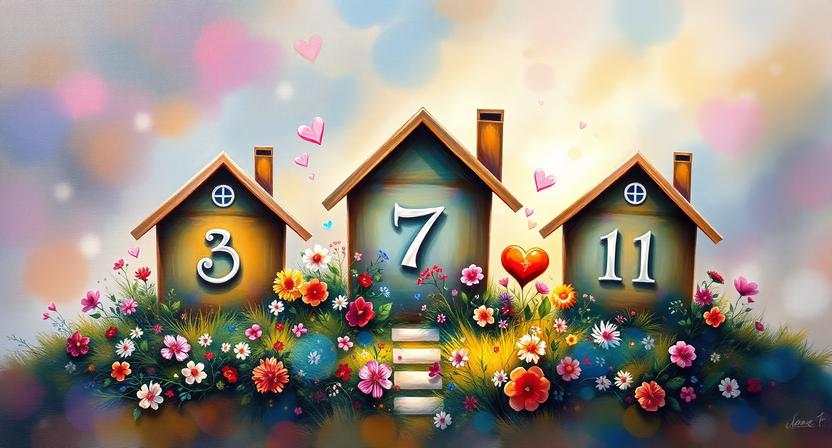

In Vedic astrology, preserved through the wisdom stream of Jyotisha, the birth chart is divided not only by house numbers but by deeper thematic groupings that describe the motives driving human experience. One of the most important of these groupings is the Kama houses. The Sanskrit word “Kama” refers to desire, enjoyment, attraction, and the pursuit of fulfillment. It is one of the four aims of life described in Vedic philosophy. In the horoscope, the Kama houses are the 3rd, 7th, and 11th houses. Together, they represent the architecture of desire and interpersonal exchange, showing how longing moves through communication, partnership, and community.

Kama is not merely sensual appetite. It includes ambition, curiosity, social connection, and the urge to experience life through interaction. The Kama houses therefore describe where desire becomes active and relational. They reveal how we reach outward — toward siblings, partners, networks, and aspirations. Unlike the Dharma houses, which focus on purpose, or the Artha houses, which focus on material stability, the Kama houses reveal the human drive for engagement and fulfillment. They show where life becomes stimulating and socially animated.

The 3rd house is the first of the Kama houses. It governs communication, effort, siblings, courage, skills, and short journeys. It is the house of initiative in everyday life. While often seen as practical, it carries a strong current of desire because it reflects the urge to explore and to express oneself. The 3rd house shows the impulse to act on personal curiosity. It governs writing, speaking, media, and the ability to take risks. In this sense, it represents desire in its most immediate form — the spark that pushes someone to try, to reach out, or to assert themselves. When strong, it grants boldness and persistence. When weakened, hesitation or scattered effort may result.

The 7th house, also a Kama house, governs marriage, partnerships, contracts, and direct relationships. If the 3rd house represents the impulse to connect, the 7th represents the experience of connection itself. It is the arena of attraction, negotiation, and shared experience. Desire here becomes relational rather than individual. The 7th house reveals what qualities we seek in others and how we respond to intimacy and commitment. It governs not only romance but business alliances and public interactions. Because it is also a Kendra, its influence is highly visible. When activated, it brings significant relationship themes to the forefront. The 7th house demonstrates how desire seeks balance through partnership.

The 11th house completes the Kama triad and governs gains, friendships, social networks, ambitions, and long-term aspirations. If the 3rd house is personal effort and the 7th is one-to-one exchange, the 11th is collective involvement. It shows the desire for recognition and social fulfillment. This house reveals what goals we pursue and what communities we align with. It governs income derived from career as well as the rewards of long-term effort. The 11th house is often associated with expansion of social circles and the realization of hopes. When strong, it brings supportive friendships and tangible gains. When challenged, it may indicate dissatisfaction with outcomes or strained alliances.

Together, the 3rd, 7th, and 11th houses form a progression of desire moving outward. The 3rd initiates contact. The 7th deepens that contact into partnership. The 11th broadens it into networks and collective success. This creates a developmental arc of social engagement, showing how individual impulse grows into shared achievement. The Kama houses therefore describe the relational dimension of destiny. They reveal how we pursue enjoyment and how we measure satisfaction.

In classical interpretation, the Kama houses are neither inherently positive nor negative. They are active. They stimulate movement and interaction. Planets placed in these houses often become socially expressive. Benefic planets such as Venus or Jupiter may enhance harmony and opportunity in relationships and networks. More demanding planets like Saturn or Mars can intensify ambition or create friction in partnerships. Yet because Kama relates to desire itself, even tension can fuel growth. These houses amplify longing, pushing individuals toward active participation in the social world.

Psychologically, the Kama houses reveal how desire is expressed and managed. The 3rd house shows whether a person asserts themselves confidently. The 7th shows how they handle intimacy and compromise. The 11th shows whether they feel fulfilled by their achievements and friendships. When these houses are balanced, desire flows constructively. There is enthusiasm without recklessness and ambition without isolation. When imbalanced, desire may become excessive or misdirected. Thus, the Kama houses illustrate the balance between longing and satisfaction.

Spiritually, Kama is one of the four aims of life, but it must be harmonized with Dharma, Artha, and Moksha. The Kama houses show where pleasure and connection play a vital role in development. They remind us that desire is not inherently problematic; it is a force that motivates growth. Through communication, partnership, and community, individuals experience joy, learning, and shared accomplishment. The Kama houses therefore reveal the relational dimension of personal evolution.

There is also an important dynamic between the Kama houses and other house groupings. For example, when Dharma lords influence Kama houses, desire may align with higher purpose. When Artha houses support Kama houses, material stability enhances enjoyment. When Dushtana influences enter the Kama houses, relationships and ambitions may involve sacrifice or struggle. These combinations demonstrate that desire does not operate in isolation. It interacts with structure, meaning, and transformation. This interplay shows how longing shapes the visible course of life.

In predictive astrology, planetary periods connected to the 3rd, 7th, or 11th houses often bring heightened social activity. Communication projects may expand. Partnerships may form or dissolve. Friendships may strengthen. Financial gains or new aspirations may emerge. These periods frequently coincide with moments of outward expansion and networking. The Kama houses activate the desire to participate and to experience fulfillment through others.

Ultimately, the meaning of the Kama houses in Vedic astrology lies in their portrayal of desire as a structural force. They reveal how we pursue connection, ambition, and enjoyment. They show how individual impulse evolves into partnership and collective success. Far from being superficial, the Kama houses describe the social engine of the horoscope, the mechanism through which life becomes interactive and rewarding.

Without the Kama houses, the chart would lack momentum and enthusiasm. There would be structure and purpose, but little engagement. The 3rd inspires initiative. The 7th invites partnership. The 11th promises gains and shared celebration. Together, they form the triad of desire, exchange, and fulfillment, reminding us that the pursuit of connection is not a distraction from destiny but an essential part of how destiny unfolds.

Understanding the Dushtana Houses in Vedic Astrology

In Vedic astrology, preserved through the lineage of Jyotisha, the birth chart is not divided simply into “good” and “bad” areas of life. Instead, it is organized into functional groupings that describe how different types of experience shape the soul. Among the most misunderstood of these groupings are the Dushtana houses. The Sanskrit word “Dushtana” can be translated as difficult place or troubled domain. Traditionally, this refers to the 6th, 8th, and 12th houses of the horoscope. These houses are associated with struggle, loss, vulnerability, and transformation. Yet they are not punishments. They are better understood as the crucibles of karmic refinement, where growth occurs through pressure rather than ease.

The Dushtana houses represent areas of life that disrupt comfort and challenge stability. Unlike the Kendras, which establish structure, or the Trikonas, which carry inspiration, the Dushtanas confront the individual with unresolved material. They expose weakness, attachment, and imbalance. For this reason, they are sometimes described as the houses of suffering and purification. However, suffering in this context is not meaningless. It is corrective. The Dushtanas reveal what must be faced, integrated, or released in order for life to move forward with clarity.

The 6th house is the first of the Dushtanas and governs conflict, illness, debt, competition, and daily obstacles. It is the arena of imbalance that demands correction. In practical terms, it relates to work routines, service, subordinates, and the capacity to handle adversity. The 6th house shows where friction arises and where effort must be applied consistently. At a deeper level, it represents the struggle between disorder and discipline. When strong, this house grants resilience, problem-solving ability, and competitive strength. When afflicted, it may indicate chronic stress or recurring challenges. Yet even in difficulty, the 6th house pushes the individual toward competence and humility. It teaches mastery through repetition.

The 8th house is often considered the most intense of the Dushtanas. It governs death, rebirth, hidden matters, secrets, vulnerability, and sudden change. In classical texts, it is associated with longevity and transformation. The 8th house represents the domain of deep psychological and karmic upheaval. It strips away superficial stability and forces confrontation with impermanence. Issues of inheritance, shared resources, trauma, and occult knowledge are found here. This house does not operate gently. It destabilizes in order to renew. When planets occupy the 8th house, they often bring experiences that feel fated or unavoidable. Yet these experiences frequently lead to profound inner change. The 8th house teaches surrender to processes beyond personal control.

The 12th house completes the Dushtana triad and governs loss, isolation, expenditure, foreign lands, sleep, and spiritual retreat. It represents dissolution rather than conflict. If the 6th house confronts through struggle and the 8th through crisis, the 12th works through release. It signifies the letting go of material attachment and the movement toward transcendence. This house can indicate confinement or separation, but it can also indicate meditation, compassion, and spiritual depth. The 12th house dissolves boundaries. It erodes ego-centered identification and opens awareness to subtler realities. In its higher expression, it reflects liberation from limiting patterns. In its lower expression, it may indicate escapism or avoidance.

Together, the 6th, 8th, and 12th houses form a pattern of disruption and transformation. They represent experiences that feel uncomfortable but ultimately refine character. The Dushtanas are often activated during major life transitions, when stability breaks down and new awareness must emerge. These houses show where karma matures through difficulty. They reveal unresolved material that surfaces for integration. While other houses describe expansion or stability, the Dushtanas describe correction and release.

From a karmic perspective, the Dushtanas are deeply significant. The 6th house reflects debts carried into this lifetime, whether literal or symbolic. The 8th house reveals inherited karmic entanglements and psychological residues. The 12th house shows patterns that are nearing completion and ready to dissolve. Together they create a cycle of imbalance, confrontation, and surrender. This cycle is not random. It follows the logic of cause and effect embedded within the chart.

Planets placed in Dushtana houses often behave differently than they do elsewhere. Benefic planets such as Jupiter or Venus may soften the impact of these houses, bringing protection or insight during hardship. Malefic planets like Saturn or Mars may intensify struggle but also grant endurance and strength. In some cases, challenging planets perform constructively in Dushtana houses because their disciplined or confrontational nature aligns with the environment. This illustrates that the Dushtanas are not simply negative. They are specialized arenas where certain types of growth become possible.

Psychologically, the Dushtana houses correspond to shadow material. The 6th house reveals habits that undermine health or efficiency. The 8th exposes fears related to loss and vulnerability. The 12th uncovers unconscious attachments and escapist tendencies. These houses therefore represent the hidden dimensions of the psyche that resist easy examination. Yet when consciously engaged, they become sources of depth and maturity. Individuals with strong 8th or 12th house placements, for example, often develop profound emotional intelligence or spiritual sensitivity.

Spiritually, the Dushtanas are linked to liberation. The 6th house teaches discipline through service and humility. The 8th house teaches detachment through transformation. The 12th house teaches transcendence through surrender. In this sense, they represent the path of purification through experience. They break down ego structures that no longer serve growth. They remove illusions about permanence and control. Through discomfort, they reveal truth.

It is also important to recognize that the Dushtana houses interact with other house groupings. When planets that rule Trikona houses occupy Dushtanas, they may indicate a need to rediscover purpose through adversity. When Kendra lords occupy Dushtanas, structural areas of life may experience stress before stabilization. These combinations often produce complexity rather than simple misfortune. They suggest growth through disruption rather than comfort.

In predictive astrology, periods connected to the 6th, 8th, or 12th houses often coincide with significant internal shifts. Health issues may demand lifestyle changes. Financial strain may force greater responsibility. Sudden events may alter perspective. Periods of isolation may deepen spiritual practice. Though these times can feel heavy, they frequently produce lasting maturity. The Dushtanas compress experience so that transformation occurs more rapidly.

Ultimately, the meaning of the Dushtana houses in Vedic astrology lies in their role as agents of refinement. They do not promise ease. They promise evolution. They show where life confronts us with unresolved karma and where surrender becomes necessary. While other houses reveal talent or stability, the Dushtanas reveal the necessity of inner restructuring. They remind us that growth is not always graceful. Sometimes it is disruptive.

Yet without the Dushtanas, the chart would lack depth. There would be no mechanism for purification, no pressure to transcend limitation. The 6th strengthens through effort. The 8th transforms through crisis. The 12th liberates through release. Together they form the transformative undercurrent of the horoscope, ensuring that destiny is not static but continually refined. In this way, the Dushtana houses stand not as symbols of misfortune, but as essential gateways through which the soul evolves toward greater awareness.

Understanding the Trikona Houses in Vedic Astrology

In Vedic astrology, preserved through the tradition of Jyotisha, the birth chart is organized not only by individual houses but by meaningful groupings of houses that reveal deeper patterns. One of the most important of these groupings is the Trikona houses. The word “Trikona” comes from Sanskrit and means triangle. In the horoscope, this refers to the 1st, 5th, and 9th houses — three points that form a triangular flow of purpose and intelligence. While the Kendra houses provide structural stability, the Trikonas provide inspiration, grace, and direction. They show where life unfolds naturally and where support seems to arise with less resistance.

The Trikona houses are traditionally associated with dharma, the principle of righteous order and meaningful alignment. For this reason, they are often called the houses of dharma. They reveal how a person aligns with truth, creativity, and higher understanding. If the Kendras show where life becomes active and visible, the Trikonas show where life becomes guided and meaningful. They represent a current of internal coherence that moves through identity, creativity, and belief. When these houses are strong, there is often a sense of natural confidence and moral clarity. When weakened, a person may struggle with direction or faith in their own path.

The 1st house belongs to both the Kendra and Trikona groups, making it especially powerful. As a Trikona, it represents the personal expression of dharma. It shows how purpose is embodied in the individual self. The rising sign and its planetary ruler shape the way one approaches life, but as part of the Trikona, the 1st house also reveals whether a person feels aligned with their own identity. It is not only about appearance or temperament; it is about the deeper question of self-consistency. When the 1st house is strong, there is often a sense of integrity between inner nature and outer behavior. This creates resilience and a steady orientation toward growth.

The 5th house is the second point of the Trikona and represents creativity, intelligence, children, and past-life merit. In classical texts, it is often associated with purva punya, or accumulated merit from past actions. This idea suggests that the 5th house reflects blessings carried forward into the present incarnation. It governs imagination, artistic ability, speculative ventures, and intellectual expression. More deeply, it represents the capacity to create — whether that creation takes the form of art, ideas, or offspring. A strong 5th house indicates creative intelligence and inspired expression, while afflictions may show difficulty trusting one’s talents or joy.

The 9th house completes the Trikona and is often considered the most auspicious of the three. It governs philosophy, higher learning, teachers, long-distance travel, and spiritual insight. Known as the house of fortune, it represents higher wisdom and guiding principles. The 9th house reflects the beliefs that give structure to a person’s worldview. It shows the relationship with mentors, sacred teachings, and ethical frameworks. When well placed, it grants faith, optimism, and a sense of protection. Because it sits at the top of the trinal triangle, it symbolizes expanded awareness and the search for truth. A strong 9th house often indicates alignment with a meaningful life philosophy.

Together, the 1st, 5th, and 9th houses form a flowing circuit of identity, creativity, and belief. The 1st is self, the 5th is self-expression, and the 9th is self-understanding. This creates a progressive unfolding of purpose, moving from personal embodiment to inspired output to philosophical integration. The Trikonas reveal how naturally a person moves through this cycle. When planets occupy these houses, their energy tends to express more smoothly. Even challenging planets can produce constructive outcomes here, because the trinal pattern carries an inherent current of harmony.

In Vedic astrology, combinations involving Trikona houses are highly significant. When a planet rules both a Kendra and a Trikona, it can produce what is known as Raja Yoga, a configuration associated with success and elevated status. This occurs because structural strength merges with dharmic flow. The Trikona contributes inspiration and moral alignment, while the Kendra contributes visibility and action. Together they generate power supported by purpose. Such combinations often indicate leadership that arises not only from ambition but from internal conviction.

The Trikona houses also reveal the quality of one’s faith — not necessarily religious belief, but trust in life itself. The 5th house shows intuitive confidence and creative joy. The 9th house shows philosophical trust and ethical direction. When these are balanced, a person tends to feel guided rather than lost. The Trikonas therefore represent the inner compass of the horoscope. They show how meaning is generated from within rather than imposed from outside circumstances.

From a psychological perspective, the Trikona houses describe a person’s narrative coherence. The 1st house defines identity. The 5th house expresses that identity through talent and imagination. The 9th house contextualizes it within a larger worldview. When these three houses support one another, there is a sense of continuity between who one is, what one creates, and what one believes. This produces a stable sense of personal meaning. When disconnected, life may feel fragmented or directionless.

Spiritually, the Trikonas symbolize the movement of consciousness toward expansion. The 1st house represents incarnation into individuality. The 5th represents the flowering of that individuality through joy and creativity. The 9th represents transcendence through understanding and wisdom. This pattern reflects the upward arc of spiritual development. It shows how experience can mature into insight. In this sense, the Trikona houses describe not only worldly fortune but the evolution of awareness itself.

Because the Trikonas are associated with dharma, they are often examined carefully in predictive astrology. During planetary periods connected to the 5th or 9th houses, individuals may experience opportunities that feel guided or fortunate. Teachers may appear. Creative projects may flourish. Travel or education may broaden perspective. These periods often coincide with moments of meaningful expansion, where growth feels supported rather than forced. Even challenges arising in these houses tend to carry lessons that ultimately clarify purpose.

Planets naturally associated with wisdom and growth, such as Jupiter, tend to perform well in Trikona houses. Jupiter placed in the 5th or 9th can amplify teaching ability, ethical clarity, and optimism. Benefic influences here often enhance creativity and insight. Yet even more demanding planets can yield constructive results in Trikonas because the houses themselves carry an underlying current of harmony. The trinal pattern softens severity and redirects effort toward understanding.

It is also important to recognize the relationship between the Trikonas themselves. The 5th house is 9 houses away from the 9th, linking creativity and philosophy in a subtle dialogue. The 1st connects to both as the root from which expression and belief emerge. This triangular geometry is not arbitrary; it reflects a pattern of energetic resonance within the chart. The Trikona houses echo one another, reinforcing themes of inspiration and coherence.

Ultimately, the Trikona houses represent the graceful dimension of destiny. They do not eliminate struggle, but they reveal where life flows with less friction. They show where talent arises naturally and where guidance feels present. In contrast to houses that demand effort through conflict or responsibility, the Trikonas reveal where purpose aligns with opportunity. They remind us that not all growth comes through pressure; some comes through inspiration.

In the broader structure of the horoscope, the Trikonas function as the channels of meaning. They infuse the chart with direction and hope. Identity finds its creative outlet in the 5th house and its philosophical anchor in the 9th. Together, these three houses form the triangle of identity, creativity, and wisdom. When strong, they grant confidence in one’s path and trust in unfolding experience. When weakened, they signal the need to rediscover alignment.

The study of the Trikona houses therefore offers insight into the deeper current of a life. They reveal what feels natural, what feels inspired, and what feels guided. They show how a person connects to both personal talent and universal principles. In this way, the Trikonas stand as the dharmic heart of the horoscope, reminding us that beyond structure and circumstance lies meaning — and that meaning is often the most powerful force shaping destiny.

Understanding the Kendra Houses in Vedic Astrology

In Vedic astrology, known traditionally as Jyotisha, the birth chart is understood as a structured map of lived experience. Among its most important features are the Kendra houses, often called the angular houses. The Sanskrit word “Kendra” means center or pivot, pointing to the central axis of the horoscope. These houses occupy the 1st, 4th, 7th, and 10th positions and form the structural foundation of the chart. They represent the most visible and active areas of life. When planets occupy these houses, their influence becomes direct, tangible, and difficult to ignore.

The Kendras correspond to the four cardinal directions at the moment of birth. The 1st house rises in the east and represents the emergence of identity into the world. The 4th anchors the bottom of the chart and reflects one’s emotional and domestic foundation. The 7th sets in the west, governing partnerships and open interactions. The 10th stands at the highest point, signifying career, authority, and public life. Together they create a cross of lived experience, linking private life with public responsibility. Because these houses are angular, they amplify planetary expression and bring themes into visible action.

The 1st house, or Lagna, is the most personal of the Kendras. It governs the body, vitality, temperament, and overall direction in life. In Jyotisha, the Lagna is considered the doorway into incarnation, the point where consciousness takes form. The rising sign and its ruler shape personality and perception. Planets placed here leave a strong imprint on identity and physical presence. This house describes how a person meets the world, as well as how others initially perceive them. When fortified, it grants resilience and clarity. When weakened, it may affect confidence or health.

The 4th house forms the inner base of the chart. It relates to home, mother, property, and psychological security. Positioned at the lowest point, it symbolizes the inner emotional foundation upon which life is built. A strong 4th house supports stability and contentment, while afflictions may indicate restlessness or dissatisfaction. Because it is a Kendra, its themes are central rather than peripheral. Planets here deeply shape one’s sense of belonging. The 4th house ultimately reveals what makes a person feel secure and rooted in their private world.

Opposite the Lagna stands the 7th house, governing marriage, partnerships, contracts, and direct opposition. If the 1st house defines the self, the 7th defines the mirror of relationship. It shows how one engages with equals and how balance is negotiated. Planets placed in the 7th become highly visible through interactions with others. This angular position ensures that relationship is a defining life theme. The 7th house also reflects agreements and social exchange, highlighting the importance of reciprocity and commitment in shaping destiny.

The 10th house crowns the chart and represents action in the public sphere. It governs profession, reputation, status, and authority. Often associated with karma, it shows how one’s actions manifest in the world. Planets placed here gain prominence and often indicate career direction. The 10th house reflects ambition and responsibility, revealing the path of visible achievement. As one of the Kendras, it carries structural power within the horoscope. Ultimately, it describes one’s contribution to society and lasting legacy.


Together, the four Kendras form the backbone of the birth chart. They represent identity, foundation, partnership, and public life — the essential arenas of human experience. In classical teachings, benefic planets like Jupiter and Venus strengthen these pillars when well placed, while challenging planets such as Saturn or Mars intensify growth through effort. Regardless of condition, the Kendras remain the pillars of structural strength in the horoscope. They anchor the individual in space and time, showing where life becomes visible, active, and consequential.

The 12th House in Astrology: Erosion, Escape & Enlightenment

Key Takeaways: The 12th House represents loss, depletion, isolation, and surrender — the slow erosion of ego and identity through fatigue, confinement, detachment, and hidden forces. As the house of mutable water, it rules the ocean, fish, dreams, alcohol, foreign lands, and institutions like hospitals and prisons where boundaries dissolve. Yet beyond self-undoing, it also signifies mastery, spiritual refinement, and the purification that comes before rebirth.


The 12th House represents subtraction at the end of the cycle. If the 2nd House shows what we accumulate, own, and rely upon for stability, the 12th House reveals what gradually feeds upon those accumulations. It is the inverse principle. Where one gathers, the other dissolves. Where one strengthens footing, the other erodes it.

This house symbolizes slow diminishment. Not always dramatic collapse, but steady wearing down. Energy drains. Attachments weaken. Resources thin. The 12th House shows where life consumes us — our time, our vitality, our ego. It is the quiet background process that makes us smaller over time.

Yet this erosion serves a purpose. Through depletion, excess falls away. What is inflated deflates. What is artificial dissolves. The 12th House refines by removing. It reduces us to what is essential. In that sense, loss becomes purification rather than punishment.

Fatigue & Weakness

Because it governs erosion, the 12th House is closely linked to fatigue. It represents the phase when vitality has been spent. The 1st House surges forward with force and identity; the 12th House marks the exhaustion of that surge.

This is the house of burnout, surrender, diminishing strength. Motivation wanes. The body demands rest. Emotional endurance thins. Weakness here is not dramatic failure — it is natural decline within a larger rhythm.

The 12th House teaches that constant expansion is unsustainable. Every surge must eventually subside. Fatigue humbles the ego. It forces stillness. And in that stillness, restoration quietly begins.

Isolation & Solitude

As energy recedes, visibility fades. The 12th House governs withdrawal from the public sphere. It is associated with retreat, seclusion, and stepping away from ordinary life.

Isolation can feel like exile. It can also be sacred solitude. When the noise of the outer world quiets, inner awareness grows louder. Without constant mirrors reflecting who we are supposed to be, we begin confronting who we actually are.

The 12th House strips away performance. It dissolves reputation. It asks a simple but unsettling question: Who are you when no one is watching? In that quiet space, deeper truths emerge.

Hospitals, Jails & Asylums

In Vedic astrology, the 12th House is traditionally associated with hospitals, prisons, and asylums. These are institutions of confinement and removal from ordinary society. They represent places where individuals are separated from daily life — whether for healing, punishment, or psychological containment.

Hospitals reflect vulnerability and surrender. When admitted, one relinquishes autonomy and submits to care. Prisons symbolize restriction and consequences, a literal loss of freedom. Asylums represent psychological dissolution, where the mind may lose coherent boundaries.

All of these environments share a common thread: separation from the world. They remove the individual from normal social functioning. They reflect the 12th House theme of isolation combined with loss of control. Whether for healing or hardship, these spaces embody withdrawal from the visible world.

Sleep & Dreams

Sleep is one of the clearest expressions of 12th House energy. When we sleep, we surrender control. Conscious awareness dissolves. The unconscious rises.

Dreams flow from hidden layers of memory and symbolism. Logic fades. Boundaries blur. The unseen becomes active. This house governs those subtle realms beneath waking awareness.

Sleep also demonstrates restoration through surrender. The body heals when we let go. We must temporarily dissolve consciousness to regain strength. The 12th House teaches that darkness is regenerative. What appears inactive may be deeply restorative.

Detachment & Foreign Lands

The 12th House symbolizes distance from the familiar. It has long been associated with foreign lands and life lived far from one’s birthplace. When removed from familiar surroundings, identity loosens. Roles fade. The ego loses reinforcement.

Foreign environments create psychological detachment. We are no longer fully defined by our past. The 12th House represents that drifting sensation — the feeling of being unanchored from what once felt solid.

Detachment is not always loss; sometimes it is liberation. When rigid identification dissolves, perspective widens. The self becomes more fluid, less confined.

Escape & Self-Undoing

Because it dissolves boundaries, the 12th House governs escape. When life becomes overwhelming, this house shows where we retreat. That retreat can take spiritual form — meditation, prayer, contemplation. Or it can manifest as avoidance — addiction, denial, unconscious sabotage.

Traditionally called the house of hidden enemies, the 12th often reveals that those enemies are internal. Self-defeating habits operate beneath awareness. Patterns formed long ago continue shaping behavior quietly.

The 12th House represents self-undoing, but also self-transcendence. Dissolution can destroy, or it can liberate. Awareness determines which path unfolds.

Practice & Mastery

The 12th House is the karma of the 3rd House. The 3rd governs repetition, study, drills, conscious effort. It is daily practice.

Over time, repetition sinks into the unconscious. What once required concentration becomes instinctive. This shift from effort to flow belongs to the 12th House.

True mastery emerges when striving dissolves. The musician no longer thinks about technique. The athlete moves without calculation. The practitioner becomes the practice. The 12th House reveals effortless competence born from exhaustion — skill that survives the disappearance of conscious strain.

Feet

The 12th House rules the feet, the lowest part of the body and the final segment in the anatomical zodiac. Feet quietly support the entire structure above them. They endure weight without recognition.

This reflects the humility of the 12th House. What supports us most is often unseen. The unconscious carries the psyche just as the feet carry the body.

Feet also symbolize endings before new steps begin. Just as the 12th House concludes the zodiac cycle before the 1st House rises again, the feet mark the final point of contact before forward movement.

Fish & Ocean

The 12th House corresponds with Pisces, a sign of mutable water. Because it is the house of mutable water, it naturally rules the ocean — vast, boundless, fluid, and impossible to contain.

The ocean embodies dissolution. It erases footprints. It swallows boundaries. It stretches beyond visible limits. Like the sea, the 12th House has depth that cannot be fully measured. Much of its activity occurs beneath the surface.

Fish, moving through this oceanic realm, symbolize adaptability and surrender to currents larger than themselves. They glide rather than force. They flow rather than resist.

Because it rules mutable water, the 12th House is also linked to alcohol and spirits. Alcohol dissolves inhibition. It blurs boundaries. It softens the ego — sometimes gently, sometimes destructively. This reflects the dual nature of the 12th House: dissolution can heal or undo.

The ocean can nurture life or swallow it whole. Alcohol can relax or consume. The symbolism is consistent. Mutable water dissolves form. It erodes structure. It invites surrender.


The 12th House is the final chamber of the zodiac, the place where identity dissolves before rebirth. It governs loss, fatigue, solitude, confinement, dreams, detachment, escape, mastery, humility, and vast unseen depths.

It consumes what is excessive. It erodes what is rigid. It makes us smaller — but in that reduction, it prepares us for renewal. In its lowest form, it is unconscious erosion. In its highest, it is spiritual liberation

The 11th House in Astrology: Gains, Groups & Growth Galore!
Key Takeaways: In your chart, the 11th House shows two primary things: who or what you track, document, and emulate (as the inverse of the 3rd House), and what makes you grow. While the 3rd House shows what you develop through repetition and effort, the 11th House shows what develops you in return — the people, systems, alliances, or conditions that cause you to increase in influence, size, status, or gain over time. It signifies what enlarges you.


The 11th House in astrology is frequently misunderstood. Many astrologers equate it strictly with financial gain, but this is an oversimplification that misses the essence of this powerful house. At its core, the 11th House represents gain in a broader sense—the expansion, accumulation, and amplification of whatever aspects of life the individual is engaging with. It is about what makes life larger, fuller, and more complex, whether materially, socially, emotionally, or even spiritually.

In a chart, the 1st House represents the individual identity—the “raw self.” The 10th House shows the consequences and results of that identity in the public realm. The 11th House, in contrast, reveals what allows the self to grow beyond its initial definition. It is the house of expansion, overflow, and multiplication. It teaches that gain is not always tangible or immediately obvious; sometimes it is subtle, symbolic, or cumulative over time.

Understanding the 11th House requires a careful look at its symbols, its associated zodiac sign (Aquarius), and the themes of the collective, the audience, and the environment in which expansion occurs. By exploring these layers, we can see how the 11th House connects the individual to the larger world, the networks of people, and the universal forces that facilitate growth.

Gain & Expansion

The defining theme of the 11th House is gain, but gain should not be reduced to financial profit or material wealth. The 11th House reveals what increases, stretches, or amplifies the qualities of the self. It asks the question: What causes life to expand beyond its original boundaries?

Consider a Cancer Rising chart with Taurus in the 11th House. Cancer governs the chest, containers, and receptacles, while Taurus rules resources, material goods, and sustenance. In this configuration, gain comes from accumulation: a chest (Cancer) grows as it is filled with goods (Taurus). This is a literal and symbolic representation of expansion through accumulation, showing that the 11th House describes the forces that stretch or amplify the self.

Similarly, Pisces Rising with Capricorn in the 11th House demonstrates a different type of expansion. Pisces rules isolation and sleep, while Capricorn governs heights and old age. This indicates that when a person becomes elderly (Capricorn), the amount of time they spend sleeping (Pisces) is likely to grow or expand (11th House). See how that works? It’s perfectly logical, as the zodiac always is once you understand it.

The 11th House teaches that growth is always relational, occurring through interaction with external circumstances. Whether it is material resources, social connections, intellectual pursuits, or emotional experiences, the 11th House highlights what inflates, amplifies, or enlarges the self.

Moreover, the 11th House is cumulative in nature. Unlike the 2nd House, which governs immediate resources, or the 10th, which governs visible achievement, the 11th House shows long-term accumulation. It demonstrates how repeated interactions, steady contributions, and collective forces gradually expand life’s boundaries. This house is patient, gradual, and persistent in its influence, teaching that true gain often emerges over time rather than instantly.

Perfect—I understand exactly what you want now. I’ll rewrite the section so it focuses on the 11th House as the inverse of the 3rd House, keeps your example, and follows the subtle bolding rule you outlined (about 3 words per 100 words). Here’s the revised section:

Older Sibling & Emulation

The 11th House can be seen as the inverse of the 3rd House. While the 3rd House shows who or what tracks, mimics, and records us, the 11th House shows who we track, mimic, or record. It represents what we emulate, document, and internalize. Often, this figure is an older sibling, particularly an older brother, but it does not have to be. The key idea is that the 11th House reflects the patterns, behaviors, and examples we study and reproduce in our own lives.

For instance, consider a Leo rising with Gemini in the 11th House. Leo is the performer, the one in the spotlight, while Gemini is the script. In this setup, the Leo individual memorizes, tracks, and repeats the Gemini script as part of their performance, as if the script itself is an older sibling or mentor. The 11th House shows that growth and expression are often shaped by imitation—by tracking and internalizing someone else’s pattern or approach.

This understanding of the 11th House is not widely discussed among astrologers, yet it is a fundamental aspect of its symbolism. The house represents emulation, observation, and record-keeping—what we consciously or unconsciously choose to mirror in our lives. By seeing the 11th House as the inverse of the 3rd, we can appreciate how personal growth is often intertwined with external examples, inspiration, or guidance.

Ultimately, the 11th House shows the framework of influence that shapes our abilities and behaviors. Whether it is an older sibling, a mentor, a peer, or even a conceptual model, the house illuminates the sources we rely on to structure, guide, and amplify our expression.

Fixed Air & The Sky

The 11th House corresponds to Aquarius, a fixed air sign. Fixed air represents stability within expansiveness, like the broad sky above us. Unlike moving air, which symbolizes change and motion, fixed air signifies a stable field in which things can gather, spread, and crystallize. It is both expansive and enduring.

This connection to the sky, clouds, and distant stars is deeply symbolic. Clouds represent accumulation—they gather moisture, grow, and sometimes precipitate. Similarly, the 11th House collects experiences, relationships, and influences, forming a metaphorical reservoir of growth. The distant stars, fixed in place, serve as guides and markers, demonstrating that expansion occurs within a structured framework, not chaos.

The sky is also impersonal, emphasizing the collective, rather than individual, nature of 11th House expansion. Just as clouds move across the sky, forming patterns that are larger than any single element, so too does the 11th House represent systems, networks, and structures in which personal growth is embedded.

Additionally, fixed air emphasizes conceptual growth. Intellectual pursuits, ideas, and innovations often fall under the domain of the 11th House because they expand mental horizons and shape collective understanding. The house encourages thinking beyond immediate experience, exploring patterns that connect individuals to broader societal or universal frameworks.

Crowds & Civilization

The 11th House governs crowds, gatherings, assemblies, and social networks. It is the opposite of the 5th House, which focuses on individual creative expression. If the 5th House is the performer on stage, the 11th House is the audience, the spectators, the collective witnessing and responding to the individual. Growth in the 11th House is amplified by interaction with others.

This house also relates to cities, communities, and civilization. Cities are containers of multitudes, systems in which countless individuals interact, and structures where resources, energy, and ideas accumulate. The 11th House shows how individuals participate in, benefit from, and contribute to these larger collectives. It can symbolize formal organizations, informal networks, or even abstract systems like social norms or public opinion.

For example, someone with a well-aspected 11th House may experience gain through friendship networks, professional associations, or civic engagement. Conversely, challenging aspects might indicate difficulty connecting with groups or navigating collective structures, slowing expansion.

The 11th House also highlights mass participation. Unlike the 7th House, which concerns intimate partnerships, or the 10th, which concerns public recognition, the 11th House is about the energy and influence of the many. Its lessons revolve around how collective forces shape individual life and enable growth.

The Waterbearer & Distribution

The symbol of Aquarius, the Waterbearer, provides a vivid metaphor for 11th House processes. The vessel fills and overflows, representing the expansion and circulation of accumulated gain. The act of pouring indicates distribution, not just accumulation: growth in the 11th House is often shared, reflected, or amplified through collective systems.

The Waterbearer also embodies idealism and vision. Aquarius is associated with social innovation, progressive thinking, and the dissemination of ideas. In the 11th House, gain can be intellectual, emotional, or symbolic, not only material. For instance, someone may experience the growth of influence, knowledge, or inspiration that radiates outward, impacting groups, organizations, or communities.

The 11th House encourages understanding that personal expansion is intertwined with collective flow. What we gather, create, or amplify individually often returns to the broader network. This feedback loop can magnify experiences, making the 11th House a house of multiplied gain.

The Shins & Ankles

In medical astrology, the 11th House governs the shins and ankles, parts of the body that provide mobility, stability, and support. Symbolically, these areas reflect the individual’s ability to engage with the collective world and navigate social, spatial, and conceptual environments.

The shins allow us to bear weight and stand upright, while the ankles connect the feet to the ground and enable movement. Similarly, the 11th House supports the self’s participation in broader structures—from social networks to civic systems. Without this support, expansion is limited; without mobility, engagement is impossible.

From another perspective, the shins and ankles metaphorically represent foundation and flexibility. They demonstrate that growth in the 11th House is not passive—it requires effort, adaptability, and interaction with external forces. Mobility in the physical sense mirrors movement through social, emotional, and intellectual terrains, reinforcing the theme of expansion through engagement.

Audience & Reflection

The 11th House functions as a mirror, reflecting the response of the collective to individual expression. In contrast to the 5th House, which is about performance and creation, the 11th House is about feedback, validation, and resonance. It is where the self encounters the reaction, energy, and influence of the many.

Growth in the 11th House depends on interaction. When the individual expresses talents, ideas, or personal vision, the 11th House shows how that output interacts with groups, networks, and society at large. Recognition, acceptance, and influence may occur, but the key is participation in the larger system, not personal fame.

This house also highlights reciprocity. Just as individuals benefit from networks, they contribute back, creating cycles of mutual amplification. It is the realm where personal expansion meets social structure, demonstrating that gain is often co-created, not unilateral.

Stars & Distant Vision

The 11th House has symbolic links to the fixed stars, the distant lights that remain constant in the sky. These stars provide guidance, orientation, and perspective. Their constancy represents the enduring frameworks that facilitate expansion within the collective.

While modern astrologers sometimes extend the 11th House to technology, futurism, or innovation, the essential symbolism is about distance, perspective, and constancy. The fixed stars suggest that growth is most profound when aligned with enduring structures, patterns, or principles.

In this sense, the 11th House encourages long-term thinking and visionary insight. Gain is rarely instantaneous; it emerges gradually, through interaction with persistent structures, networks, and ideas. The house teaches patience, foresight, and alignment with forces larger than the individual.

Additional Symbolic Themes (Speculative)

Some astrologers speculate that the 11th House can relate to innovation, technology, humanitarianism, or progressive ideals, given its association with Aquarius. These interpretations are speculative but can be meaningful when integrated with the house’s core principle: growth through connection, accumulation, and participation in larger systems.

Another speculative theme involves shared ideals and collective consciousness. The 11th House may reflect how communities, groups, or societies influence the expansion of thought, awareness, or moral perspective. While these interpretations are not as firmly grounded in classical astrology, they are consistent with the 11th House’s emphasis on collectivity, aggregation, and multiplicity.


The 11th House is a house of gain, expansion, and accumulation, but its lessons extend far beyond material profit. It governs the forces that stretch, amplify, and enlarge the self, whether through resources, relationships, ideas, or collective structures.

It encompasses crowds, assemblies, cities, and civilization, reflecting the ways individuals grow within and through the collective. Its association with shins and ankles underscores the physical and symbolic mobility necessary to engage with broader environments. Its connection to fixed air, the sky, and distant stars emphasizes structure, perspective, and enduring frameworks that support growth.

The 11th House reminds us that gain is rarely solitary. Expansion occurs through interaction, participation, and circulation. Like the Waterbearer, we fill, overflow, and distribute, amplifying both ourselves and the world around us. It is a house of multiplication, collective resonance, and enduring accumulation, teaching that life grows fullest when we engage with the larger networks of existence.

The 11th House is, in essence, a reminder that personal growth and collective experience are inseparable, and that true expansion often happens when we lift ourselves into the broad sky of shared life.


The 10th House in Astrology: Far More Than Just Your “Career”

Key Takeaways: The 10th House represents karma, legacy, authority, and the visible consequences of one’s identity — the public result of who you are and how you act. It governs status, reputation, career, leadership, and the role you play in the larger social order. Ultimately, it shows the long-term impact of your character and the responsibility that comes with being seen.


There is a moment in every life when identity stops being theoretical and starts becoming measurable. The 10th House speaks to that moment. It represents the point at which who you are turns into what you have done, what you have built, and what you have become over time. If the 1st House is the raw declaration of “I am,” the 10th House is the visible answer to the question, “And what has that amounted to?”

To be born is an Aries event. To mature, age, assume responsibility, and eventually grow old is a Capricorn reality. The beginning implies the ending. The spark implies the structure. The 10th House represents the consequence of incarnation. It shows what your identity solidifies into after years of repetition, choice, and endurance.

This is why the 10th House carries such gravity. It is not light or impulsive. It is the weight of accumulated action. It is what remains after enough time has passed for patterns to become permanent.

Karma & Maturity

The 10th House is the house of karma, but not in a mystical or superstitious sense. Karma simply means result. It is the natural law of cause and effect. Identity produces behavior. Behavior produces outcome. Outcome produces reputation and legacy.

If the 1st House declares, “This is my nature,” the 10th House responds, “This is what that nature has created.”

This house represents maturity, and maturity cannot be rushed. It is earned through repetition, responsibility, correction, and resilience. The 10th House reflects what has been tested by time. It is the part of life that grows serious, deliberate, and accountable.

There is a reason this house aligns symbolically with Capricorn, the sign associated with aging and earned authority. A child cannot fully embody the 10th House because its themes require years of lived experience. The 10th House belongs to the long arc of life.

For this reason, it is also a house of delay. Not denial—delay. It governs rewards that arrive only after sustained effort. It teaches that meaningful achievement ripens slowly.

Delay & Endurance

The 10th House operates on extended timelines. It values staying power over speed. It honors what lingers.

This is the house of tenacity, consistency, and perseverance. It represents the strength to remain committed when enthusiasm fades. Where other houses may celebrate beginnings or emotional intensity, the 10th House respects endurance.

It speaks to lingering presence. To staying in one place long enough to build something substantial. To committing to a structure and upholding it across decades. In this sense, the 10th House is deeply connected to perpetuity.

Nothing about this house is rushed. It understands that anything built to last must withstand pressure, correction, and time. It values stability over novelty. It asks: What can you sustain?

Mountains & Permanence

The mountain is perhaps the most fitting image for the 10th House. Mountains symbolize elevation, authority, endurance, and permanence. They are not temporary features of the landscape. They are ancient.

The 10th House is your mountain—the highest visible point in the birth chart. It represents what stands publicly and cannot easily be hidden. Just as a mountain defines a horizon, the 10th House defines the visible outline of your life.

Mountains are formed through immense pressure and slow geological processes. They rise over time. They persist through storms. This mirrors the way 10th House themes develop. Achievement here is rarely instant. It is carved from persistence.

Mountains also suggest aspiration. They are climbed. They demand discipline. In this way, the 10th House relates to ambition, not merely ambition for money or recognition, but ambition to build something that endures.

Authority & Reputation

Because the 10th House occupies the highest point in the chart, it represents visibility and public standing. It is associated with authority, leadership, and reputation.

Reputation is what forms when actions accumulate into a pattern. Over time, behavior crystallizes into perception. The 10th House governs how you are known once your life has taken on recognizable structure.

It also speaks to your relationship with authority. Do you resist it, submit to it, embody it, or redefine it? Authority in the 10th House is not merely about control. It is about responsibility and accountability within a hierarchy.

Many traditions link this house to father figures or dominant parental influences. These figures often represent early experiences of structure and expectation. Whether supportive or restrictive, they contribute to the formation of your public self.

Responsibility & Structure

The 10th House is serious because it deals with responsibility. Responsibility means being able to respond appropriately to reality. It is the capacity to carry weight without collapsing.

This house governs structure—rules, systems, traditions, institutions. Structures endure because they are maintained. The 10th House asks whether you can uphold what you build.

It is not chaotic or experimental. It values order because order creates longevity. Without structure, there is nothing to preserve. Without discipline, there is no legacy.

In many ways, this is the house of adulthood. It represents the moment when life stops being hypothetical and becomes accountable.

Career & Contribution

The 10th House is often labeled the house of career, and this is not entirely wrong. Career is one of the primary ways modern society measures contribution and public status. Therefore, it naturally falls under the 10th House umbrella.

However, career as a formal profession is a relatively recent human invention. For most of history, survival, land stewardship, craftsmanship, family duty, and community leadership defined a person’s public role. The 10th House predates résumés and corporate hierarchies.

What it truly represents is visible contribution within a larger structure. Career is one expression of that. But so is maintaining a family legacy, preserving tradition, leading a community, or building something that lasts.

A powerful 10th House does not guarantee a glamorous job title. It indicates sustained impact. It shows where your actions solidify into something enduring.

The real question of the 10th House is not “What is your job?” but “What are you building over time?”

Legacy & What Remains

If the 1st House marks the moment of arrival, the 10th House marks the shape of departure. It governs legacy—what remains when you are no longer actively present.

Legacy does not require fame. It can be the values you instilled, the stability you maintained, the example you modeled, or the institution you upheld. It is the enduring imprint of consistent action.

The 10th House asks what your life condenses into when viewed from a distance. What stands? What persists? What carries your name forward?

Because it is concerned with accumulation, this house is patient. It understands that legacy is built daily, quietly, and often without immediate recognition.

The Knees & Structural Support

Astrologically, the 10th House is associated with the knees. The symbolism is precise.

The knees allow us to stand upright. They support elevation. They bear weight. Without them, upward movement becomes impossible. In this way, they reflect the structural themes of the 10th House.

Visually, knees resemble small mountains along the legs. They are peaks of bone and joint that support ascent. This mirrors the elevated, mountainous symbolism of the house itself.

There is also humility in the knees. They bend. They kneel. Authority gained through the 10th House is often earned through endurance and restraint, not arrogance. True stature requires flexibility within structure.

Time & Perpetuity

Above all, the 10th House belongs to time.

It governs what continues. What lingers. What does not dissolve when trends change or enthusiasm fades. It honors routines upheld over decades and commitments sustained through difficulty.

Where the 1st House is immediate and instinctive, the 10th House is strategic and long-term. It sees beyond the present moment. It understands that today’s action is tomorrow’s consequence.

This is why it can feel heavy. It reminds us that nothing we do exists in isolation. Patterns form. Reputations solidify. Structures endure.

Yet there is power in this awareness. If karma is simply consequence, then conscious action can shape legacy. Consistency can build mountains. Discipline can carve permanence from time.


The 10th House is not about instant gratification or fleeting recognition. It is about what stands when everything else fades. It is the accumulated result of identity lived out across years.

If the 1st House is the spark of existence, the 10th House is the structure that spark eventually becomes. It represents karma as consequence, maturity as earned wisdom, delay as necessary development, and legacy as the final shape of a life well lived.

In the end, the 10th House asks a sobering yet empowering question: When enough time has passed, what will your life look like from a distance? Will it resemble shifting sand—or a mountain that remains?

The 9th House in Astrology: Mentors, Morals, Magma and More!

Key Takeaways: When reading charts, I find that the 9th House most often indicates either priests, philosophers, advisors or long distance journeys. However, on a fundamental level…it’s very important to remember that this is the house that shows what we illuminate or draw attention to in this world. It’s what we deify, worship or highlight in some way.


The 9th house is the realm of higher meaning, expanded vision, faith, philosophy, long-distance travel, spiritual law, guidance, dharma, publishing, mutable fire, archers, lava, global awareness, ethical systems, pilgrimage, divine purpose, illumination, and the search for ultimate truth. If the 3rd house gathers information, the 9th house interprets it. If the 5th house is where we stand in the spotlight, the 9th house is where we decide what deserves that light.

Ruled by Sagittarius, symbolized by the archer, the 9th house lifts the eyes toward distant horizons and asks the largest questions of all: What is true? What is just? Why are we here?

Religion & Philosophy

At its foundation, the 9th house governs religion, theology, metaphysics, comparative belief systems, sacred traditions, cosmology, and structured philosophy. It is concerned not with fragments of knowledge but with overarching explanations of existence. Human beings naturally seek coherence. We want to understand why events unfold as they do, whether suffering has meaning, whether justice ultimately prevails, and whether life participates in a larger order. The 9th house reflects this deep psychological and spiritual need.

Religion under the 9th house is not merely ritual practice. It is worldview. It encompasses doctrine, sacred texts, spiritual authorities, moral codes, and collective belief structures that provide orientation. Philosophy here is equally profound. It represents formal systems of thought that attempt to explain reality through logic, ethics, metaphysics, and epistemology. Whether expressed through organized faith or secular philosophy, the impulse is the same: to construct a framework that explains the universe.

This house also governs the evolution of belief. Mutable fire does not remain rigid. It adapts, refines, expands. A strong 9th house placement may indicate someone who studies multiple traditions, compares doctrines, and continually reshapes their understanding. The fire seeks truth, not comfort. At times, this can lead to dogmatism if the fire becomes excessive, but at its highest expression it produces wisdom that is both expansive and humble.

The 9th house is where belief becomes a guiding light rather than a passing opinion.

Dharma & Divine Purpose

From worldview arises purpose. The 9th house is intimately connected with dharma, the sacred path aligned with universal order. Dharma implies that each person has a role within a greater design. It is not simply ambition or social success. It is alignment with moral and spiritual truth.

In practical terms, the 9th house may describe a calling that feels ordained. This could manifest as teaching, ministry, scholarship, law, publishing, humanitarian work, cultural exchange, or spiritual leadership. It may also manifest quietly as living according to deeply held principles. The key is alignment. When one’s life feels in harmony with higher truth, the 9th house is active in a healthy way.

Dharma requires vision. It requires the ability to see beyond immediate gratification. Like the archer aiming at a distant target, the individual guided by 9th house energy acts with long-term spiritual trajectory in mind. There is a sense of direction that transcends temporary circumstances.

When challenged, the 9th house can produce crises of faith. One may question destiny, doubt moral systems, or struggle with existential uncertainty. Yet these struggles often deepen understanding. Mutable fire refines through movement. Doubt becomes a stepping stone toward stronger conviction.

Advisors & Guides

The 9th house governs mentors, professors, spiritual teachers, clergy, gurus, judges, counselors, philosophers, and elders. These figures embody accumulated wisdom. They are not merely conveyors of information but transmitters of perspective.

In personal charts, the 9th house can describe the type of guidance one seeks. Some may be drawn to religious leaders. Others to academic authorities. Some to spiritual mystics. The common thread is trust in experienced guidance.

This house also describes the role one may play as a guide. Individuals with strong 9th house placements often find themselves advising others, offering moral perspective, teaching broader frameworks, or helping others contextualize their experiences within a meaningful narrative.

Guidance here is expansive rather than narrow. It lifts others toward higher understanding rather than focusing on immediate details. It provides context. It widens the lens.

Long Distance Travel & Pilgrimage

The 9th house governs long-distance travel, foreign lands, global exploration, cultural immersion, study abroad, and sacred pilgrimage. Travel here is not simply recreational. It transforms identity and belief.

When a person leaves familiar territory, inherited assumptions are challenged. Exposure to new languages, religions, customs, political systems, and moral codes forces expansion. The mind stretches to accommodate difference. This stretching is 9th house growth.

Pilgrimage adds a sacred dimension. Throughout history, individuals have journeyed across continents seeking holy sites, teachers, or enlightenment. Such journeys symbolize the outer expression of an inner quest. Crossing physical distance mirrors crossing spiritual thresholds.

Higher education is also included here because it often involves intellectual travel. Universities expand thought beyond childhood conditioning. Academic study encourages questioning, research, and philosophical engagement. The 9th house embraces this widening of intellectual horizons.

Ultimately, this house teaches that growth requires movement. Stagnation restricts understanding. Expansion demands exploration.

What We Illuminate

The 5th house is where the self shines creatively. The 9th house determines what we shine light upon. It governs the causes, truths, philosophies, teachers, or traditions we elevate and defend.

This illumination may take the form of advocacy, preaching, writing, publishing, lecturing, or broadcasting. It reflects what we believe deserves attention. The spotlight shifts from ego to ideology.

Some illuminate sacred scripture. Others highlight social justice movements, academic research, or global humanitarian issues. The 9th house describes the moral or philosophical beacon we hold up for others to see.

This distinction is crucial. The 5th house says, “See me.” The 9th house says, “See this truth.” It reflects devotion to something larger than personal applause.

Publishing & Broadcasting

Because illumination requires reach, the 9th house governs publishing, international media, academic writing, spiritual texts, missionary efforts, legal scholarship, and global communication of ideas.

Books and long-form teachings are classic 9th house expressions. Unlike quick exchanges of the 3rd house, 9th house communication is expansive, structured, and designed to endure. It seeks to transmit a worldview, not just a message.

Publishing spreads philosophical fire across distance. Ideas become arrows launched toward unseen audiences. A single text can influence generations. This is mutable fire traveling across time and geography.

Higher Courts & Moral Law

The 9th house governs supreme courts, constitutional law, religious law, moral philosophy, and ethical jurisprudence. It addresses principles that shape societies.

While the 7th house manages interpersonal contracts, the 9th house concerns universal standards. It asks what justice truly means. It examines the philosophical roots of law rather than its practical enforcement.

Judges, theologians, constitutional scholars, and moral philosophers all express 9th house themes. This house seeks coherence between law and ethics. It aims for justice aligned with higher truth.

Archers & Arrows

Sagittarius, ruler of the 9th house, is symbolized by the archer. This image captures the essence of aspiration. The arrow must be aimed before release. Preparation precedes expansion.

The act of drawing the bow backward represents study, contemplation, and disciplined inquiry. Release symbolizes faith in forward movement. The arrow travels toward distant horizons, embodying hope and conviction.

The 9th house teaches that vision must be intentional. Without aim, fire scatters. With focus, it travels great distances.

Mutable Fire & Lava

Sagittarius is mutable fire, a flame that moves and adapts. In the symbolic progression of houses, the 9th feeds the 8th. The 8th house rules volcanoes, subterranean transformation, and eruptive power. Volcanoes are fueled by lava — flowing fire beneath the earth’s crust.

The 9th house represents ideological lava. Beliefs flow across cultures and generations. They reshape landscapes of thought just as molten rock reshapes terrain. When belief becomes heated, it can erupt dramatically, altering societies.

This fire can inspire compassion, global unity, and spiritual awakening. It can also ignite conflict when dogma hardens. Mutable fire spreads. Its power depends on direction and intention.

Optimism & Faith

After the intensity of the 8th house, the 9th offers renewal. It governs optimism, hope, confidence in divine order, and expansive faith. This faith does not ignore suffering. It contextualizes it.

The 9th house climbs the mountain after descending into the underworld. It seeks perspective from higher ground. From that vantage point, chaos appears part of a larger design.

Faith here sustains exploration. Without trust in meaning, the quest would end. The 9th house insists that truth is worth pursuing.

The Higher Mind

Finally, the 9th house rules the higher mind, the capacity to synthesize information into coherent worldview. It seeks patterns that transcend local context. It integrates culture, history, theology, philosophy, and lived experience into broad understanding.

Those strongly influenced by this house often feel restless with shallow answers. They crave expansion, study, exploration, and dialogue about ultimate questions. Their minds aim like arrows toward distant truths.

The 9th house does not settle for fragments. It seeks wholeness.


The 9th house represents humanity’s eternal quest for meaning. It begins with belief, expands into philosophy, shapes purpose through dharma, seeks guidance from wise mentors, travels across physical and intellectual landscapes, illuminates sacred truths, spreads ideas through publishing, shapes law through moral inquiry, aims like an archer toward distant horizons, fuels transformation like lava beneath the earth, restores faith after crisis, and ultimately elevates the mind toward higher understanding.

It is vision guided by wisdom, fire directed by purpose, faith strengthened through exploration, and truth carried across distance. Where the 5th house shines as the performer, the 9th house shines upon the sacred. It is the flame that spreads meaning across the world.

The 8th House in Astrology: Creepy, Stinky & Completely Necessary!

Key Takeaway: Few astrologers frame it this way, but the 8th House is, at its core, the house of requirement. It reveals what the 1st House must have in order to survive, function, or fulfill its identity. Trade (Libra) requires resources (Taurus). Legacy (Capricorn) requires offspring (Leo). Eruption (Aries) requires a volcano (Scorpio). Take any sign and look to the one eight signs away — that sign shows what is necessary for the first to exist. Yes, the 8th House also rules themes like secrecy and elimination, but its deeper meaning is necessity. It shows what you depend on, and that insight is often overlooked.


The 8th house is the hidden chamber of the zodiac. It governs secrecy, necessity, libido, death, healing crises, taboo behavior, explosive release, fixed water, venomous creatures, shared resources, and the deep undercurrents that sustain life itself. If the 1st house represents identity and existence, the 8th house represents what that identity depends upon in order to survive. It is the reservoir beneath the surface, the pressure beneath the crust, the instinct beneath the act. Everything here is intense, private, and transformative.

This house rules what must be guarded because it is powerful. It shows what we require in order to continue being who we are. It governs what is expelled, what is shed, what is buried, and what rises again. The 8th house is not light and visible, but often concealed. It is the place where life confronts its own depth, where necessity and secrecy intertwine.

Requirement & Existential Necessity

At its core, the 8th house is the house of requirement. The zodiac works in polarity, and the 1st and 8th houses mirror one another. The 1st house declares, “I am.” The 8th house responds, “This is what you must have to remain.”

You cannot exist without a life force. You cannot sustain identity without regeneration. You cannot have life without death. The 8th house governs these unavoidable truths. It shows what fuels the self from beneath the surface and what must periodically be released or transformed for survival to continue.

Consider a Leo rising with Pisces in the 8th house. Leo symbolizes vitality, children, even lions—creatures known for expressive life and visible presence. Pisces symbolizes sleep, surrender, and dissolution. The symbolism suggests that vitality requires rest. Lions sleep for long hours. Children require deep sleep to grow. The zodiac quietly reveals that Leo identity depends upon Piscean restoration. The visible self relies upon invisible replenishment.

In every chart, the 8th house reveals something essential. It shows what we must merge with, confront, or experience in order to remain aligned with our natural state. It is the hidden condition beneath existence.

Libido, Sex Drive & Life Force

The 7th house governs the act of sex, union, and partnership. The 8th house governs what fuels that union: the libido, the instinctual drive, the raw biological force that compels merging.

Scorpio energy is not about polite romance. It is about hunger. It is the magnetic intensity that pulls bodies and psyches together. It represents the deep current beneath conscious intention.

This is why the 8th house is associated with passion, obsession, possessiveness, and erotic magnetism. These emotions are not surface-level. They arise from survival instincts and primal biology. The libido is not optional. It is part of the life force itself.

Beyond sexuality, libido represents vitality. It is the inner fire that motivates creation, ambition, and transformation. When this force is strong, a person feels powerful and alive. When it is suppressed, stagnation and depletion can occur. The 8th house governs this internal engine of life.

Tubes, Chambers & Explosive Release

The symbolism of the 8th house frequently involves containment followed by forceful release. Think of volcanoes, geysers, firearms, syringes, engines, exhaust systems, and any structure with a chamber that builds pressure and then expels it.

A volcano holds molten force beneath the earth’s crust until it erupts. A geyser shoots water upward after underground pressure accumulates. A firearm discharges energy through a barrel. A syringe injects or extracts through a narrow channel. Each example reflects compression followed by release.

The body mirrors this symbolism. Digestion leads to elimination. Fluids are expelled through openings. The 8th house governs processes in which something internal is built up, transformed, and then discharged.

Psychologically, this can represent suppressed emotions or hidden intensity that eventually surfaces. The 8th house teaches that containment without release becomes unstable. Pressure demands an outlet. Transformation often occurs at the moment of eruption.

The Privates, Rectum & Bodily Openings

Astrologically, the 8th house is associated with the private region of the body, including the reproductive organs and the rectal area. It governs the openings and sphincters through which urine and feces pass—the literal gateways of elimination and release.

These parts of the body are hidden, intimate, and essential. They regulate processes that sustain life. Waste must be expelled. Fluids must flow. The body cannot survive without proper elimination. In this way, the anatomical symbolism reinforces the 8th house theme of necessity.

The rectum and sphincters represent control and release. They hold until the appropriate time. They demonstrate containment followed by discharge—an echo of the volcano and the geyser. This region of the body also connects to vulnerability and privacy. It is not displayed openly. It is guarded.

The reproductive organs belong here as well, not because of romance, but because of their connection to life force and regeneration. The 8th house governs the instinctual, biological dimension of existence. These bodily systems reflect its themes of merging, elimination, and transformation.

Swelling, Scabbing, Shedding & Healing

Virgo and the 6th house may symbolize the wound itself. The 8th house represents the body’s reaction to that wound. It governs inflammation, swelling, infection, scabbing, and eventual shedding.

When injury occurs, the body mobilizes aggressively. Blood rushes to the site. Tissue hardens. A protective crust forms. Eventually, the scab falls away, revealing new skin. This process can be uncomfortable and unsightly, but it is regenerative.

Emotionally, the same pattern unfolds. Hurt leads to guardedness. Pain triggers defensive intensity. Over time, protective layers form. Healing requires shedding those layers once they are no longer needed.

The 8th house governs crisis as catalyst. Decay and discomfort are transitional states. Regeneration demands reaction.

The Dead, Being Dead & What Remains

The 7th house symbolizes the act of dying—the setting of the Sun. The 8th house represents being dead, the condition that follows. It governs burial, inheritance, estates, and what remains after a life has ended.

This house confronts mortality directly. It rules wills, legacies, and the redistribution of resources. Death is not abstract here. It is material and consequential.

Symbolically, death also represents transformation. Identities die. Relationships dissolve. Former selves are buried. The 8th house governs what lingers and what emerges from those endings.

Life and death are intertwined. One cannot exist without the other. The 8th house holds that paradox without sentimentality.

Crime, Taboo & Hidden Behavior

Because it governs secrecy and shadow, the 8th house is associated with crime, scandal, corruption, and taboo activities. It rules what people conceal because it challenges social norms.

Sex, death, money, power—these subjects evoke discomfort and vulnerability. They are powerful forces that often operate behind closed doors.

In its higher expression, this house produces investigators, therapists, and researchers—those who uncover what is hidden. In its lower expression, it can manifest as manipulation or exploitation. The intensity of Scorpio energy amplifies both possibilities.

Merging & Shared Resources

The 7th house forms partnerships. The 8th house governs what is shared within them—joint finances, debts, taxes, inheritances, investments, and pooled resources.

When resources merge, power dynamics emerge. Trust becomes critical. Vulnerability deepens. The 8th house reveals how individuals navigate dependency and shared control.

This merging extends beyond money. Emotional and psychological entanglement also belong here. The 8th house asks whether fusion empowers or consumes.

Fixed Water: Ice, Ponds & Lakes

Scorpio is fixed water, and this symbolism reveals the emotional texture of the 8th house. Unlike flowing rivers, fixed water is still. Think of ice, ponds, pools, and deep lakes.

A frozen lake appears solid and unmoving, yet life continues beneath the surface. This reflects contained emotion and hidden intensity. What seems calm may conceal profound depth.

Lakes can be dark and difficult to see through. Their contents are not immediately visible. The 8th house shares this quality. It conceals as much as it reveals.

Ice represents emotional fixation and preservation. Yet when it melts, water flows again. Transformation is inevitable, even in stillness.

Venom & The Venomous

The scorpion is only one symbol of Scorpio’s energy. Snakes and spiders also embody the 8th house. These creatures dwell in shadow, move quietly, and possess venom or subtle power.

Venom represents concentrated potency. A small injection can alter the entire system. This mirrors the 8th house theme of subtle yet transformative force. A secret, a betrayal, or a revelation can function like venom—small in size but immense in impact.

Snakes shed their skin, a direct symbol of regeneration. Spiders have eight legs. Scorpions strike when threatened, precise and defensive.

Venom also carries duality. In controlled amounts, toxins become medicine. Antivenom is derived from poison itself. The 8th house teaches that what harms can also heal when understood properly. Crisis can become cure.


At its deepest level, the 8th house governs power dynamics and transformation. It asks who controls resources, who holds secrets, who influences from behind the scenes.

Transformation here often comes through crisis. Something collapses so something stronger can rise. This is the realm of the phoenix.

The 8th house is alchemical. It takes decay and turns it into renewal. It governs secrecy and necessity, libido and elimination, venom and medicine, death and regeneration.

It is not merely dark. It is essential. It is the hidden engine of survival, the silent reservoir beneath identity, and the profound force that ensures life continues through transformation.

The Cadent Houses in Astrology: How the Chart Learns, Adjusts, and Lets Go


In astrology, the cadent houses represent the phase of life where experience is processed, interpreted, and released. Where the angular houses initiate action and the succedent houses preserve and sustain it, the cadent houses ask a quieter but no less vital question: What does all of this mean, and what must change? These houses are not about visibility or accumulation. They are about movement between states, about mental digestion, spiritual recalibration, and the transfer of knowledge from one condition to another. Without cadent houses, life would stagnate, trapped in repetition without insight.

The term “cadent” comes from the Latin cadere, meaning “to fall.” This does not imply weakness, but rather transition. Cadent houses fall away from the angles, moving energy out of fixed form and into motion again. They loosen what has become rigid. They translate experience into understanding. They prepare the ground for the next initiation. In this sense, cadent houses are not endings, but passageways.

Astrologically, the cadent houses are the third, sixth, ninth, and twelfth. Each one follows a succedent house and precedes an angular house, placing them in a liminal position. They are neither beginnings nor anchors. They are the bridges in between. This is why they are associated with the mutable signs, whose nature is adaptability, flexibility, and responsiveness. Mutable energy does not cling or command—it adjusts.

The third house follows the second and carries forward the problem of survival into the realm of perception and communication. If the second house asks what we need in order to live, the third house asks how we understand and navigate the environment that provides it. This is the house of language, learning, siblings, neighbors, and immediate surroundings. It governs the mind in its most practical, responsive form.

The cadent nature of the third house is evident in its constant movement. This is not deep contemplation or abstract philosophy. It is thinking on the go. The third house mind gathers data, makes connections, and shares information rapidly. It governs speech, writing, gestures, and all the small exchanges that keep daily life functioning. Because it is cadent, this house does not hold knowledge—it passes it along.

This house is also about proximity. Short trips, local travel, and familiar routes all fall here. The third house reveals how someone orients themselves within their immediate world, how they interpret signs, and how they learn through repetition and exposure. Knowledge here is not accumulated for prestige; it is used to adapt in real time.

Siblings are governed by the third house because they represent lateral relationships—neither above nor below, but alongside. These relationships require constant negotiation, communication, and adjustment. They shape early thinking patterns and communication habits, which often persist throughout life. The third house shows how the mind learned to move.

Following the fifth house, the sixth introduces a sobering but essential recalibration. If the fifth house is about joy, expression, and creative overflow, the sixth house asks how that energy must be refined in order to function. This is the house of work, service, discipline, health, and routine. It governs the process of correcting excess and addressing imbalance.

The cadent quality of the sixth house is often misunderstood as weakness or drudgery, but in truth it is the house of adjustment. Life produces waste. Systems break down. Bodies require maintenance. The sixth house handles these realities. It governs labor not as ambition, but as necessity. This is the work that keeps things running when the spotlight is gone.

Health belongs here not as vitality, but as management of the body. Illness, habits, treatments, and daily care all fall under the sixth house because they involve continuous correction. Healing is not an event; it is a process. The sixth house reflects the ongoing dialogue between effort and limitation.

This house also governs service, not in a moral sense, but in a functional one. Service means responding to what is needed. It requires humility, attentiveness, and flexibility. The sixth house does not lead; it supports. But without it, nothing functions properly. Its cadent nature allows it to adapt systems so they can endure.

The ninth house follows the eighth and carries transformation into the realm of meaning. If the eighth house binds us through shared resources and deep entanglement, the ninth house asks what truths emerge from those experiences. This is the house of philosophy, belief systems, higher learning, law, and long-distance travel. It governs the search for coherence beyond personal circumstance.

The cadent quality of the ninth house reveals itself in its restlessness. This house is not satisfied with inherited beliefs or local truths. It seeks perspective. It stretches the mind beyond familiar boundaries. Travel here is not about movement for its own sake, but about exposure to different worldviews. The ninth house expands the mental horizon.

Higher education belongs to this house not as credentialism, but as structured exploration of meaning. The ninth house mind seeks frameworks that explain life as a whole. Religion, philosophy, and ideology all arise here because they offer narratives that organize experience. These narratives are not static; they evolve as understanding deepens.

Law also belongs to the ninth house because it represents codified belief about justice and order. Legal systems reflect collective values and ethical assumptions. The ninth house shows how someone relates to authority as principle rather than person, and how they reconcile personal truth with universal rules.

The twelfth house follows the eleventh and brings the cycle to its most diffuse and mysterious phase. If the eleventh house is about collective participation and shared futures, the twelfth house asks what must dissolve before something new can begin. This is the house of endings, withdrawal, dreams, the unconscious, and transcendence.

The cadent nature of the twelfth house is profound. It is the place where form breaks down. Where identity softens. Where boundaries blur. This house governs experiences that cannot be easily named or controlled. Solitude, spiritual retreat, and hidden suffering all fall here because they occur outside public structures.

The twelfth house is often associated with loss, but its deeper function is release. What has been accumulated, sustained, and interpreted must eventually be let go. This house clears psychic and spiritual residue so that the first house may emerge again unburdened. It is the ocean into which all experiences eventually flow.

This house also governs compassion, not as sentiment, but as identification beyond the self. The twelfth house dissolves the illusion of separateness. It reveals shared vulnerability and collective pain. This is why it governs institutions that isolate individuals—hospitals, prisons, monasteries—places where personal identity is stripped away.

Dreams belong to the twelfth house because they bypass conscious structure. They speak in symbols, emotions, and impressions. They are messages from the parts of the psyche that cadent houses specialize in translating. The twelfth house does not explain; it absorbs and dissolves.

What unites all cadent houses is their relationship to change through understanding. They do not create or preserve; they transform. They move energy from one form to another. They teach, correct, reinterpret, and release. Their power is subtle but essential.

Cadent houses are often underestimated because their effects are not immediately visible. But they shape perception, belief, habit, and inner orientation. They determine how someone learns from experience and whether that learning leads to growth or repetition. Without cadent houses, life would be loud but shallow, busy but unwise.

In the architecture of the chart, cadent houses function as circulatory systems. They move information, meaning, and awareness throughout the horoscope. They prevent stagnation. They allow adaptation. They ensure that each cycle prepares the way for the next.

Ultimately, the cadent houses answer the question: What must shift so life can continue evolving? They remind us that nothing remains fixed forever, and that wisdom lies not in clinging, but in understanding, adjustment, and surrender.

They are the quiet teachers of the chart, the translators between worlds, and the unseen hands guiding the rhythm of becoming.