
The Cadent Houses in Astrology: How the Chart Learns, Adjusts, and Lets Go


In astrology, the cadent houses represent the phase of life where experience is processed, interpreted, and released. Where the angular houses initiate action and the succedent houses preserve and sustain it, the cadent houses ask a quieter but no less vital question: What does all of this mean, and what must change? These houses are not about visibility or accumulation. They are about movement between states, about mental digestion, spiritual recalibration, and the transfer of knowledge from one condition to another. Without cadent houses, life would stagnate, trapped in repetition without insight.

The term “cadent” comes from the Latin cadere, meaning “to fall.” This does not imply weakness, but rather transition. Cadent houses fall away from the angles, moving energy out of fixed form and into motion again. They loosen what has become rigid. They translate experience into understanding. They prepare the ground for the next initiation. In this sense, cadent houses are not endings, but passageways.

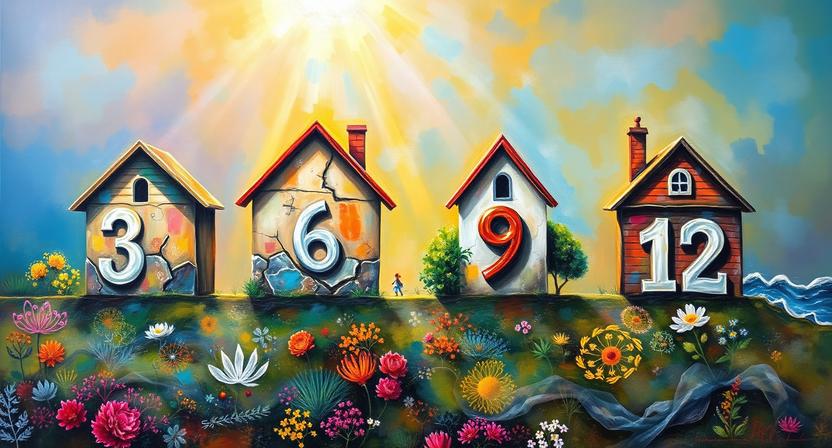
Astrologically, the cadent houses are the third, sixth, ninth, and twelfth. Each one follows a succedent house and precedes an angular house, placing them in a liminal position. They are neither beginnings nor anchors. They are the bridges in between. This is why they are associated with the mutable signs, whose nature is adaptability, flexibility, and responsiveness. Mutable energy does not cling or command—it adjusts.

The third house follows the second and carries forward the problem of survival into the realm of perception and communication. If the second house asks what we need in order to live, the third house asks how we understand and navigate the environment that provides it. This is the house of language, learning, siblings, neighbors, and immediate surroundings. It governs the mind in its most practical, responsive form.

The cadent nature of the third house is evident in its constant movement. This is not deep contemplation or abstract philosophy. It is thinking on the go. The third house mind gathers data, makes connections, and shares information rapidly. It governs speech, writing, gestures, and all the small exchanges that keep daily life functioning. Because it is cadent, this house does not hold knowledge—it passes it along.

This house is also about proximity. Short trips, local travel, and familiar routes all fall here. The third house reveals how someone orients themselves within their immediate world, how they interpret signs, and how they learn through repetition and exposure. Knowledge here is not accumulated for prestige; it is used to adapt in real time.

Siblings are governed by the third house because they represent lateral relationships—neither above nor below, but alongside. These relationships require constant negotiation, communication, and adjustment. They shape early thinking patterns and communication habits, which often persist throughout life. The third house shows how the mind learned to move.

Following the fifth house, the sixth introduces a sobering but essential recalibration. If the fifth house is about joy, expression, and creative overflow, the sixth house asks how that energy must be refined in order to function. This is the house of work, service, discipline, health, and routine. It governs the process of correcting excess and addressing imbalance.

The cadent quality of the sixth house is often misunderstood as weakness or drudgery, but in truth it is the house of adjustment. Life produces waste. Systems break down. Bodies require maintenance. The sixth house handles these realities. It governs labor not as ambition, but as necessity. This is the work that keeps things running when the spotlight is gone.

Health belongs here not as vitality, but as management of the body. Illness, habits, treatments, and daily care all fall under the sixth house because they involve continuous correction. Healing is not an event; it is a process. The sixth house reflects the ongoing dialogue between effort and limitation.

This house also governs service, not in a moral sense, but in a functional one. Service means responding to what is needed. It requires humility, attentiveness, and flexibility. The sixth house does not lead; it supports. But without it, nothing functions properly. Its cadent nature allows it to adapt systems so they can endure.

The ninth house follows the eighth and carries transformation into the realm of meaning. If the eighth house binds us through shared resources and deep entanglement, the ninth house asks what truths emerge from those experiences. This is the house of philosophy, belief systems, higher learning, law, and long-distance travel. It governs the search for coherence beyond personal circumstance.

The cadent quality of the ninth house reveals itself in its restlessness. This house is not satisfied with inherited beliefs or local truths. It seeks perspective. It stretches the mind beyond familiar boundaries. Travel here is not about movement for its own sake, but about exposure to different worldviews. The ninth house expands the mental horizon.

Higher education belongs to this house not as credentialism, but as structured exploration of meaning. The ninth house mind seeks frameworks that explain life as a whole. Religion, philosophy, and ideology all arise here because they offer narratives that organize experience. These narratives are not static; they evolve as understanding deepens.

Law also belongs to the ninth house because it represents codified belief about justice and order. Legal systems reflect collective values and ethical assumptions. The ninth house shows how someone relates to authority as principle rather than person, and how they reconcile personal truth with universal rules.

The twelfth house follows the eleventh and brings the cycle to its most diffuse and mysterious phase. If the eleventh house is about collective participation and shared futures, the twelfth house asks what must dissolve before something new can begin. This is the house of endings, withdrawal, dreams, the unconscious, and transcendence.

The cadent nature of the twelfth house is profound. It is the place where form breaks down. Where identity softens. Where boundaries blur. This house governs experiences that cannot be easily named or controlled. Solitude, spiritual retreat, and hidden suffering all fall here because they occur outside public structures.

The twelfth house is often associated with loss, but its deeper function is release. What has been accumulated, sustained, and interpreted must eventually be let go. This house clears psychic and spiritual residue so that the first house may emerge again unburdened. It is the ocean into which all experiences eventually flow.

This house also governs compassion, not as sentiment, but as identification beyond the self. The twelfth house dissolves the illusion of separateness. It reveals shared vulnerability and collective pain. This is why it governs institutions that isolate individuals—hospitals, prisons, monasteries—places where personal identity is stripped away.

Dreams belong to the twelfth house because they bypass conscious structure. They speak in symbols, emotions, and impressions. They are messages from the parts of the psyche that cadent houses specialize in translating. The twelfth house does not explain; it absorbs and dissolves.

What unites all cadent houses is their relationship to change through understanding. They do not create or preserve; they transform. They move energy from one form to another. They teach, correct, reinterpret, and release. Their power is subtle but essential.

Cadent houses are often underestimated because their effects are not immediately visible. But they shape perception, belief, habit, and inner orientation. They determine how someone learns from experience and whether that learning leads to growth or repetition. Without cadent houses, life would be loud but shallow, busy but unwise.

In the architecture of the chart, cadent houses function as circulatory systems. They move information, meaning, and awareness throughout the horoscope. They prevent stagnation. They allow adaptation. They ensure that each cycle prepares the way for the next.

Ultimately, the cadent houses answer the question: What must shift so life can continue evolving? They remind us that nothing remains fixed forever, and that wisdom lies not in clinging, but in understanding, adjustment, and surrender.

They are the quiet teachers of the chart, the translators between worlds, and the unseen hands guiding the rhythm of becoming.


The Succedent Houses in Astrology: Where The Horoscope Stabilizes

In astrology, the succedent houses represent the phase of life that follows initiation. Where the angular houses ignite experience and thrust us into action, the succedent houses ask a quieter but equally important question: What do you do with what you’ve begun? These houses are not about first contact or public confrontation. They are about continuation, maintenance, and preservation. They describe how energy is stabilized, how resources are accumulated, and how meaning is sustained over time. Without succedent houses, nothing lasts. Without them, beginnings collapse and efforts evaporate.

The word “succedent” comes from the Latin succedere, meaning “to follow after.” This alone reveals their function. Succedent houses follow the angular houses, inheriting their momentum and determining whether that momentum becomes something durable or something fleeting. They are the houses of holding, keeping, and cultivating. Unlike angular houses, which are visible and event-driven, succedent houses operate through consistency, attachment, and endurance. They do not shout. They settle in.

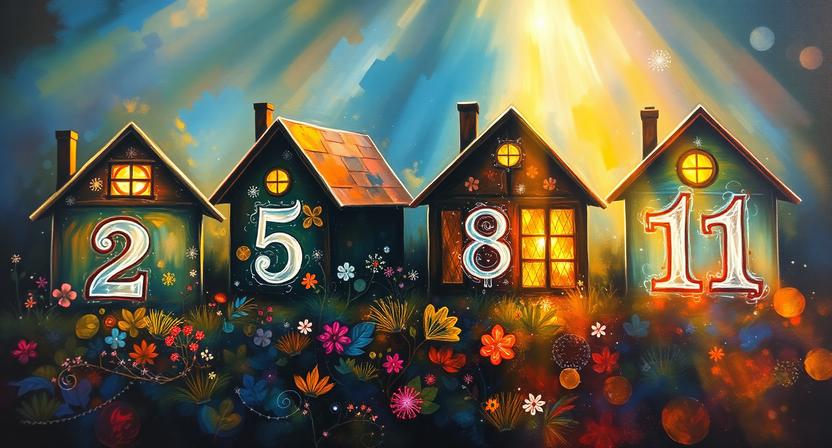
Astrologically, the succedent houses are the second, fifth, eighth, and eleventh. Each one follows an angular house and develops its themes in a more sustained and embodied way. These houses are associated with the fixed signs, which further emphasizes their role in stability, persistence, and resistance to change. Fixed energy does not initiate or dissolve—it maintains. This makes succedent houses deeply connected to material reality, emotional investment, and long-term consequence.

The second house follows the first, and it is here that existence becomes something that must be sustained. If the first house declares “I am,” the second house asks “What do I need in order to continue?” This is the house of resources, values, appetite, and consumption. It governs not only money and possessions, but the deeper principle of what we take in and what we hold onto. The second house reveals how life feeds itself.

The succedent nature of the second house is immediately evident in its relationship to survival. Once the body exists, it must eat. Once identity emerges, it must be supported. This is why the second house governs food, income, personal assets, and the material means of self-preservation. It is not concerned with ambition or reputation; it is concerned with having enough. Enough food. Enough stability. Enough reassurance that tomorrow can be met.

But the second house goes far beyond finances. It is the house of values, meaning what we consider worth keeping. This includes beliefs, attachments, comforts, and preferences. What someone spends money on, what they crave, what they refuse to give up—these are all second-house expressions. Because this house is succedent, these attachments tend to be strong and persistent. Once something becomes part of the second house economy, it is not easily released.

This house also governs appetite in a broad sense. Not just hunger for food, but hunger for experience, pleasure, and material engagement. The second house shows what we consume and, by extension, what we diminish through consumption. To eat is to reduce. To use is to wear down. This subtle principle reveals the second house as a place of exchange between self and environment, where sustenance comes at the cost of depletion elsewhere.

The fifth house follows the fourth and carries forward the foundation established there. If the fourth house is about roots and inner security, the fifth house is about creative expression that grows from those roots. This is the house of joy, pleasure, children, talents, and personal radiance. It is where life says, “Now that I am safe, I can play.” The fifth house is succedent because joy must be sustained to be meaningful.

The fifth house governs creativity not as effort, but as overflow. It is the act of giving form to something that already exists within. Art, performance, romance, and play all live here because they are expressions of vitality that require ongoing engagement. A talent discovered once means little unless it is practiced. A child conceived must be raised. Pleasure must be revisited again and again to remain alive.

This house is also deeply connected to recognition and appreciation, though not in the tenth-house sense of public status. The fifth house wants applause, affection, and acknowledgment on a personal level. It seeks to be seen enjoying itself. Because it is succedent, the fifth house thrives on repetition—regular hobbies, ongoing creative projects, long-term romances. It does not chase novelty for novelty’s sake; it wants continuity of delight.

Children are governed by the fifth house because they represent life extended forward. A child is not an event but a commitment. Parenting requires sustained attention, emotional investment, and long-term responsibility. This aligns perfectly with the succedent quality of the house. What is born must now be nurtured, encouraged, and supported so it can grow.

The eighth house follows the seventh, and here the succedent principle becomes more complex and intense. If the seventh house is about balance and encounter, the eighth house is about what happens after union. This is the house of shared resources, obligations, debts, inheritances, and transformations that arise from entanglement. The eighth house is succedent because bonds, once formed, create ongoing consequences.

This house governs what is shared, not what is owned outright. Money held jointly, emotional burdens carried together, secrets, contracts, and mutual dependencies all fall here. The eighth house reveals how deeply someone is willing to commit their resources to another and how they handle the loss of autonomy that follows intimacy. Once two lives intertwine, disentangling is not simple.

Despite common misconceptions, the eighth house is not inherently about sex. Sex belongs to the seventh house as an act of balance and pleasure between equals. The eighth house is about what comes after that act—attachment, obligation, and transformation. It governs the psychological and material aftermath of union, not the act itself. This distinction is crucial and often overlooked.

The eighth house is also associated with death, but not as a single event. It governs death as a process of transfer. Inheritances, legacies, and the passing of resources from one person to another all fall here. Something ends so something else may continue. This makes the eighth house profoundly succedent: it ensures continuity through redistribution rather than creation.

Transformation is a key theme here, but it is not sudden or explosive. It is slow, unavoidable change that results from sustained entanglement. Grief, healing, and psychological rebirth all belong to the eighth house because they unfold over time. This house does not initiate change; it absorbs it and reshapes the inner landscape accordingly.

The eleventh house follows the tenth and carries public action into the realm of collective continuity. If the tenth house is about achievement and authority, the eleventh house is about what those achievements contribute to the future. This is the house of friendships, communities, alliances, and long-term goals. It governs the networks that sustain influence beyond individual effort.

The eleventh house is succedent because social structures require maintenance. Friendships are not moments; they are relationships that must be tended. Causes do not advance without ongoing participation. Dreams do not materialize without repeated engagement. This house shows how someone invests energy into shared visions and collective aspirations.

Unlike the seventh house, which focuses on one-to-one relationships, the eleventh house governs many-to-many connections. It is the house of groups, audiences, and social ecosystems. These are not intimate bonds but enduring affiliations. The eleventh house reveals where someone finds belonging among peers and how they contribute to something larger than themselves.

This house is also associated with hopes and wishes, but not idle fantasies. These are goals anchored in reality, shaped by circumstance, and pursued over time. The eleventh house shows what someone is willing to work toward patiently, often without immediate reward. This makes it one of the most future-oriented houses in the chart.

What unites all succedent houses is their relationship to value over time. They are concerned with what is worth keeping, what deserves investment, and what must be managed carefully to endure. These houses resist disruption. They prefer continuity to change, familiarity to novelty, and stability to risk. This can manifest as loyalty and reliability, or as stubbornness and resistance, depending on how the energy is handled.

Succedent houses also represent emotional and material attachment. They show where we dig in our heels, where we store our treasures, and where we struggle to let go. This attachment is not inherently negative; it is necessary for building a life. But it can become limiting when growth requires release.

In the architecture of the chart, succedent houses act as the load-bearing walls. Angular houses may set the direction, but succedent houses determine whether that direction is sustainable. Cadent houses may adapt and reinterpret, but succedent houses decide what remains unchanged. They are the keepers of continuity.

Ultimately, the succedent houses answer a fundamental question: What lasts? They show how life is sustained through effort, commitment, and care. They remind us that beginnings mean nothing without follow-through, and that meaning is not created in moments alone, but through endurance, repetition, and devotion.


The Angular Houses in Astrology: Where the Sky Touches the Earth

In astrology, the angular houses hold a special status that immediately sets them apart from all others. They are not subtle, hidden, or abstract. They are loud, visible, and active. When planets occupy these houses, they announce themselves in unmistakable ways, shaping the trajectory of a life through concrete events, decisive actions, and unmistakable turning points. The angular houses describe the points where the sky meets the Earth, where the symbolic becomes real, and where intention crystallizes into experience. They are the houses of doing, meeting, founding, and culminating. Without them, a chart lacks traction. With them, life moves.

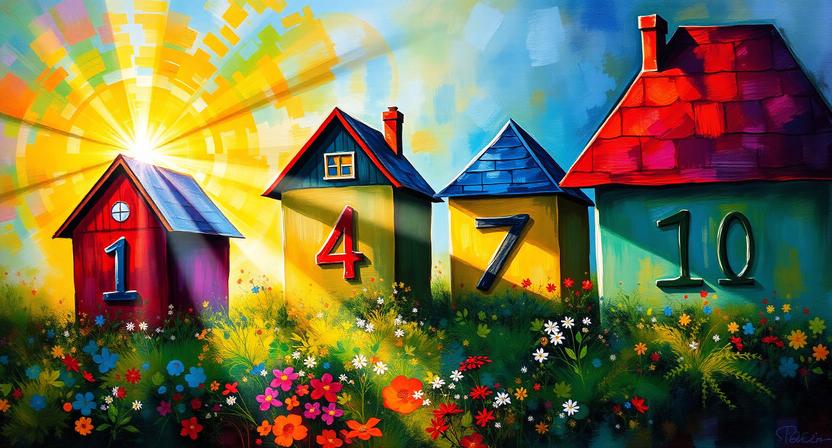
The word “angular” itself comes from the idea of angles, and in astrology, angles are the most potent points in the chart. These are not arbitrary divisions. They are rooted in astronomy and lived experience. The Ascendant marks the moment a body rises over the eastern horizon, the Midheaven marks the highest point it reaches in the sky, the Descendant marks its setting in the west, and the Imum Coeli marks its lowest, darkest point beneath the Earth. These four angles form the skeleton of the chart, and the angular houses attached to them describe the four great acts of human existence: becoming, acting, relating, and rooting.

The first house begins at the Ascendant, and it is here that life enters the world. This is the house of arrival, emergence, and self-assertion. It is not simply about personality in a superficial sense. It describes the raw fact of existence as a separate being. The first house is the act of standing upright and declaring “I am.” It governs the body as a living vessel, the instinct to survive, and the way consciousness inhabits flesh. This is why planets in the first house are impossible to miss. They shape how someone moves through space, how they are noticed, and how they initiate action. The first house is not passive. It does not wait. It begins.

What makes the first house angular is its direct connection to the horizon. This is the place where the unseen becomes seen, where potential becomes form. It governs identity in motion, not identity as an idea. The Ascendant is not who someone thinks they are; it is who they are being moment by moment. This is why the first house also governs instinctual reactions and immediate responses. There is no mediation here. No negotiation. No reflection. The first house acts first and understands later. It is the spark that lights the chart.

The angular quality of the first house also explains why it is associated with vitality and health. This is not medical detail in the sixth-house sense, but life force itself. When the first house is strong, life moves forward. When it is burdened, life feels heavy to initiate. The first house shows how easily someone steps into existence each day, how naturally they take up space, and how confidently they face the world as an individual.

Opposite the first house is the seventh, anchored by the Descendant. If the first house is “I am,” the seventh house is “I meet.” This is the house of encounter, exchange, and mirroring. It governs marriage, partnerships, contracts, alliances, and declared enemies, not because these are moral categories, but because they all involve another will standing across from you. The seventh house is angular because it marks the moment where the self must recognize that it is not alone.

The seventh house is often misunderstood as merely romantic, but its deeper function is balance. It is the house where the chart corrects itself. Where the first house pushes outward, the seventh pushes back. It forces awareness of equilibrium, justice, and reciprocity. This is why law courts, negotiations, treaties, and commerce fall under this house. All of these require two sides to acknowledge one another as equals, even when they oppose each other.

The angular nature of the seventh house makes relationships unavoidable. When planets are here, life brings people into direct confrontation with others who matter. These are not background characters. They are pivotal figures who shape choices and redirect paths. The seventh house teaches that identity does not exist in isolation. It is forged through contrast. Through opposition. Through the act of standing face-to-face with someone who reflects what we are and what we are not.

This is also why the seventh house governs sex and union. Sex is not hidden or secretive here; it is an act of balance and mutual pleasure. It is the meeting point of two bodies seeking harmony and exchange. Unlike the eighth house, which dissolves boundaries and merges resources, the seventh house preserves two distinct entities choosing to connect. Sex here is about reciprocal enjoyment, not loss of self. It is pleasure achieved through alignment.

Moving from the horizon to the deepest point of the chart brings us to the fourth house, anchored by the Imum Coeli. This is the lowest angle, the place of midnight, roots, and foundations. If the first house is emergence, the fourth house is origin. It governs where we come from, what holds us up, and what remains when the world is stripped away. This is the house of home, family, ancestry, and inner security.

The angular nature of the fourth house is subtle but profound. It is not loud like the first or confrontational like the seventh, but it is just as powerful. This is the axis of gravity. The fourth house determines what someone returns to when life collapses inward. It describes the psychological basement, the emotional ground floor, and the inherited patterns that shape behavior long before conscious choice enters the picture.

Planets in the fourth house anchor a person’s life around themes of belonging and protection. This is not just the physical home, but the idea of having somewhere to land. The fourth house governs shelter in all forms, including emotional safety, private identity, and the inner world that is never fully shared. Because it is angular, these matters manifest clearly. Home is not abstract here; it is decisive.

The fourth house also relates to endings, not as death itself, but as withdrawal from public life. It is the place one retreats to after the world has taken its toll. This is why it governs old age, family legacy, and the emotional inheritance we pass on. The fourth house completes the cycle that begins in the first. One enters the world through the Ascendant and eventually seeks rest and containment at the IC.

Opposite the fourth house is the tenth, crowned by the Midheaven. This is the highest point in the chart, the place of maximum visibility. The tenth house governs achievement, reputation, authority, and public contribution. If the fourth house is where we come from, the tenth house is where we are seen. It describes what we build, what we are known for, and how our actions ripple outward into the collective.

The angular power of the tenth house cannot be overstated. Planets here seek expression through accomplishment and recognition. This is not ego for ego’s sake. It is responsibility made visible. The tenth house asks, “What are you doing with your life in the eyes of the world?” It governs career not merely as a job, but as a calling, a role that carries weight and consequence.

This house also governs authority figures, not because of hierarchy alone, but because authority represents structure imposed from above. The tenth house is where order is established and maintained. It shows how someone handles power, status, and accountability. When strong, it produces leaders. When challenged, it produces conflict with systems and expectations.

The relationship between the fourth and tenth houses is one of private versus public, inner versus outer, roots versus results. These two angular houses form the vertical axis of the chart, describing the tension between personal security and worldly ambition. Every life negotiates this axis differently, but it is always active. One cannot climb without a foundation, and one cannot hide forever without forfeiting potential.

What unites all four angular houses is their relationship to action and consequence. Unlike succedent houses, which stabilize, or cadent houses, which adapt and transition, angular houses initiate. They begin chapters. They mark turning points. They are where events happen rather than where they are processed. This is why traditional astrology considers angular planets the strongest. They are closest to the angles, closest to manifestation, closest to the physical world.

The angular houses also correspond to the cardinal signs, reinforcing their initiatory nature. Aries aligns with the first house and emergence, Cancer with the fourth and protection, Libra with the seventh and balance, and Capricorn with the tenth and authority. This cardinal quality gives angular houses a sense of urgency. They do not linger. They move life forward, sometimes forcefully.

Another defining trait of angular houses is visibility. Matters associated with these houses are rarely hidden. Identity, home, relationships, and public standing are all observable in tangible ways. When challenges arise here, they tend to be lived out in real time, through real events, with real people. There is little room for avoidance. Angular houses demand engagement.

The angular houses also serve as anchors for the rest of the chart. Each one pulls energy toward itself, shaping how neighboring houses function. The first house influences the second and twelfth, the fourth shapes the third and fifth, the seventh affects the sixth and eighth, and the tenth conditions the ninth and eleventh. In this way, angular houses act as gravitational centers, organizing experience around core life themes.

In a broader philosophical sense, the angular houses describe the human condition itself. We are born into a body, shaped by a home, defined through relationships, and measured by what we contribute. These are not optional experiences. They are universal. This is why angular houses feel so immediate and unavoidable. They reflect the fundamental structure of lived reality.

Ultimately, the angular houses show where life meets resistance and response. Where we must act, adapt, confront, and commit. They are not comfortable by default, but they are meaningful. They are where astrology stops being symbolic and starts being lived. When you understand the angular houses, you understand the engine of the chart—the places where fate presses hardest and where choice matters most.

Horary: The Astrology of the Question Itself


Horary astrology is a branch of astrology devoted to answering specific questions. Unlike natal astrology, which interprets a birth chart, or predictive astrology, which looks at cycles and timing, horary astrology focuses on a single moment: the moment a sincere question is asked.

The core idea is simple but profound. When a question arises with genuine urgency or emotional charge, that moment carries meaning. The sky at that exact time becomes a symbolic mirror of the situation being asked about. By casting a chart for the time and place where the astrologer receives and understands the question, the astrologer can interpret the answer.

Horary astrology does not ask, “What is my personality?” or “What will the next year be like?” Instead, it asks things like: Will I get this job? Where is my missing item? Is this relationship likely to continue? Should I take this opportunity? What is really going on in this situation?

Because horary astrology is direct, concrete, and outcome-oriented, it has long been valued for its practical usefulness. It is not speculative or psychological in nature. Its purpose is clarity.

At its heart, horary astrology rests on a radical premise: the universe responds to questions. When a question is asked at the right moment, the answer is already present in the structure of the heavens.

The Core Philosophy

The philosophical foundation of horary astrology is rooted in correspondence rather than causation. The planets do not cause events in a mechanical sense. Instead, celestial configurations and earthly situations unfold together as expressions of the same underlying order.

This worldview comes from ancient and medieval cosmology, where the universe was seen as a living, intelligible whole. Human thought, emotion, and intention were not separate from nature. A meaningful question was not random. It was part of the same fabric as the movement of the stars.

In horary astrology, the question itself is the key. Not every curiosity qualifies. A valid horary question must carry weight. It must matter. It must be asked because the answer is genuinely unknown and emotionally relevant.

This is why traditional horary texts often stress that the astrologer should not judge charts for idle or repetitive questions. The moment must be ripe. When it is, the chart speaks with striking clarity.

Another core principle is radicality. A chart is considered radical when it is fit to be judged. This involves considerations such as the condition of the Ascendant, the planetary hour, and whether the chart reflects the nature of the question. Radicality is not superstition. It is a symbolic check that the chart truly belongs to the question being asked.

Horary astrology assumes that truth can be symbolized, and that symbols, when interpreted correctly, reveal concrete outcomes.

Ancient Origins

Horary astrology has deep roots in the ancient world. Its foundations can be traced back to Hellenistic astrology, which flourished in the Mediterranean between roughly the 1st century BCE and the 7th century CE.

Early astrologers already understood that charts could be cast for moments other than birth. Electional astrology, which chooses auspicious times for action, and interrogational astrology, which answers questions, were both practiced alongside natal astrology.

However, horary astrology truly matured during the Islamic Golden Age, from roughly the 8th to the 13th centuries. Scholars in the Islamic world preserved, translated, and expanded upon Greek astrological texts, developing highly refined systems of interpretation.

Astrologers such as Masha’allah, Sahl ibn Bishr, and Al-Biruni made significant contributions to horary technique. They formalized rules for house meanings, planetary significators, receptions, prohibitions, and perfection of matters. Their work laid the groundwork for what later became classical horary astrology.

From the Islamic world, horary astrology passed into medieval Europe. Latin translations of Arabic texts circulated widely, influencing astrologers across the continent. By the Renaissance, horary astrology was firmly established as a respected and practical art.

Medieval Development

The medieval period marked the golden age of horary astrology. During this time, astrology was not separated from daily life. Kings, merchants, physicians, and ordinary people consulted astrologers for guidance on legal matters, travel, health, war, and personal affairs.

The most influential horary astrologer in the Western tradition was William Lilly, a 17th-century English astrologer. His monumental work, Christian Astrology, remains one of the most important horary texts ever written.

Lilly systematized horary astrology in a way that made it accessible without stripping it of its depth. He provided clear rules, examples, and judgments drawn from real cases. His approach emphasized clarity, honesty, and precision, and his work continues to shape horary practice today.

Medieval horary astrology was unapologetically concrete. Questions were answered plainly. Charts were judged decisively. There was little interest in psychological nuance or abstract interpretation. The focus was on what would actually happen.

This practicality is one of the reasons horary astrology survived even as astrology declined during the Enlightenment. It worked.

Modern Revival

In the 19th and early 20th centuries, astrology underwent a major shift. Psychological and spiritual interpretations became dominant, particularly in natal astrology. Horary astrology, with its strict rules and predictive nature, fell out of favor.

However, the late 20th century saw a revival of traditional astrology. Scholars and practitioners began translating and studying ancient and medieval texts again. Horary astrology reemerged as a powerful, elegant system rooted in centuries of accumulated knowledge.

Modern horary astrologers often blend traditional techniques with contemporary sensibilities, but the core methods remain unchanged. The planets still signify people and forces. The houses still describe areas of life. Aspects still show connection, movement, and outcome.

What has changed is context. Today, horary astrology is practiced in a world shaped by psychology, technology, and personal autonomy. While the technique remains traditional, its application has expanded.

Yet at its core, horary astrology remains what it has always been: a tool for answering real questions with symbolic precision.

How a Horary Chart Is Cast

A horary chart is cast for the exact time and location where the astrologer receives and comprehends the question. This moment is critical. It is not when the question first occurs to the querent, but when it is clearly understood by the astrologer.

Once the chart is cast, the astrologer identifies the Ascendant, which represents the querent and the situation as a whole. The ruler of the Ascendant becomes the primary significator of the person asking the question.

Next, the astrologer identifies the house that governs the matter being asked about. Each house has a defined range of meanings. Relationships belong to the seventh house. Career questions often involve the tenth. Lost objects are usually found in the second or fourth. Secrets and hidden matters fall under the twelfth.

The ruler of the relevant house becomes the significator of the thing sought.

From there, the astrologer examines aspects, planetary conditions, receptions, dignities, and movement to determine whether the matter will be perfected or denied.

Horary astrology is not intuitive guesswork. It is a structured symbolic language with internal logic.

The Role of Significators

Significators are the backbone of horary interpretation. They are the planets that represent the people, objects, or outcomes involved in the question.

The querent is usually signified by the ruler of the Ascendant and sometimes the Moon. The Moon plays a particularly important role in horary astrology, acting as a co-significator of the question and showing how the situation unfolds over time.

The quesited, or thing being asked about, is signified by the ruler of the relevant house. For example, in a question about marriage, the seventh house ruler signifies the potential partner. In a question about money, the second house ruler signifies finances.

The condition of a significator tells a story. A planet that is strong, dignified, and well-placed suggests capability, stability, or success. A planet that is weak, afflicted, or retrograde suggests difficulty, delay, or reversal.

What matters most is connection. If the significators apply to each other by major aspect, the matter is likely to come together. If they separate, are blocked, or never connect, the matter may fail.

Timing & Outcome

One of horary astrology’s most valued features is its ability to address timing. By examining the speed of planets, the nature of signs, and the distance between significators, astrologers can estimate when an outcome is likely to occur.

Timing in horary is not exact to the minute, but it can be surprisingly accurate. The astrologer may determine whether something will happen soon or later, quickly or slowly, or whether it will happen at all.

The outcome is judged through perfection or frustration. Perfection occurs when significators connect under favorable conditions. Frustration occurs when something interferes, such as another planet blocking the aspect or a significator changing signs.

These symbolic movements often correspond uncannily with real-world events.

Strengths of Horary Astrology

One of the greatest strengths of horary astrology is its clarity. It does not drift into abstraction. It answers the question that is asked.

Horary astrology is also highly efficient. A single chart can address a specific issue without requiring extensive background information. This makes it ideal for moments of uncertainty or decision.

Another strength is its honesty. Horary astrology does not promise what someone wants to hear. It reveals what is shown. This can be challenging, but it is also liberating.

Because horary astrology is rooted in tradition, it has been tested over centuries. Its rules exist because they work, not because they sound appealing.

Perhaps most importantly, horary astrology respects the power of the moment. It affirms that meaning is present now, not only in the past or future.

Limitations & Criticism

Despite its strengths, horary astrology is not without limitations. It requires discipline, study, and restraint. Without proper training, it is easy to misjudge charts or overinterpret symbolism.

Horary astrology also demands ethical responsibility. Some questions should not be judged, particularly those that invade others’ privacy or encourage obsession. Traditional astrologers were clear about this, and modern practitioners must be as well.

Another limitation is that horary astrology can feel rigid to those accustomed to psychological or intuitive approaches. Its rules can seem restrictive, and its answers can feel blunt.

Critics also argue that horary astrology relies too heavily on symbolic coincidence. To those who reject symbolic worldviews, its premises may seem implausible.

Yet for those who practice it sincerely, horary astrology consistently demonstrates that meaningful questions produce meaningful charts.

Why Horary Still Matters

Horary astrology endures because it addresses something timeless: the human need for guidance in moments of uncertainty. It acknowledges that not all questions can be answered by logic alone.

In a world saturated with information, horary astrology offers focus. It narrows attention to what truly matters right now.

It also reminds us that questions themselves are powerful. To ask sincerely is already to engage with meaning.

Horary astrology does not remove free will, nor does it dictate fate. Instead, it illuminates the terrain so choices can be made with awareness.

In that sense, horary astrology is not about prediction alone. It is about recognition—recognizing where things stand, what forces are at play, and what paths are open or closed.

After centuries of use, horary astrology remains one of the most elegant examples of symbolic reasoning ever developed. It stands as a testament to the idea that the universe, when questioned properly, is willing to answer.

Famous Astrology Books – From The Stars To The Page


Astrology survives because it was written. Long before astrology became personalized, spiritualized, or commercialized, it existed as recorded memory. Kings funded it. Temples guarded it. Scholars copied it by hand across centuries, often at personal risk. These texts were not curiosities — they were operational manuals for reality itself.

Astrological books did more than describe planetary meanings. They encoded worldviews. They defined what time was, how fate operated, whether the cosmos was moral, mechanical, or conscious. Each great astrological text is therefore not merely instructional, but philosophical. To read them is to enter different civilizations’ answers to the same question: what governs life?

What follows is a deeper and more complete canon — the books that shaped astrology’s structure, metaphysics, and survival.


The Corpus Hermeticum

The Corpus Hermeticum is the philosophical womb of Western astrology. Although not a technical astrology manual, it provides the ontological justification for astrology itself.

These texts present a universe that is alive, hierarchical, and intelligible. The stars are not distant matter but expressions of divine intelligence. Humanity, positioned between heaven and earth, is capable of understanding the cosmos because it participates in the same structure.

Astrology, under this worldview, is not fortune-telling. It is recognition. The chart does not impose meaning; it reveals what is already true. Time itself is qualitative, shaped by planetary intelligences that govern cycles of growth, decay, and transformation.

Without Hermetic philosophy, astrology would have remained omen-based. With it, astrology became symbolic, metaphysical, and ultimately psychological centuries later.

The Corpus Hermeticum taught astrologers why the sky mattered before technique ever answered how.


Enuma Anu Enlil

The Enuma Anu Enlil is humanity’s first sustained attempt to read the sky systematically. Compiled in ancient Mesopotamia, this massive omen series recorded correlations between celestial events and earthly outcomes over generations.

This was not astrology of personality or inner life. It was astrology of statecraft and survival. Eclipses, planetary disappearances, and unusual phenomena were interpreted as warnings to kings, indicators of famine, or signs of invasion.

What makes the Enuma Anu Enlil extraordinary is its empirical rigor. Observations were logged, compared, and refined. If an omen failed, it was revised. Astrology here was data-driven long before modern science existed.

This text represents astrology before symbolism — when the sky was a messaging system, and interpretation was a matter of life and death.


Tetrabiblos – Claudius Ptolemy

The Tetrabiblos is astrology’s great act of self-defense. Written in the 2nd century CE, it reframed astrology as a natural science rather than divine revelation.

Ptolemy argued that planetary influences worked through physical qualities, shaping temperament and probability rather than absolute fate. This allowed astrology to coexist with philosophical skepticism and later religious doctrine.

His system of planetary dignity, aspect theory, and sign qualities became the grammar of Western astrology. Even astrologers who reject Ptolemy still speak his language.

The brilliance of the Tetrabiblos lies not in inspiration but survival. It allowed astrology to endure when myth alone would not have sufficed.


Carmen Astrologicum – Dorotheus of Sidon

Dorotheus’ Carmen Astrologicum preserves astrology as it was practiced, not theorized. Written as instructional verse, it trained astrologers to judge charts with consistency and restraint.

The text focuses on tangible outcomes — marriage, children, profession, travel, illness, and death. Dorotheus does not soften difficult judgments. Astrology, for him, describes what happens, not what one hopes will happen.

This work is crucial because it preserves early Hellenistic technique in usable form. Its influence on Arabic and medieval astrology cannot be overstated.

The Carmen Astrologicum is astrology stripped of mysticism and psychology — clear, operational, and unforgiving.


Anthologies – Vettius Valens

The Anthologies is astrology as lived reality. Compiled over decades, it is dense, repetitive, and brutally honest.

Valens recorded charts that failed as well as those that succeeded. He described poverty, illness, exile, and disappointment alongside moments of success. His astrology does not promise transcendence — it promises understanding.

Technically, the Anthologies preserve some of the most advanced timing systems ever developed. These techniques show fate unfolding in stages, governed by planetary rulership over time.

This text is difficult because life is difficult. Valens did not write to inspire. He wrote to endure.


Brihat Parashara Hora Shastra

The Brihat Parashara Hora Shastra is not merely an astrological book; it is a cosmological system. Attributed to Maharishi Parashara, it defines Jyotisha as a karmic science.

This text assumes reincarnation as fact. The birth chart reveals accumulated karma, present obligation, and future consequence. Time unfolds through dashas, each period activating different karmic themes.

The scope of the work is immense, covering planetary significations, divisional charts, yogas, remedies, and spiritual outcomes. It does not separate material life from spiritual destiny.

In Vedic astrology, Parashara is foundational. To practice Jyotisha without Parashara is nearly unthinkable.


Jaimini Sutras

The Jaimini Sutras represent a radically different approach to astrology within the Indian tradition. Attributed to the sage Jaimini, this text introduces a symbolic, minimalist, and aphoristic system unlike Parasharian astrology.

Jaimini astrology emphasizes signs over planets, uses unique dasha systems, and interprets charts through symbolic logic rather than descriptive narrative. Its sutra format makes it cryptic and demanding.

This system treats astrology as esoteric knowledge, requiring initiation and deep study. It is less concerned with surface events and more with destiny patterns and spiritual outcomes.

The Jaimini Sutras reveal that Vedic astrology was never monolithic. Multiple systems coexisted, sometimes contradicting one another, yet all aimed at decoding karma.


Brihat Samhita – Varahamihira

The Brihat Samhita is astrology as civilizational science. Varahamihira integrated astrology with meteorology, architecture, agriculture, omens, rituals, and social order.

This text assumes the cosmos operates as an interconnected system. Planetary movements influence rainfall, crop yield, political stability, and human behavior.

Varahamihira did not see astrology as personal guidance. He saw it as infrastructure — knowledge necessary for maintaining harmony between heaven and earth.


Phaladeepika

The Phaladeepika is one of the most influential natal astrology texts in Jyotisha. Written by Mantreswara, it synthesizes Parasharian principles into a clear, structured guide focused on results.

The title itself means “lamp of results,” and the text delivers exactly that. It emphasizes planetary placements, combinations, and outcomes with remarkable clarity.

The Phaladeepika became popular because it was teachable. It translated complex doctrine into practical interpretation, ensuring Jyotisha’s transmission across generations.

This text represents astrology as applied wisdom — distilled, precise, and enduring.


Saravali – Kalyana Varma

The Saravali further refined natal astrology, emphasizing temperament, mental disposition, and planetary interaction.

Kalyana Varma brought psychological depth to Jyotisha long before modern psychology existed. His work stabilizes interpretation without reducing symbolism.

The Saravali helped standardize Vedic astrology into a coherent, transmissible tradition.


Liber Astronomiae – Guido Bonatti

Bonatti’s Liber Astronomiae is the definitive medieval horary manual. It systematized rules with relentless precision.

Bonatti treated astrology as a discipline requiring discipline. Judgment demanded restraint, hierarchy of testimony, and technical correctness.

This text marks astrology’s last period of institutional authority in Europe.


Three Books on Life – Marsilio Ficino

Ficino reframed astrology as spiritual medicine. Drawing from Hermetic and Platonic thought, he taught how to harmonize planetary influences through ritual, music, and contemplation.

Astrology here is not fate but alignment.


Christian Astrology – William Lilly

Lilly’s Christian Astrology preserved astrology through example. It shows astrology functioning in real time, in political chaos, personal fear, and public consequence.

This book ensured astrology’s survival in the English-speaking world.


Astrology survives because it was written by those who believed time mattered. These texts do not agree. They argue across centuries and cultures. Yet all assume the same thing: that life unfolds according to structure, not randomness. Astrology is not ancient because it is old. It is ancient because it remembers. And as long as these books exist, humanity’s dialogue with time remains unfinished.


Astrology: A Quick History For Beginners
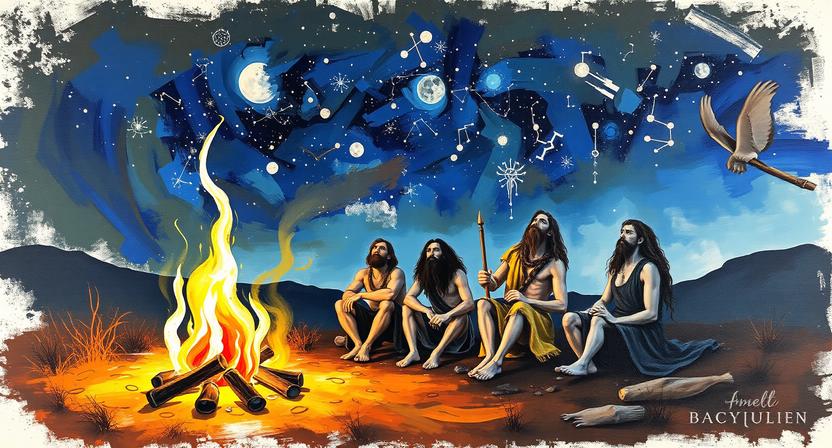

Astrology is one of humanity’s most enduring intellectual and symbolic systems, rooted in the earliest attempts to understand existence itself. Long before formal language, mathematics, or writing, human beings oriented their lives by the sky.

The heavens were not distant or abstract; they were immediate, intimate, and alive. The rising and setting of the Sun structured the day, the Moon shaped the sense of time and fertility, and the stars marked the seasons that governed survival. In a world where nature could be unpredictable and dangerous, the sky offered regularity. This predictability fostered meaning, and meaning gradually evolved into interpretation. Astrology began not as belief but as attention—the sustained, careful watching of the heavens and the conviction that what happened above was deeply connected to what happened below.

Early hunter-gatherer societies relied on celestial patterns to anticipate animal migrations, weather changes, and seasonal abundance. Over time, this observational knowledge became embedded in myth. Stars were imagined as ancestors, animals, spirits, or gods; their movements told stories that encoded survival knowledge. These myths were not separate from reality but functioned as memory systems, preserving astronomical observations across generations. As human societies settled into agricultural life, celestial knowledge became even more crucial. Farming required long-term planning, and the sky became the most reliable guide available. This shift from nomadic to sedentary life intensified humanity’s dependence on celestial cycles and laid the groundwork for more formalized systems of sky interpretation.

The construction of ancient monuments aligned with solar and lunar events reveals that early civilizations possessed an advanced understanding of celestial mechanics, even without modern instruments. These structures were not merely calendars but sacred spaces where cosmic order and human ritual intersected. The alignment of stone, earth, and sky reflected a worldview in which time was cyclical and sacred. In such societies, there was no distinction between scientific observation and spiritual meaning; astrology, religion, and cosmology were inseparable aspects of a unified understanding of reality.

The emergence of writing in Mesopotamia transformed astrology from oral tradition into a documented discipline. Clay tablets preserved detailed records of planetary movements, eclipses, and unusual celestial events. The Mesopotamians believed the gods communicated their intentions through the sky, and astrology became a method of divine interpretation. This was not speculative mysticism but a state-sponsored practice central to governance. Astrologers served kings and were responsible for interpreting celestial warnings that could determine political decisions. If an eclipse threatened the king, ritual substitutions might be enacted to divert the danger. In this way, astrology shaped not only belief but concrete political action.

Over centuries, Mesopotamian astrologers refined their techniques, gradually recognizing repeating cycles and developing mathematical models to predict future celestial events. This predictive capacity marked a crucial shift: astrology was no longer only reactive but anticipatory. The creation of the zodiac represented a major conceptual leap, dividing the continuous movement of the sky into symbolic segments that could be analyzed and compared. This abstraction allowed astrology to evolve beyond immediate omens into a systematic language capable of describing patterns across time.

In Egypt, the sky was woven into theology and the afterlife. The soul’s journey was imagined as a celestial ascent, and the stars were both destination and guide. Egyptian astrology emphasized continuity, renewal, and eternal order rather than sudden fate or catastrophe. The rising of Sirius, coinciding with the Nile’s flood, symbolized rebirth and divine benevolence. This intimate link between celestial events and earthly sustenance reinforced the idea that the heavens were actively involved in human survival. Egyptian star lore influenced temple design, burial practices, and royal ideology, embedding astrology into the fabric of daily and spiritual life.

The fusion of Egyptian, Babylonian, and Greek thought during the Hellenistic period produced one of the most influential astrological systems in history. Greek philosophers approached astrology with a desire to reconcile celestial influence with rational explanation. The concept of a cosmos governed by logos, or rational order, allowed astrology to be framed as a natural process rather than divine whim. Planets were no longer merely gods but carriers of specific qualities that interacted with the material world. This philosophical reframing elevated astrology’s intellectual status and allowed it to coexist with emerging scientific inquiry.

The development of natal astrology fundamentally changed how individuals understood themselves. The moment of birth was seen as a symbolic imprint, capturing the quality of time itself. Astrology offered a language for describing personality, temperament, strengths, and challenges. It did not claim absolute determinism but suggested tendencies shaped by cosmic conditions. This nuanced view allowed astrology to function as both predictive and interpretive, offering insight without eliminating choice. The popularity of horoscopes reflected a growing interest in individuality and personal destiny, concepts that were becoming increasingly important in Hellenistic and Roman culture.

As astrology spread throughout the Roman Empire, it became embedded in everyday life. Soldiers consulted astrologers before battles, merchants before journeys, lovers before marriages. Astrology crossed class boundaries, practiced in both elite courts and popular settings. Yet its power made it politically sensitive. Predicting the death or downfall of an emperor was a dangerous act, and astrologers often walked a fine line between influence and exile. This tension highlights astrology’s perceived authority; it was feared not because it was trivial, but because it was believed to work.

In India, astrology developed within a metaphysical framework that emphasized cosmic justice and spiritual evolution. Jyotisha integrated astronomy, mathematics, ritual, and philosophy into a coherent system that viewed human life as part of a vast karmic cycle. Planetary influences were not arbitrary but reflected accumulated actions across lifetimes. Astrology thus served as a tool for understanding one’s spiritual responsibilities and timing one’s actions in harmony with cosmic law. Its integration into religious practice ensured its continuity across centuries, largely uninterrupted by cultural upheaval.

The Islamic Golden Age represented a critical bridge in astrology’s history. Scholars approached astrology with both reverence and skepticism, refining its techniques while debating its philosophical implications. The distinction between permissible natural influence and forbidden determinism was carefully examined. Advances in astronomy improved the accuracy of astrological calculations, and the development of sophisticated observatories demonstrated that careful observation and symbolic interpretation could coexist. Astrology during this period was deeply interdisciplinary, informing medicine, geography, meteorology, and statecraft.

When astrology re-entered Europe through translation movements, it found fertile ground in medieval universities. Students learned astrology as part of a broader cosmological education that included geometry, music, and natural philosophy. Medical astrology was especially prominent; physicians believed that different parts of the body were governed by zodiac signs and planets, and treatments were timed accordingly. While religious authorities remained cautious, astrology was widely accepted as a means of understanding God’s creation rather than challenging divine authority.

The Renaissance intensified astrology’s symbolic richness. Thinkers viewed the universe as a grand correspondence system, where celestial, terrestrial, and human realms mirrored one another. Astrology provided a language for this interconnectedness, influencing art, architecture, literature, and music. Birth charts were interpreted not only for prediction but for philosophical insight. Even as new scientific discoveries challenged traditional cosmology, astrology remained a framework for meaning, offering coherence in a rapidly changing intellectual landscape.

The eventual separation of astrology from science was not sudden but gradual. As experimental methods prioritized quantifiable results, astrology’s symbolic and qualitative nature became increasingly incompatible with dominant scientific paradigms. The heavens were reimagined as inert matter rather than meaningful signs. Astrology’s authority diminished, but its cultural presence persisted. It survived in folk traditions, esoteric societies, and personal practice, adapting to new contexts and audiences.

In the modern era, astrology’s revival reflected broader cultural shifts. As industrialization and secularization altered traditional sources of meaning, astrology offered an alternative framework for self-understanding. Psychological interpretations reframed planetary symbols as expressions of inner dynamics rather than external fate. This transformation allowed astrology to align with modern values of self-exploration and personal growth. The rise of mass media simplified astrology for popular consumption, while digital technology later enabled unprecedented access to detailed charts and global communities.

Today, astrology exists in multiple forms simultaneously, ranging from scholarly study to casual entertainment. It is practiced differently across cultures, belief systems, and personal philosophies. Some approach it skeptically, others spiritually, others metaphorically. Yet its persistence across millennia suggests that astrology fulfills a fundamental human impulse: the desire to find pattern, meaning, and orientation within a vast and complex universe. Astrology endures not because it resists change, but because it continually adapts, absorbing new ideas while preserving its core function as a symbolic bridge between the sky and human experience.

In this sense, astrology is less a fixed doctrine than a living tradition, shaped by the civilizations that practice it. Its history mirrors humanity’s evolving relationship with knowledge, faith, and identity. From prehistoric stone circles to digital birth charts, astrology remains a testament to humanity’s enduring belief that the universe is not silent, and that by watching the sky, we may learn something profound about ourselves.