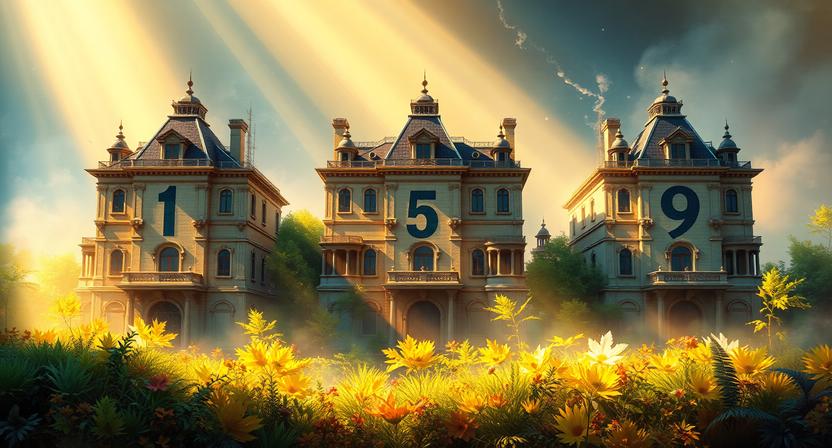
In Vedic astrology, preserved through the tradition of Jyotisha, the birth chart is organized not only by individual houses but by meaningful groupings of houses that reveal deeper patterns. One of the most important of these groupings is the Trikona houses. The word “Trikona” comes from Sanskrit and means triangle. In the horoscope, this refers to the 1st, 5th, and 9th houses — three points that form a triangular flow of purpose and intelligence. While the Kendra houses provide structural stability, the Trikonas provide inspiration, grace, and direction. They show where life unfolds naturally and where support seems to arise with less resistance.
The Trikona houses are traditionally associated with dharma, the principle of righteous order and meaningful alignment. For this reason, they are often called the houses of dharma. They reveal how a person aligns with truth, creativity, and higher understanding. If the Kendras show where life becomes active and visible, the Trikonas show where life becomes guided and meaningful. They represent a current of internal coherence that moves through identity, creativity, and belief. When these houses are strong, there is often a sense of natural confidence and moral clarity. When weakened, a person may struggle with direction or faith in their own path.
The 1st house belongs to both the Kendra and Trikona groups, making it especially powerful. As a Trikona, it represents the personal expression of dharma. It shows how purpose is embodied in the individual self. The rising sign and its planetary ruler shape the way one approaches life, but as part of the Trikona, the 1st house also reveals whether a person feels aligned with their own identity. It is not only about appearance or temperament; it is about the deeper question of self-consistency. When the 1st house is strong, there is often a sense of integrity between inner nature and outer behavior. This creates resilience and a steady orientation toward growth.
The 5th house is the second point of the Trikona and represents creativity, intelligence, children, and past-life merit. In classical texts, it is often associated with purva punya, or accumulated merit from past actions. This idea suggests that the 5th house reflects blessings carried forward into the present incarnation. It governs imagination, artistic ability, speculative ventures, and intellectual expression. More deeply, it represents the capacity to create — whether that creation takes the form of art, ideas, or offspring. A strong 5th house indicates creative intelligence and inspired expression, while afflictions may show difficulty trusting one’s talents or joy.
The 9th house completes the Trikona and is often considered the most auspicious of the three. It governs philosophy, higher learning, teachers, long-distance travel, and spiritual insight. Known as the house of fortune, it represents higher wisdom and guiding principles. The 9th house reflects the beliefs that give structure to a person’s worldview. It shows the relationship with mentors, sacred teachings, and ethical frameworks. When well placed, it grants faith, optimism, and a sense of protection. Because it sits at the top of the trinal triangle, it symbolizes expanded awareness and the search for truth. A strong 9th house often indicates alignment with a meaningful life philosophy.
Together, the 1st, 5th, and 9th houses form a flowing circuit of identity, creativity, and belief. The 1st is self, the 5th is self-expression, and the 9th is self-understanding. This creates a progressive unfolding of purpose, moving from personal embodiment to inspired output to philosophical integration. The Trikonas reveal how naturally a person moves through this cycle. When planets occupy these houses, their energy tends to express more smoothly. Even challenging planets can produce constructive outcomes here, because the trinal pattern carries an inherent current of harmony.
In Vedic astrology, combinations involving Trikona houses are highly significant. When a planet rules both a Kendra and a Trikona, it can produce what is known as Raja Yoga, a configuration associated with success and elevated status. This occurs because structural strength merges with dharmic flow. The Trikona contributes inspiration and moral alignment, while the Kendra contributes visibility and action. Together they generate power supported by purpose. Such combinations often indicate leadership that arises not only from ambition but from internal conviction.
The Trikona houses also reveal the quality of one’s faith — not necessarily religious belief, but trust in life itself. The 5th house shows intuitive confidence and creative joy. The 9th house shows philosophical trust and ethical direction. When these are balanced, a person tends to feel guided rather than lost. The Trikonas therefore represent the inner compass of the horoscope. They show how meaning is generated from within rather than imposed from outside circumstances.
From a psychological perspective, the Trikona houses describe a person’s narrative coherence. The 1st house defines identity. The 5th house expresses that identity through talent and imagination. The 9th house contextualizes it within a larger worldview. When these three houses support one another, there is a sense of continuity between who one is, what one creates, and what one believes. This produces a stable sense of personal meaning. When disconnected, life may feel fragmented or directionless.
Spiritually, the Trikonas symbolize the movement of consciousness toward expansion. The 1st house represents incarnation into individuality. The 5th represents the flowering of that individuality through joy and creativity. The 9th represents transcendence through understanding and wisdom. This pattern reflects the upward arc of spiritual development. It shows how experience can mature into insight. In this sense, the Trikona houses describe not only worldly fortune but the evolution of awareness itself.
Because the Trikonas are associated with dharma, they are often examined carefully in predictive astrology. During planetary periods connected to the 5th or 9th houses, individuals may experience opportunities that feel guided or fortunate. Teachers may appear. Creative projects may flourish. Travel or education may broaden perspective. These periods often coincide with moments of meaningful expansion, where growth feels supported rather than forced. Even challenges arising in these houses tend to carry lessons that ultimately clarify purpose.
Planets naturally associated with wisdom and growth, such as Jupiter, tend to perform well in Trikona houses. Jupiter placed in the 5th or 9th can amplify teaching ability, ethical clarity, and optimism. Benefic influences here often enhance creativity and insight. Yet even more demanding planets can yield constructive results in Trikonas because the houses themselves carry an underlying current of harmony. The trinal pattern softens severity and redirects effort toward understanding.
It is also important to recognize the relationship between the Trikonas themselves. The 5th house is 9 houses away from the 9th, linking creativity and philosophy in a subtle dialogue. The 1st connects to both as the root from which expression and belief emerge. This triangular geometry is not arbitrary; it reflects a pattern of energetic resonance within the chart. The Trikona houses echo one another, reinforcing themes of inspiration and coherence.
Ultimately, the Trikona houses represent the graceful dimension of destiny. They do not eliminate struggle, but they reveal where life flows with less friction. They show where talent arises naturally and where guidance feels present. In contrast to houses that demand effort through conflict or responsibility, the Trikonas reveal where purpose aligns with opportunity. They remind us that not all growth comes through pressure; some comes through inspiration.
In the broader structure of the horoscope, the Trikonas function as the channels of meaning. They infuse the chart with direction and hope. Identity finds its creative outlet in the 5th house and its philosophical anchor in the 9th. Together, these three houses form the triangle of identity, creativity, and wisdom. When strong, they grant confidence in one’s path and trust in unfolding experience. When weakened, they signal the need to rediscover alignment.
The study of the Trikona houses therefore offers insight into the deeper current of a life. They reveal what feels natural, what feels inspired, and what feels guided. They show how a person connects to both personal talent and universal principles. In this way, the Trikonas stand as the dharmic heart of the horoscope, reminding us that beyond structure and circumstance lies meaning — and that meaning is often the most powerful force shaping destiny.