Ketu is one of the most severe, uncomfortable, and psychologically revealing forces in astrology. In Vedic astrology, Ketu is known simply as Ketu, a shadow graha whose power does not depend on physical form. It has no mass, no body, no light of its own, and yet its effects are unmistakable. In Western or tropical astrology, this same force is referred to as the South Node of the Moon, a designation that emphasizes its role as a lunar eclipse point. Though the naming conventions differ, the function remains the same. Ketu represents disappearance, erosion, loss, and collapse. It is not a creative principle. It is a subtractive one.
Ketu does not initiate. It does not desire. It does not expand. Ketu removes what already exists. It shrinks what was once full. It drains what once flowed. Where other planets shape experience by adding pressure, movement, or attraction, Ketu shapes experience by taking something away. When Ketu becomes active, something in life begins to weaken, fade, or disintegrate. Often this happens quietly, gradually, and without clear explanation. By the time the loss is fully visible, the process has already run its course.
Ketu cannot be understood on its own. It exists only in polarity with Rahu. Rahu and Ketu form an axis of eclipse, an invisible line where light is swallowed. Rahu is the consuming end of that axis. Ketu is the consumed end. Rahu reaches outward, grasps, exploits, and feeds. Ketu is where the feeding occurs. Rahu desires endlessly; Ketu is endlessly depleted. Rahu manipulates systems; Ketu is manipulated by them. This relationship is not moralistic. It is structural. One side extracts. The other is extracted from.
Psychologically, Ketu represents the experience of being subject to forces greater than one’s will. It shows where a person does not feel sovereign. Where Rahu inflates ego, hunger, and ambition, Ketu deflates them. It governs resignation, surrender, and withdrawal, often not as conscious spiritual choices, but as responses to exhaustion. Ketu is what happens when a person no longer has the energy to resist, assert, or fight back. It is not bravery. It is depletion.
Loss is the most obvious theme of Ketu, but it is important to understand the quality of this loss. Ketu’s loss is not explosive or dramatic. It does not resemble the destruction of Mars or the punishment of Saturn. Ketu’s loss is erosive. It is the slow wearing down of vitality, relevance, autonomy, or meaning. Things under Ketu do not necessarily end all at once. They simply stop working. They hollow out from the inside. The structure remains, but the life inside it is gone.
This is why Ketu is associated with decline, collapse, and disintegration. Collapse under Ketu is rarely sudden. It is the result of prolonged draining. Something has been overused, exploited, or stretched beyond recovery. Ketu governs systems that cannot regenerate themselves. When collapse finally occurs, it often feels inevitable in hindsight. There was nothing left to sustain it.
Materially, Ketu governs absence and reduction. It rules abandoned buildings, ruins, wastelands, scrapyards, landfills, and forgotten spaces. These are places where value once existed and has since been extracted or exhausted. Ketu rules leftovers, remains, debris, and residue. It governs what society discards once usefulness is gone. While Saturn rules scarcity through limitation and restriction, Ketu rules scarcity through loss. Something was there. Now it is not.
Ketu also governs elimination. It is associated with disposal, removal, severance, and cutting away. In material terms, this includes liquidation, bankruptcy, write-offs, and depletion of resources. Ketu is the principle of subtraction in the economic and material world. Where Jupiter multiplies and Venus attracts, Ketu subtracts until only what cannot be removed remains.
In the physical body, Ketu manifests as weakness, wasting, numbness, and collapse. It governs conditions where energy drains without obvious cause. Chronic fatigue, immune depletion, unexplained weakness, and gradual bodily breakdown all reflect Ketu’s influence. Unlike Mars, which causes injury, or Saturn, which causes rigidity and blockage, Ketu causes absence. Sensation fades. Strength diminishes. Coordination weakens. The body slowly disengages from itself.
Psychologically, Ketu governs withdrawal and dissociation. It represents the point where engagement with life becomes too costly. Under Ketu, people often stop trying—not because they lack intelligence or ability, but because effort no longer produces results. This creates a sense of futility. Why push, when everything drains away anyway? Over time, this can lead to emotional numbness, detachment, and retreat from participation in the world.
This psychological pattern is deeply connected to Ketu’s symbolism of being controlled, used, or exploited. Ketu shows where boundaries dissolve, leaving a person vulnerable to extraction. This extraction can take many forms: emotional labor, physical labor, loyalty, time, attention, or even identity. Often, the Ketu person does not realize they are being drained until exhaustion sets in. By then, the pattern is already established.
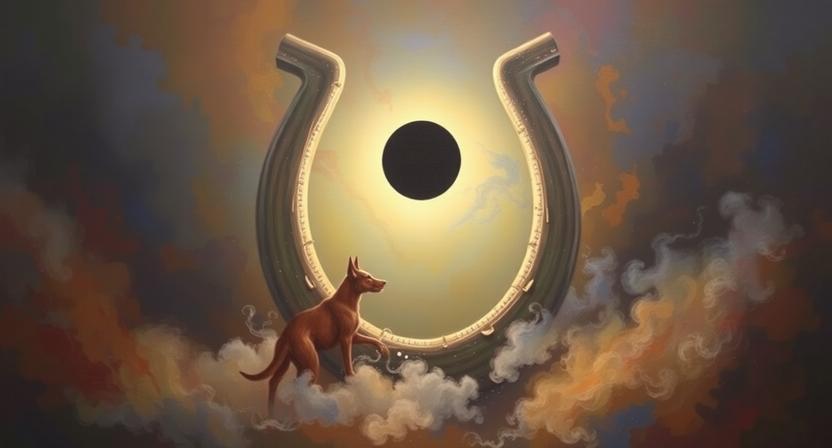
The animal symbolism associated with Ketu makes this dynamic unmistakably clear. Ketu is traditionally linked with dogs, not in the romanticized sense of loyalty and companionship, but in the structural sense of ownership and obedience. A dog is trained. A dog is commanded. A dog serves. Rahu is the owner, the master, the one who gives orders and extracts utility. Ketu is the dog—the one whose instincts are shaped, whose movements are controlled, whose power is subordinated.
This symbolism extends naturally to horses. A horse is powerful, fast, and full of life. Yet when tamed, that power is no longer self-directed. The horse becomes a vehicle for another’s will. It runs where it is guided. It stops when commanded. Ketu represents this surrender of agency. The energy still exists, but it is no longer sovereign.
The same principle applies to snakes that are charmed. A snake is inherently autonomous and dangerous. Under a charmer’s influence, it becomes passive, entranced, and controllable. Rahu is the snake charmer—the hypnotist, the manipulator, the one who extracts power. Ketu is the snake itself, subdued and drained of autonomy. This imagery captures Ketu’s psychological essence with brutal precision.
The parasite symbolism clarifies the Rahu–Ketu relationship even further. Rahu behaves like a tick, leech, or mosquito. It attaches, feeds, and extracts without consent or reciprocity. Ketu is the host. Ketu is the body being bitten, drained, and weakened over time. Parasites do not destroy their hosts immediately. They drain them slowly. By the time symptoms appear, the system is already compromised.
This is why Ketu so often represents being exploited or used in real life. Where Ketu is placed in a chart, a person may give more than they receive, sacrifice without recognition, or be treated as a resource rather than a participant. This exploitation is not always malicious. Often it is unconscious, systemic, or habitual. Ketu dissolves boundaries, making it easy for others to take without noticing the cost.
Ketu also governs shrinking. Things under Ketu grow smaller over time. Influence diminishes. Roles contract. Presence fades. A person may find themselves slowly sidelined, marginalized, or pushed out. This shrinking can be social, professional, physical, or psychological. Ketu does not announce these reductions. They happen quietly, incrementally, until the person looks around and realizes how much has been lost.
This shrinking often culminates in collapse. Collapse under Ketu is not explosive. It is implosive. The structure gives way because there is nothing left holding it up. Relationships end not with conflict but with emptiness. Careers dissolve not through failure but through irrelevance. Bodies fail not through trauma but through exhaustion.
In Vedic astrology, Ketu is closely associated with karmic residue and exhaustion. It represents areas of life that have already been overused, overidentified with, or drained across time. There is no growth potential left there. Attempting to expand in Ketu areas often leads to confusion, stagnation, or loss. Ketu’s function is not to create new life but to end cycles.
In Western astrology, as the South Node of the Moon, Ketu similarly represents familiarity without nourishment. It is the past that no longer feeds the present. It is the comfort zone that has become a trap. As an eclipse point, Ketu marks where light disappears, where awareness fades, and where form dissolves.
Ketu also governs invisibility. Where Rahu demands attention and recognition, Ketu fades into the background. People strongly influenced by Ketu may feel unseen regardless of effort. Their contributions may be ignored. Their presence may go unacknowledged. Over time, this can lead to disengagement from society altogether. Withdrawal becomes a defense against further depletion.
Despite its severity, Ketu has a precise role. It removes what cannot be sustained. It strips illusions once they are exhausted. It enforces endings when continuation would only prolong decay. Ketu does not promise comfort, reward, or growth. It promises removal.
Ultimately, Ketu represents the reality that not all loss is chosen, not all decline is avoidable, and not all suffering leads to enlightenment. It is the force that drains until something collapses. What happens after that collapse depends on what is built elsewhere in the chart. Ketu does not offer renewal. It clears the ground through depletion and leaves silence behind.
That silence is Ketu’s final gift—or its final cruelty.