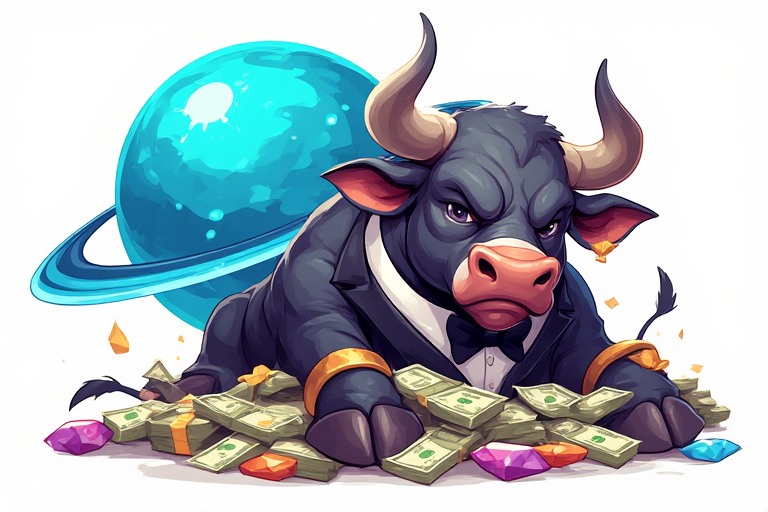
Uranus in Taurus is one of the most striking combinations in astrology because it brings together two forces that seem fundamentally opposed. Uranus represents disruption, awakening, rebellion, and progress. Taurus represents stability, security, material comfort, land, food, money, and enduring value. When these archetypes merge, the result is not reckless chaos, but measured revolution within the material world.
Where Taurus seeks to preserve, Uranus seeks to innovate. Where Taurus builds slowly, Uranus changes suddenly. The friction between them does not cancel either force out — instead, it reshapes both. Stability must evolve. Change must become grounded. This placement speaks to transformation that unfolds through the very systems people rely upon most.
The Meaning of Uranus in Taurus
Uranus symbolizes breakthroughs, independence, and unexpected shifts. Taurus governs tangible reality — income, possessions, agriculture, pleasure, self-worth, and the physical body. When Uranus occupies Taurus in a natal chart, it electrifies these themes. The area of life connected to Taurus becomes the stage for awakening through disruption.
This placement often correlates with unconventional financial thinking. Individuals may resist traditional career structures or seek innovative methods of earning income. They may be drawn toward emerging industries, technological systems tied to finance, sustainability efforts, or alternative economic models. Stability is desired, but rarely pursued in predictable ways.
Taurus is known for its attachment to comfort and routine. Uranus destabilizes attachment. When security becomes rigid, change intervenes. This can manifest as sudden financial shifts, unexpected career turns, or evolving personal values that no longer align with old definitions of success. The lesson is rarely about rejecting material life entirely. Instead, it concerns redefining it.
Because Taurus rules self-worth, Uranus here often signals a profound reevaluation of value. External validation — salary, possessions, status — may lose its grip over time. The individual is gradually pushed toward cultivating internalized self-value rather than measuring worth solely through tangible accumulation.
There is also a sensory dimension. Taurus governs pleasure, beauty, taste, and physical embodiment. Uranus introduces experimentation and originality. This can produce unique aesthetic preferences, unconventional lifestyles, or fluctuating relationships with indulgence and restraint. Comfort may be periodically disrupted in order to prevent stagnation.
On a collective scale, Uranus in Taurus corresponds with transformation in economic and agricultural systems. Currency models evolve. Banking structures shift. Conversations around sustainability, land ownership, and resource management intensify. What appears permanent begins to modernize. Innovation takes root in soil that once resisted change.
Ultimately, this placement challenges the illusion that stability must remain static. It reveals that security survives longest when it adapts.
Uranus in Taurus Man
The Uranus in Taurus man often presents a calm and grounded exterior, yet his approach to material life carries an independent edge. He may value quality, financial stability, and physical comfort, but he rarely follows conventional paths to achieve them.
Career choices may reflect innovation or self-direction. Entrepreneurship, unconventional investments, or involvement in emerging industries are common themes. Rather than openly rebelling against systems, he may quietly detach from structures that limit autonomy and construct alternatives.
In relationships, the tension between loyalty and freedom becomes pronounced. Taurus desires consistency and physical closeness. Uranus requires space and independence. This can create a man who seeks long-term stability yet resists feeling confined. If relationships become overly predictable or possessive, sudden shifts may occur.
Financial life may move through cycles of gain and recalibration. Unexpected opportunities can arise, followed by periods of restructuring. These fluctuations tend to teach resilience and adaptability. When identity becomes overly tied to income or possessions, circumstances may intervene to broaden perspective.
Aesthetically, he may possess refined but unconventional tastes. Taurus sharpens sensory awareness; Uranus adds originality. This may manifest through distinctive fashion choices, interest in sustainable living, alternative health practices, or unique design preferences.
At its strongest expression, this placement integrates grounded practicality with progressive insight. He becomes capable of building lasting structures precisely because he understands the necessity of evolution.
Uranus in Taurus Woman
The Uranus in Taurus woman often embodies a compelling blend of sensual presence and unwavering independence. She may appear steady and composed, yet her values are not fixed in tradition. If something feels outdated or restrictive, she is willing to change it — even if it once provided comfort.
Financial autonomy frequently plays a significant role. She may prefer maintaining control over her own resources and may pursue unconventional professional paths. Innovative business models, creative monetization, or emerging industries may attract her attention. Security matters deeply, but dependency does not.
In relationships, the need for individuality within stability becomes central. Taurus seeks loyalty and enduring partnership. Uranus insists on freedom and authenticity. This can create a dynamic in which closeness must coexist with personal space. If growth stagnates, change may follow swiftly.
Her connection to beauty and the body may challenge expectations. Taurus rules aesthetics and physical pleasure; Uranus introduces experimentation. She may redefine beauty standards, shift personal style dramatically, or adopt unconventional approaches to wellness and lifestyle.
Periods of financial or material disruption often function as catalysts for empowerment. If stability is overly reliant on external structures — such as a partner, employer, or inherited system — circumstances may arise that restore independence. Through these experiences, she develops deep material self-reliance.
When balanced, this placement produces someone capable of enjoying comfort without being controlled by it. Stability becomes a choice rather than a cage.
Uranus in Taurus Dates& Years
Uranus takes approximately 84 years to complete one full orbit of the Sun, spending about seven years in each zodiac sign. Because of this slow movement, Uranus in Taurus is considered a generational placement, shaping collective attitudes toward money, land, agriculture, and material security over extended periods of time.
The most recent Uranus in Taurus cycle began on May 15, 2018. It briefly retrograded back into Aries later that year, then re-entered Taurus on March 6, 2019, where it has remained. Uranus will leave Taurus in April 2026, after one final retrograde return in late 2025. Altogether, this cycle spans 2018 to 2026, marking nearly a decade of intensified focus on economic systems, resource management, and evolving definitions of value.
Looking backward, previous Uranus-in-Taurus eras reveal striking patterns. While astrology does not claim direct causation, these timeframes consistently coincide with shifts in material structures and financial systems….
1934 – 1942: This period unfolded during the later years of the Great Depression and the early years of World War II. Banking systems were restructured, currencies were pressured, governments expanded economic control, and industrial production rapidly transformed. Questions surrounding land, labor, and resource allocation became urgent and global. The material world was forced to reorganize under intense strain.
1850 – 1859: The mid-19th century brought rapid industrial expansion, railroad growth, and increased mechanization of agriculture. Land development accelerated, new technologies reshaped production, and economic systems grew more interconnected. Property, labor, and material resources entered a new phase of modernization.
1767 – 1775: The years leading up to the American Revolution were marked by mounting economic tensions between colonies and empire. Taxation disputes, trade restrictions, and debates over land ownership intensified. Material autonomy became a political issue. Questions about who controlled resources — and who profited from them — reached a breaking point.
1683 – 1691: This late 17th-century period saw expansion in global trade networks and shifting land economies across Europe and colonial territories. Commercial systems evolved, property structures adapted, and agricultural production expanded to meet growing demand. Economic foundations were quietly reorganizing beneath established traditions.
1599 – 1607: At the turn of the 17th century, early joint-stock companies emerged, global trade routes expanded, and colonial land ventures intensified. New financial models began taking shape, laying groundwork for modern corporate and investment systems. Ownership itself was being redefined.
Each of these Uranus in Taurus periods occurred roughly 84 years apart, reflecting the planet’s orbital rhythm. Across centuries, a consistent theme emerges: when Uranus moves through Taurus, the structures that define wealth, land, currency, and material stability undergo recalibration.
For those born during Uranus in Taurus cycles, this placement symbolizes participation in a generational shift around value, ownership, and economic identity. Rather than preserving the past unchanged, these eras challenge societies to modernize how security is built and maintained.
Uranus in Taurus does not erase stability — it reshapes it. It reveals that what appears permanent is, in fact, evolving. The material world is not immune to innovation. Under this influence, the foundations of wealth are not destroyed — they are redesigned.
Uranus in Taurus does not represent reckless instability. It symbolizes evolution within the foundations of security. It disrupts comfort when comfort becomes stagnant. It questions ownership when ownership becomes attachment. It modernizes systems that once appeared immovable.
On a personal level, this placement challenges rigid definitions of worth and material success. On a collective level, it corresponds with sweeping transformations in finance, land, and resource management.
The enduring lesson of Uranus in Taurus is that security cannot remain frozen in time. The material world changes. Markets shift. Technology advances. Stability survives not through resistance, but through adaptation. When innovation is grounded and stability is flexible, something stronger than permanence is created — resilience.